
 E-Paper



Photos: Vietnamese women clear countryside of war-era mines
At least 40,000 Vietnamese have since died in accidents related to unexploded ordnance left behind from the Vietnam War since the conflict ended in 1974. Victims are often farmers who accidentally trigger explosions, people salvaging scrap metal, or children who mistake small bombs for toys. More than 6.1 million hectares of land in Vietnam remain blanketed by unexploded munitions -- mainly dropped by US bombers. Decades on, all women demining teams continue to comb through the demilitarised zone that once divided the North and South and the worst-affected provinces.
Updated on: Jan 10, 2020 5:17 PM IST


Share via


Copy link

1/9

 View Photos in a new improved layout
Updated on Jan 10, 2020 5:17 PM
Members of an all-female demining team scan for unexploded ordnance at a landmine site in the Quang Tri province, Vietnam. Inching across a field littered with Vietnam war-era bombs, Le Thi Bich Ngoc leads an all-women demining team clearing unexploded ordnance that has killed tens of thousands of people—including her uncle. (Nhac Nguyen/AFP)
2/9
 View Photos in a new improved layout
Updated on Jan 10, 2020 5:17 PM
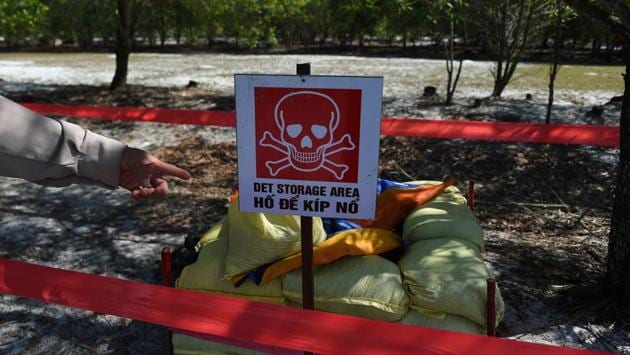
A landmine site in the Trieu Phong district in Quang Tri province. “He died in an explosion. I was haunted by memories of him,” Ngoc told AFP as she oversaw the controlled detonation of a cluster bomb found in a sealed-off site in central Quang Tri province. (Nhac Nguyen/AFP)
3/9
 View Photos in a new improved layout
Updated on Jan 10, 2020 5:17 PM
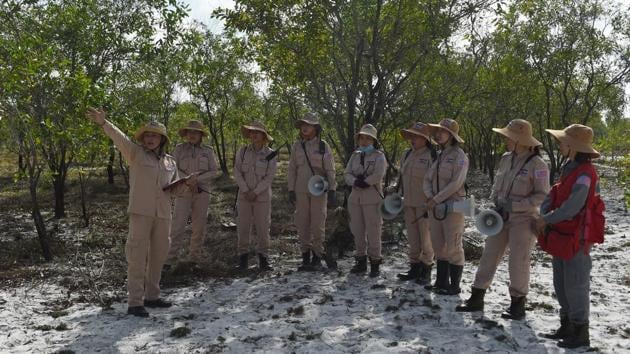
Members of a demining group during a team briefing. More than 6.1 million hectares of land in Vietnam remain blanketed by unexploded munitions decades after the war ended in 1975. Part of the demilitarised zone that once divided the North and South, Quang Tri is among the worst-affected provinces. (Nhac Nguyen/AFP)
4/9
 View Photos in a new improved layout
Updated on Jan 10, 2020 5:17 PM
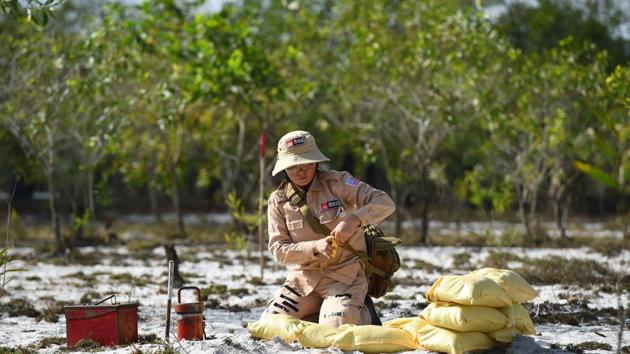
For the past 20 years, Ngoc has worked as a deminer with Mines Advisory Group (MAG), funded by the United States, Britain and Japan. Today the 42-year-old criss-crosses her home province to excavate up to a dozen pieces of unexploded ordnance daily—and she is not alone. (Nhac Nguyen/AFP)
5/9
 View Photos in a new improved layout
Updated on Jan 10, 2020 5:17 PM
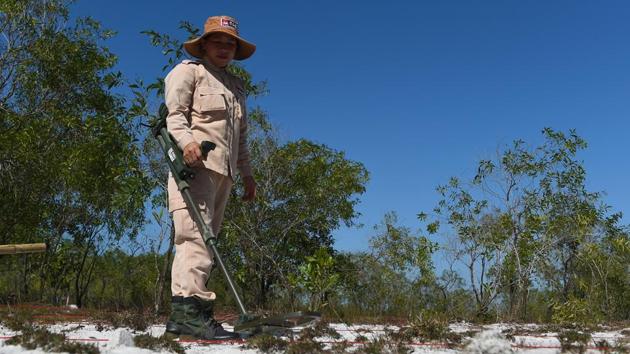
Deminer Tran Thi Hanh told AFP her husband was injured by a landmine blast while going to work, and she does not want the same thing to happen to others. “This is what motivates me to do this job,” she said. Once a site has been cleared the land can be used for agriculture. (Nhac Nguyen/AFP)
6/9
 View Photos in a new improved layout
Updated on Jan 10, 2020 5:17 PM
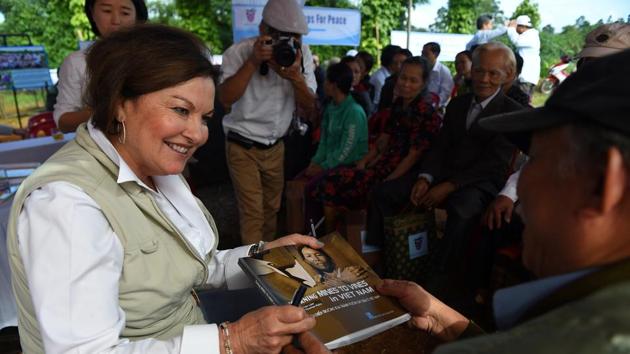
Heidi Kuhn, founder of NGO group Roots of Peace, which has helped 3,000 people to farm pepper on former mine fields, presents a book about farmers who became landmine victims in Quang Tri province. “Demine, replant, rebuild—we are in the business of peace, the economy of peace,” Kuhn told AFP. Vietnam is the world’s leading producer of black pepper. (Nhac Nguyen/AFP)
7/9
 View Photos in a new improved layout
Updated on Jan 10, 2020 5:17 PM
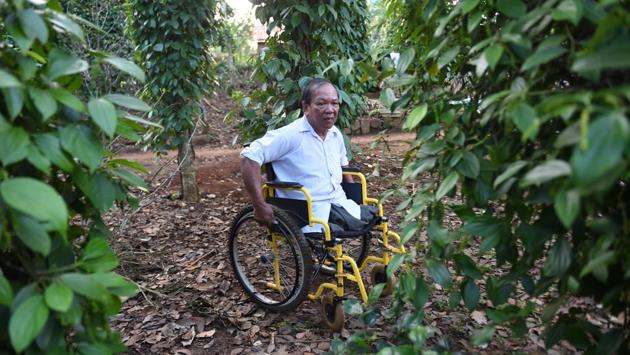
Phan Van Ty said growing the crop has given him a new lease on life. He lost a leg fighting for the southern regime, but after the war lost the other one when he detonated a bomb while searching for scrap metal in a former US weapons warehouse. “I have nightmares of my flesh being scattered in a blast—and then waking to find myself still in one piece but just without legs,” he told AFP. (Nhac Nguyen/AFP)
8/9
 View Photos in a new improved layout
Updated on Jan 10, 2020 5:17 PM
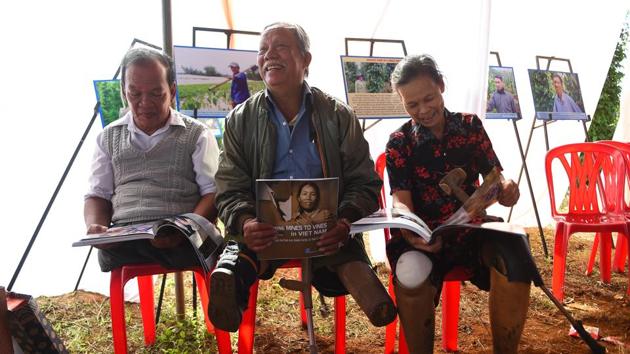
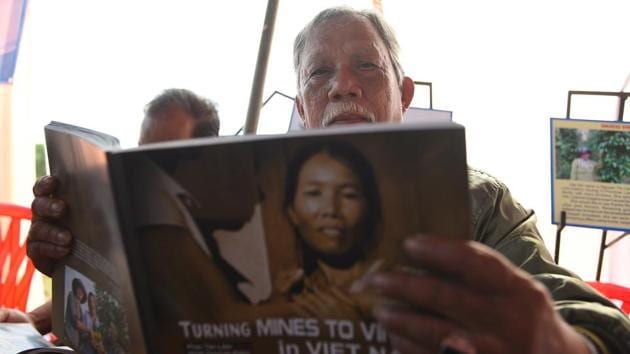
Landmine victims Phan Van Ty (L), Truong Uu (C) and Hoang Thi Luu (R) at the presentation of a book on farmers who became landmine victims. Up to three million pieces of unexploded ordnance and cluster munitions are still buried in Vietnam’s soil. Just last month, Ty said he found a grenade in his backyard. (Nhac Nguyen/AFP)
9/9
 View Photos in a new improved layout
Updated on Jan 10, 2020 5:17 PM


