

 E-Paper


Rare ‘Blood Moon’ dominates skies for first time since 1982
1 / 8
 View Photos in a new improved layout
Updated on Sept 28, 2015 09:24 am IST
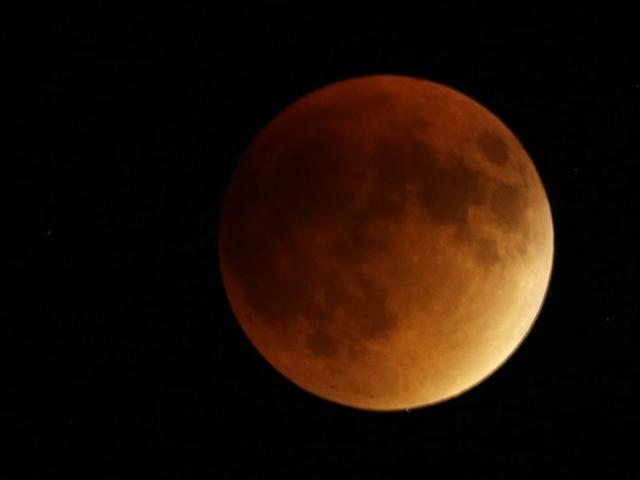
Earth's shadow obscures the view of a so-called supermoon during a total lunar eclipse Sunday, September 27, 2015, near Lecompton, Kan. It was the first time Sunday that the events have made a twin appearance since 1982, and they won't again until 2033. (AP Photo)
2 / 8
 View Photos in a new improved layout
Updated on Sept 28, 2015 09:24 am IST
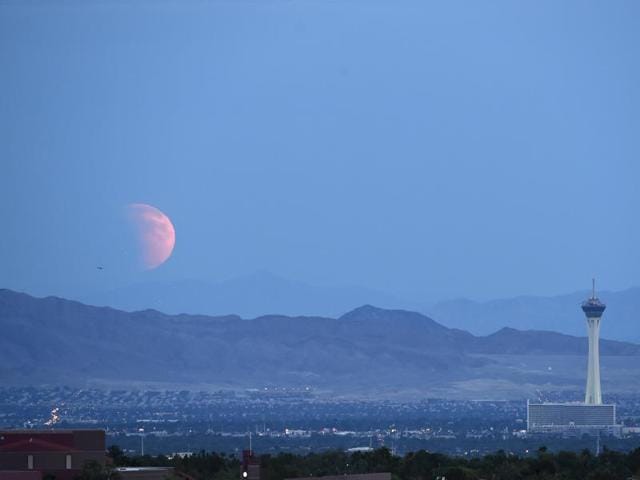
A partially eclipsed supermoon, the last of this year's supermoons, rises over Las Vegas, Nevada, September 27, 2015. The total supermoon eclipse, known as a ‘blood moon’, is an incredibly rare celestial event. (REUTERS Photo)
3 / 8
 View Photos in a new improved layout
Updated on Sept 28, 2015 09:24 am IST
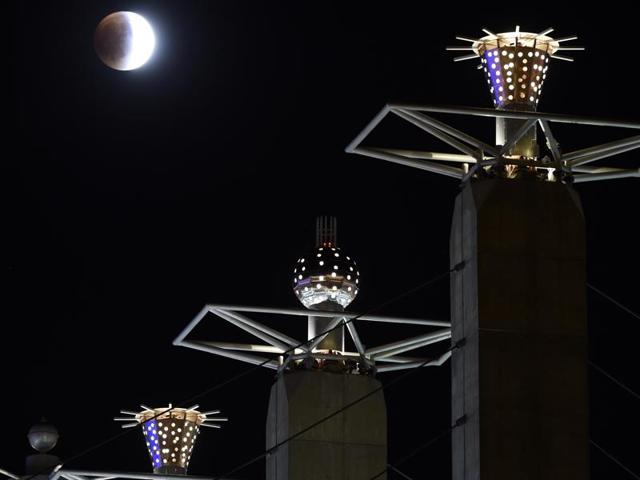
Earth's shadow begins to obscure a so-called supermoon during a lunar eclipse in Kansas City, Sunday, September 27, 2015. (AP Photo)
4 / 8
 View Photos in a new improved layout
Updated on Sept 28, 2015 09:24 am IST
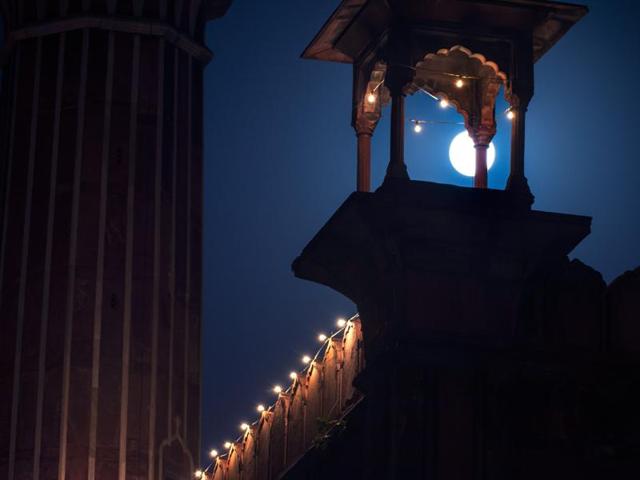
A full moon shines behind a tower of the Jama Masjid mosque in New Delhi on September 28, 2015. The moon will be at its closest orbital point to Earth, called perigee, while also in its brightest phase. (AFP Photo)
5 / 8
 View Photos in a new improved layout
Updated on Sept 28, 2015 09:24 am IST
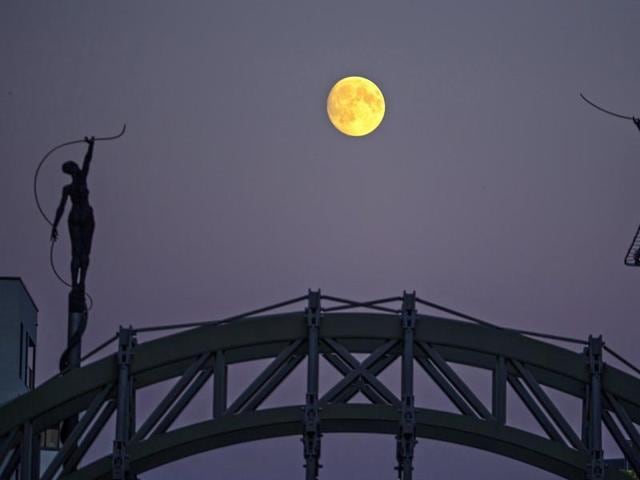
Statues are seen silhouetted against the moon in Brussels, Belgium September 26, 2015. On Saturday, a perigee moon coincided with a full moon creating a "supermoon" when it passed by the earth at its closest point. (REUTERS Photo)
6 / 8
 View Photos in a new improved layout
Updated on Sept 28, 2015 09:24 am IST
People gather near the Buenos Aires' planetarium to see the supermoon in Buenos Aires, Argentina, September 27, 2015. The rare celestial event last occurred in 1982. (REUTERS Photo)
7 / 8
 View Photos in a new improved layout
Updated on Sept 28, 2015 09:24 am IST
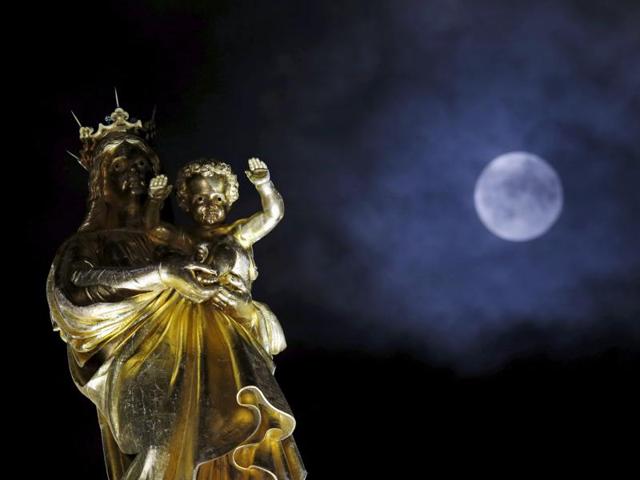
A supermoon rises in the sky above the Notre-Dame de la Garde basilica in Marseille, France, September 28, 2015. The rare event only occurs when Earth’s satellite is at a minimum distance from our planet. (REUTERS Photo)
8 / 8
 View Photos in a new improved layout
Updated on Sept 28, 2015 09:24 am IST