
 E-Paper



By the way: Too smart for the list
Like everyone who has ever had a girlfriend or boyfriend or something resembling that, I too have known heartbreak, up close and personal. But nothing really could have prepared some of us for what happened on the 28th day of January in the year 2016.


Like everyone who has ever had a girlfriend or boyfriend or something resembling that, I too have known heartbreak, up close and personal. But nothing really could have prepared some of us for what happened on the 28th day of January in the year 2016.
It was the day they said Ludhiana was going to be a ‘smart city’, one of the 20 selected for the first round of a much-touted scheme of the Government of True Patriots. Nope, I do not grudge Ludhiana its perceived success. I was briefly crestfallen because Chandigarh was not on the list.
Can you imagine? With its pretty lanes, mega roundabouts, legendary green cover, and all that jazz of modernity and stuff, Chandigarh should have made it.
Why, then, did they not choose us? Is it because we are already smart? Or are we, as some like to put it, ‘oversmart’? Are we too laidback to be termed that? After all, Venkaiah Naidu and everybody below him cannot tire talking about how smart cities are about smart citizens and not mere funds and facilities. (I am not sure what Har Har Modi thinks about it in the latest since there is no election this month and he doesn’t say much otherwise.)
One reason why we may have not been selected was because we came across as desperate. It’s a major put-off, you know.
First, we started calling ourselves ‘Smart Chandigarh’ before anyone even nodded. Then-as is the tradition with everything in India these days we made an app. Next, we touted anti-encroachment drives as a major part of a clean-up, even removing vendors who should have by now been given licences to operate under a law passed two years ago. The invisible people must be made completely invisible, you see. Online payment of power and water bills was started too-a good thing, but a classic case of peaking too early. There were several other such initiatives, including another round of announcements and claims about the metro rail system coming soon to Chandigarh.
When nothing came of it and the horrible news landed, the well-meaning young officer designated as the head of the whole thing gave everyone some balm. He underlined how Chandigarh has been put on the ‘fast track’ and would certainly be part of the next list. Work on all that defines smartness would continue unhindered.
This did not stop the Congress from doing what it does best these days-providing comic relief. Its local leaders made fun of the ruling BJP over its “failure” by literally blowing whistles and cracking a trademark PJ with the words ‘city’ and ‘seeti’ (Hindi for whistle).
But, in the noise of the wailing, everyone seems to have missed a rather obvious thing. The list of smart cities is not a list of smart cities. It is a list of cities that would be made smart. We do not need that.
Ludhiana-all said and done about its rich history, about how much tax it generates, and all those fancy, imported cars that are dented at the bottom because of the beautiful roads of Progressive Punjab-is quite filthy and can really benefit from some help.
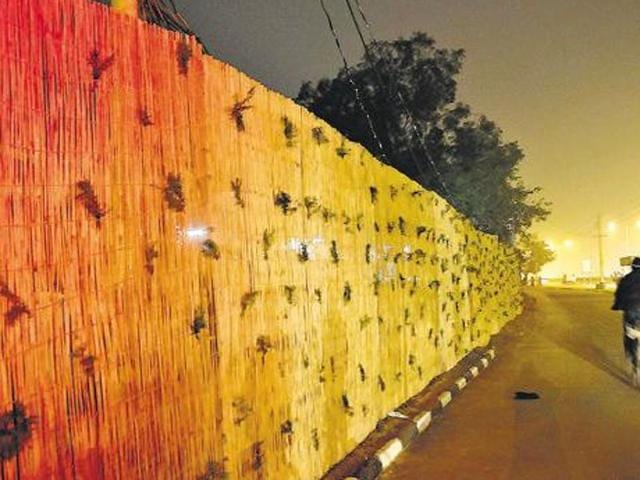
Chandigarh does not have even one filthy locality. Sorry, what did you say? Where did you see filth? Well, if you are talking about Hallomajra, we are terribly sorry that you had to see that. Maybe the bamboo-straw wall that concealed it from the view of HH Modi and his newest hug-buddy, French President François Hollande, should be turned into a concrete wall, with Le Corbusier motifs painted over it. I am sure the administration is working on it. After all, sweeping the dust under the carpet is the smart thing to do.
aarish.chhabra@hindustantimes.com


