
 E-Paper



Wake-up call: After overlooking RTE Act for 8 years, Punjab to start preschools
The entry age in formal education in 13,700-odd state-run elementary schools in the state is six years even though the Right of Children to Free and Compulsory Education (RTE) Act, 2009, lays down that necessary arrangement are to be made by the state government for providing free preschool education for such children.


The Punjab government, which is planning to set up pre-primary sections in its schools, overlooked preschool education to children in the age group of three to six years in the state till now.
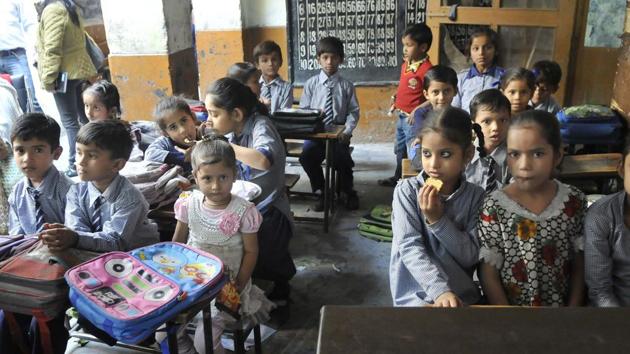
The entry age in formal education in 13,700-odd state-run elementary schools in the state is six years even though the Right of Children to Free and Compulsory Education (RTE) Act, 2009, lays down that necessary arrangement are to be made by the state government for providing free preschool education for such children.
“To prepare children above the age of three years for elementary education and to provide early childhood care and education for all children until they complete the age of six years, the appropriate government may make necessary arrangement for providing pre-school education for children,” says Section 11 of the Act.
The Comptroller and Auditor General (CAG), in its latest audit report on the implementation of the RTE Act, has pointed out that Punjab is among the five states where no preschool education is being provided. The other states are Bihar, Chhattisgarh, Gujarat and Meghalaya.
“As per U-DISE (Unified-District Information System for Education) 2015-16, in 10 states more than 50% of government primary schools had pre-primary sections. Most of the states are covering children in the age of 3-6 years through convergence with anganwadi centres co-located in primary schools or pre-primary sections in government schools,” reads the federal auditor’s report. It has also questioned the failure of the Union ministry of human resource development (MHRD) to formulate a policy of preschool education for children.
The Union human resource and development (HRD) and women and child development ministries have asked the Punjab government to examine the possibility of shifting the anganwadi Centres to campus of the nearby primary schools to ensure the transition of the children the primary stage and ensure universal enrolment.
“It will facilitate child preparedness for going to school and help in increasing the efficacy of efforts being made towards universalisation of elementary education,” Union secretary, women and child development, Rakesh Srivastava and secretary, HRD, school education, Anil Swarup, wrote to chief secretary and secretary, school education, on July 20, stressing pre-primary non-formal education.
The human resource development ministry repeatedly asked the school education department about the preschool programme, but its reply has always been in the negative. However, education minister Aruna Chaudhary, who took over four months ago, said the government will begin by setting up pre-primary sections in select schools.
“Private schools take three-plus kids, the entry age in government primary schools is six-plus. Toddlers in villages either go to private schools or do not enrol till six. The idea is to catch them young. We will introduce playway methods,” she said.


