E-Paper



Bengaluru’s paying guest crisis: Why over 200 PGs have shut down, leaving owners with 20–30% losses
Bengaluru real estate: What was once a thriving business, the PG segment is now struggling, with many owners reporting sustained losses and dwindling occupancy

 Prefer HTon Google


More than 200-300 paying guest (PG) accommodations in Bengaluru have shut down after the city's local municipal corporation, Bruhat Bengaluru Mahanagara Palike (BBMP) implemented stringent rules for PG operation in the tech capital, Sukhi Seo, secretary of the Bengaluru PG Owners’ Association, told HT.com.
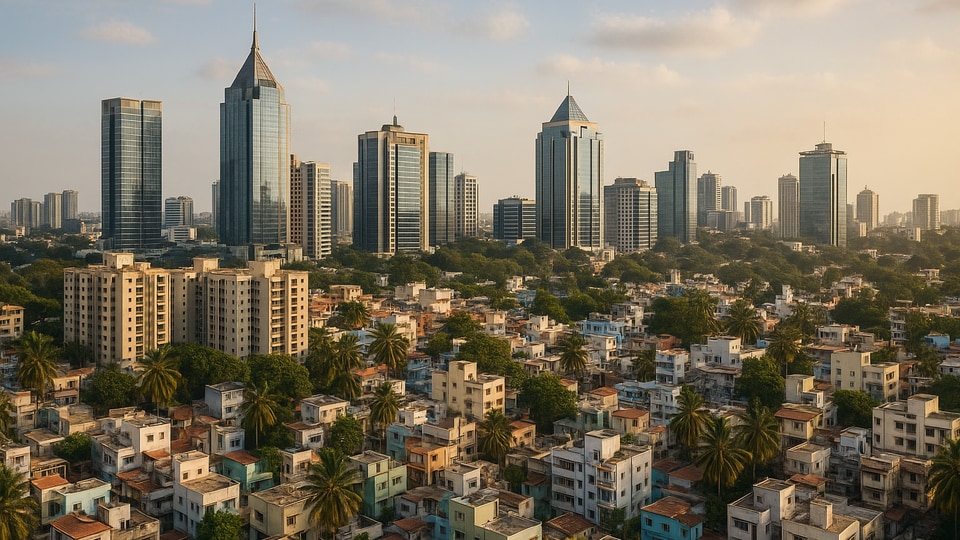
Around 2,500 PGs are currently certified in Bengaluru, Seo said, but out of over 12,000 PGs in the city, over 10,000 are still operating 'illegally' without proper approvals. "This is causing concern for investors, as BBMP can conduct raids on non-compliant properties at any time. PG business, once considered a profitable real estate investment in the city, is seeing a downfall," she said.
Bengaluru PGs now under watch: How the municipal corporation stepped in to regulate the sector
Last year, the BBMP introduced new regulations for paying guest accommodations under Section 305 of the BBMP Act, 2020.
One of the key requirements is the mandatory installation of CCTV cameras. All PG facilities must now have surveillance systems covering all entry and exit points, as well as common areas across the property. Another rule focuses on living space, each resident must be allotted at least 70 square feet, which will be a condition for receiving or renewing a licence, experts said.
In terms of water supply, operators are required to provide a minimum of 135 litres of clean water per person each day. For PGs offering meals or cooking facilities, obtaining a licence from the Food Safety and Standards Authority of India (FSSAI) is compulsory. This must be secured within three months of receiving a trade licence from the BBMP, they said.
In April, BBMP health officials in the Mahadevapura zone shut down the kitchens of around 100 paying guest accommodations due to breaches of town planning norms and licensing requirements. According to BBMP officials, many of these PGs were operating in violation of zoning laws, which restrict commercial use in residential neighbourhoods where roads are narrower than 40 feet.
Also Read: BBMP shuts down 21 PGs in Bengaluru over safety violations in city-wide drive: Report
PG owners say they are incurring losses of 20-30%
Several PG owners HT.com spoke to said most of them are running on 20-30% losses today compared to the profitable business it once was.
Typically, return on investment (ROI) in the PG sector is close to 6-8%, way higher than apartments that command a rental yield of 3-4% in Bengaluru. This led to several owners rapidly investing in the sector to capitalise on the returns, Kiran Kumar, vice president of Hanu Reddy Realty, said.
"In prime areas, owners are asking for ₹8,000 to ₹10,000 per bed, depending on the sharing type. For double sharing, the cost often exceeds ₹10,000-15,000. But if we raise rents any further, tenants tend to leave. On top of that, the Bangalore Water Supply and Sewerage Board has increased water charges, which are adding to the expenses. Many PG owners are now running at a loss because they can’t pass on the additional costs to tenants," Seo said.
Earlier, it was a profitable business. But now, electricity is charged at commercial rates, and there are additional commercial taxes, she said.
Also Read: Karnataka: MBA intern found dead in Belagavi PG, police probe underway
PG sector in Bengaluru is a complete mess, say civic experts
Civic experts have raised concerns over the growing irregularities in Bengaluru’s paying guest (PG) accommodations, describing the sector as highly unregulated and increasingly problematic.
“PG owners ignore construction bylaws, tie up with real estate brokers to aggressively market the properties, and build way beyond approved limits. In prime areas like Whitefield, many PGs have nearly double the permitted number of floors. This puts pressure on local infrastructure, especially water supply, and adds to congestion, as these buildings house far more tenants than planned," said Sandeep Anirudhan, Convenor of the Coalition for Water Security and a civic expert.
He pointed out that buildings over 21 meters in height are supposed to get a fire NOC. But PG owners stop at the threshold, around 7 to 8 floors, to avoid the requirement. "This creates dense clusters of people in limited spaces, and unapproved commercial setups like restaurants start popping up within residential zones. It is leading to the complete breakdown of planned neighbourhoods."
“The only solution is strict enforcement of existing laws. The government must intervene and regulate the PG sector with strong bureaucratic action,” he noted.