
 E-Paper



Supreme Court rules homebuyers cannot recover home loan interest from developers for delays in real estate projects
The Supreme Court has ruled that homebuyers can’t claim home loan interest from developers for project delays, only refund as per the terms of the agreement

 Prefer HTon Google


The Supreme Court has ruled that homebuyers seeking a refund for delayed projects cannot demand reimbursement from the developer for the interest paid on their home loans. The buyer is entitled only to a refund of the principal amount paid to the builder, along with compensation contractually agreed between the homebuyer and the developer.
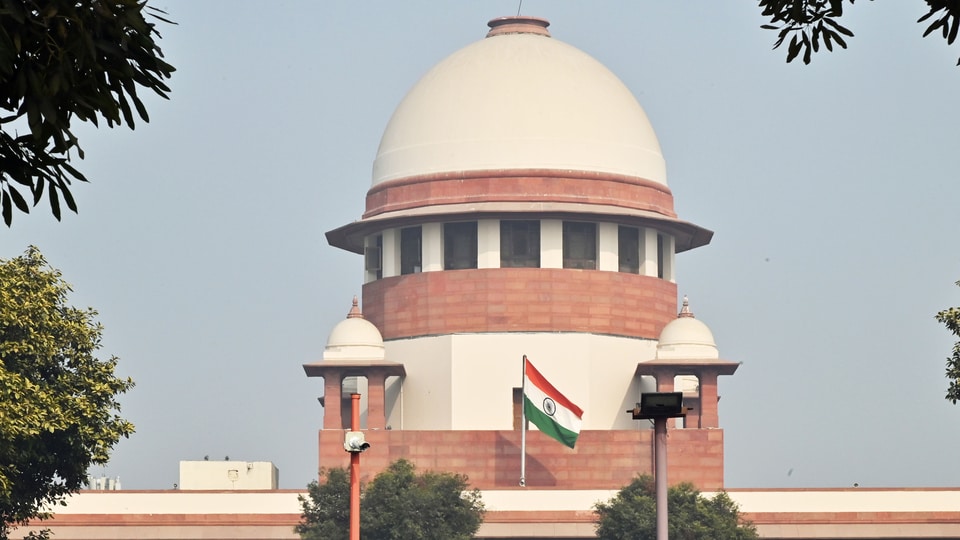
A bench comprising Justices Sanjay Karol and Prasanna B Varale observed that there cannot be multiple heads under which damages or interest are awarded beyond what is contractually agreed between the homebuyer and the developer. The Court, referring to earlier judgments, emphasized that unless there are ‘exceptional’ reasons, a builder or authority such as Greater Mohali Development Authority (GMADA) cannot be directed to reimburse the interest paid by the homebuyer on a housing loan.
The case
The case involves homebuyer Anupam Garg, who had booked a flat in 2011 under the ‘Purab Premium Apartments’ housing scheme launched by GMADA (Greater Mohali Area Development Authority) in Sector 88, Mohali. Garg secured an application for a 2-BHK + Servant Room (Type II) apartment by paying ₹5.5 lakh as earnest money—10% of the total consideration of ₹55 lakh.
The allotment was conducted through a draw of lots on March 19, 2012, in which Garg was successful. A Letter of Intent (LOI) was issued to him on May 21, 2012, outlining the flat’s price, payment schedule, potential plans, ownership terms, and possession timelines. The LOI promised possession by May 2015 and specified a refund with 8% interest in case of delay.
However, due to slow progress, the buyer sought a refund in 2016. When GMADA refused, he approached the Punjab State Consumer Commission. In 2018, the commission directed GMADA to refund the amount with 8% interest, ₹60,000 for mental harassment, ₹30,000 in litigation costs, and reimbursement of home loan interest paid by the buyer. The National Consumer Disputes Redressal Commission (NCDRC) upheld this order in 2019.
The Supreme Court order
Challenging the ruling, GMADA approached the Supreme Court, which partially overturned the earlier decisions.
“There cannot be multiple heads for awarding damages or interest beyond what is contractually agreed upon,” the bench, comprising Justices Sanjay Karol and Prasanna B Varale, observed. Citing its earlier decision in Bangalore Development Authority v. Syndicate Bank, the court reiterated that in the absence of exceptional reasons, developers or authorities like GMADA are not liable to reimburse home loan interest paid by buyers.
“A perusal of the judgment and orders of the Commissions does not reveal any exceptional or strong reasons for the interest on the loan taken by the respondents to be paid by GMADA. That apart, whether the buyers of the flat do so by utilizing their savings, taking a loan for such purpose or securing the required finances by any other permissible means, is not a consideration that the developer of the project is required to keep in mind. For, so far as they are concerned, such a consideration is irrelevant,” the order noted.
“The one who is buying a flat is a consumer, and the one who is building it is a service provider. That is the only relationship between the parties. If there is a deficiency or delay in service, the consumer is entitled to be compensated for the same. Repayment of the entire principal amount along with 8% interest thereon, as stipulated in the contract, alongside the clarification that there shall be no other liability on the authority, sufficiently meets this requirement,” it noted.
The court partially allowed GMADA’s appeal, striking down the component related to reimbursement of home loan interest while upholding the rest of the relief granted by the consumer commissions. As a result, GMADA will not be required to deposit any additional amount, and the funds already held by the State Commission will be disbursed to the buyers.
This is what legal experts have to say
The Supreme Court has observed that the compensation payable to property buyers arises only on the principal sale consideration which had been paid by the buyer. "Their observations were based on the case before them, and was therefore based on the time lost by the buyers,” said Yudhist Narain Singh, Senior Partner, YNS and Associates.
The judgment has emphasised the obligations of the parties as per the terms of the agreement. The same is on the premise that the loan agreement between the buyer and bank is separate from the agreement between buyer and developer for the purchase of flat, explained Yogendra Aldak, Partner, Lakshmikumaran & Sridharan Attorneys.
Further, the scope of compensation under the Consumer Protection Act should be restricted to losses directly suffered by consumers due to seller’s deficient service. However, the consequences of buyer’s independent financial choice in taking a loan should not be the obligation of developer, he said.
What qualifies as ‘exceptional circumstances’?
The Supreme Court in the case also considered the earlier judicial precedents and held that the developer may be directed to pay loan interest in ‘exceptional circumstances’.
Such exceptional circumstances may be cases where the homebuyer is successful in proving that the breach by the developer has caused severe financial hardship, and refund of the principal amount with interest and compensation is not sufficient to compensate the significant financial hardship faced by the homebuyer, said Aldak.
Further, in cases where the developer acted with malice or fraudulent interest and intentionally or negligently delayed the project and breached the contractual obligations. In such cases, denying interest on loans would cause manifest injustice to the homebuyer, he said.
Singh explained that these ‘exceptional’ cases may include those where it is held beyond an iota of doubt, that the property buyer was mislead into buying immovable property, and where the collusion or wrongdoing of a financial institution is clear.


