
 E-Paper



Is quake-prone Delhi ready for transit-oriented development as policy encourages skyscrapers?
Is quake-prone Delhi ready for transit-oriented development as policy encourages skyscrapers?


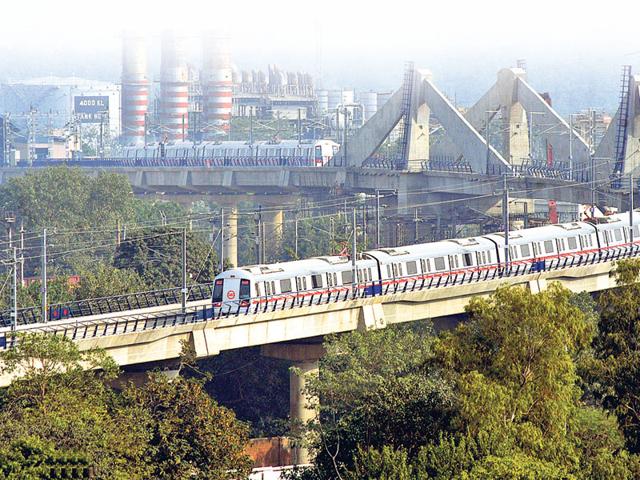
The ministry of urban development has approved its transit-oriented development policy (TOD) to address the shortage of affordable housing, pollution, congestion and to ensure that people actually walk to work. The policy provides for a higher FAR of 400, enabling vertical construction or tall buildings within the influence zone extending to 500 metres on both sides of the mass rapid transit system (MRTS).
While real estate and urban planners have welcomed the move, many structural design experts have expressed concern over rampant construction of tall structures in Delhi, which falls in the seismic zone IV category and is highly vulnerable to earthquakes.
“If a severe earthquake of 7 to 8 on the richter scale hits the capital, 80% of its buildings won’t be able to withstand it,” say experts, adding that the ministry has cleared FAR of 400 in the absence of a special building code for tall buildings.
A FAR of 400 is applicable to areas along metro transit routes in Delhi. What this means is that there will be a sudden spurt in growth of 40-storey and higher buildings in Delhi, similar to the super tall structures to be launched in the NCR. Not only will this be dangerous, it would also bring to the fore total lack of coordination between government ministries, claims Sandeep Shah, country head and MD - India, Miyamoto International, earthquake and structural engineers.
The Bureau of Indian Standards that is under the ministry of consumer affairs last year had promised to revise the National Building Code and come up with a specialised code for designing tall buildings. Nothing has been done as yet even though these are essential for constructing safe buildings with respect to earthquakes, Shah adds.
A stringent regulatory mechanism and not higher FAR of 400 is the issue here. Experts ask how, when buildings with a FAR of 250 are structurally unsafe, how can structures with a FAR of 400 be safe.
The crux of the problem lies in the regulatory mechanism. Today it’s considered a mere formality to get approvals for plans and structural drawings submitted to the authorities. There is no system in place that ensures that buildings have been done as per approved structural drawings. The inspection of the site before handing over the occupancy certificate merely certifies the planning/architectural parameters and not the structural parameters such as quality of reinforcements or beams.
Increasing FAR to 400 will increase the hazard level. The city requires a regulatory system for checking the adequacy of buildings. There are countries where the metro passes right through the buildings because the structural safety of the building has been regulated and ensured, says Abhay Gupta, director, Skeleton Consultants Pvt Ltd/ESCOM Consultants Pvt Ltd.
Structural safety experts are also sceptical about plans to construct TODs, and building a 100-storey marquee tower in east Delhi, especially Karkardooma and near Sanjay Lake because of the fragile soil in the area. “These projects are not feasible because of the presence of sandy silt on the river bed and a high water table. These areas are prone to liquefaction during an earthquake. There have to be guidelines issued by the authorities for the type of foundation to be constructed and the size of the structure in these areas because of these defects,” Gupta adds.


