
 E-Paper



Noida Aqua Line Metro extension: What it means for residential and commercial real estate markets along the Expressway
The Aqua Line Metro extension in Noida promises to transform connectivity along the Noida Expressway, impacting housing and commercial real estate markets

 Prefer HTon Google


Noida has received a major connectivity boost after the Union Cabinet approved the detailed project report and sanctioned ₹2,254 crore for the 11.56-km Metro Link extension of the Aqua Line. Once operational, the corridor will enable seamless interchange between the Delhi Metro’s Blue and Magenta Lines and Noida’s Aqua Line, bridging a long-standing connectivity gap for commuters along the 25-km Noida Expressway stretch.
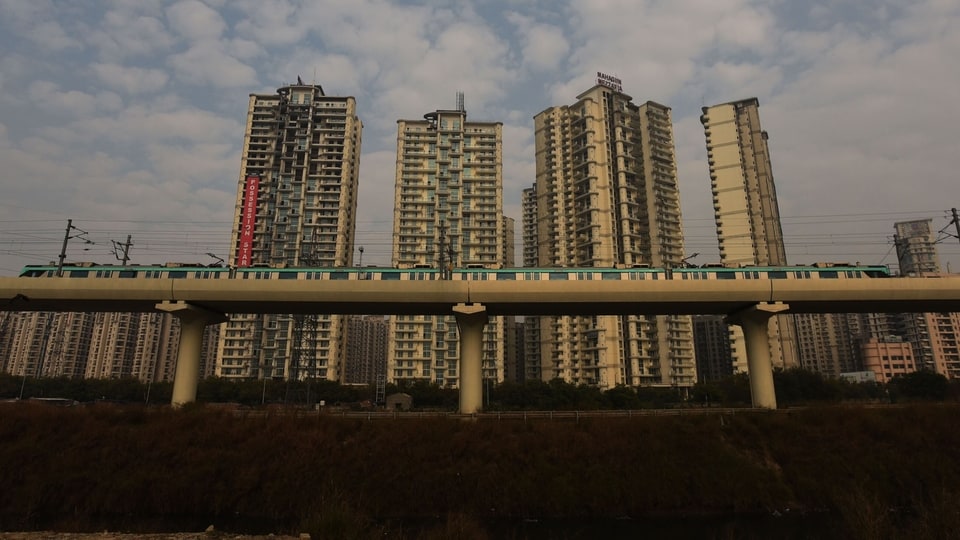
The Expressway corridor is home to several IT and ITES parks, corporate offices and large residential complexes. At present, commuters have to interchange at Sector 52, often taking considerable time to cover a distance of barely 12 km. The new link is expected to significantly reduce travel time and provide smoother access to Delhi, IGI Airport and major railway stations.
The project will feature eight elevated stations - Botanical Garden and Sectors 96, 44, 105, 93, 97, 108 and 91 - and is slated for completion within four years. The corridor is also expected to ease congestion on the Noida Expressway by encouraging a shift to public transport. Key commercial hubs such as Advant Business Park in Sector 142, along with corporate campuses in Sectors 126, 132, 145, and 157, are likely to benefit from improved workplace mobility and easier access to talent.
Real estate experts believe the project will strengthen direct connectivity between residential sectors along the Noida Expressway and Delhi, further supporting demand. Commercial rentals in the micro-market, which have already witnessed steady growth, are expected to receive an additional boost. In the residential segment, the impact is likely to be more visible in the secondary market, particularly in the ₹2–3 crore bracket.
Deepak Kapoor, director at Gulshan Group, told Hindustan Times Real Estate, that infrastructure upgrades typically have a direct impact on real estate activity, and that enhanced metro connectivity is expected to positively influence both residential and commercial segments along the corridor.
Impact on commercial real estate
On the office front, this connector, once operational, will make it easier for entry-level employees to commute, widening the available talent pool. Companies often prefer office buildings near metro stations as they help attract and retain talent more efficiently. Better public transport access can also particularly benefit women employees who rely on third-party transport, reducing travel-related constraints and improving workforce participation, he said.
Commercial rentals in the micro-market have already seen strong growth. IT office rentals that were around ₹45–50 per sq ft three years ago have risen to ₹65–70 per sq ft. Similarly, commercial office space rentals have moved up from about ₹60 per sq ft to between ₹70 and ₹100 per sq ft. With improved metro connectivity, this momentum is likely to strengthen further, acting as a catalyst for faster absorption and rental appreciation over time, he said.
Impact expected to be more pronounced in the secondary housing market
In the residential segment, the impact is expected to be more pronounced in the secondary market, particularly in the ₹2–3 crore bracket, where traction may increase due to better connectivity. In contrast, the primary market remains largely supply-driven. Land parcels along this stretch are scarce and expensive, making new launches unaffordable for mid-segment buyers.
As a result, developers are focusing on luxury and ultra-luxury projects to maintain viability. Notably, developers are now required to pay the land cost upfront to the government, as the earlier 10% payment scheme is no longer available, explains Kapoor.
Reduce traffic congestion
Overall, the Aqua metro line extension is expected to ease road congestion, enhance connectivity to the airport and major railway stations, and encourage greater reliance on public transport, factors that are expected to collectively support sustained real estate growth along the Noida-Greater Noida Expressway corridor.
Metro extension a structural reset for the Noida Expressway real estate market
This Metro extension is a structural reset for the Noida Expressway belt. For the ₹2–5 crore secondary market, especially in sectors 93, 128, and 137, this is expected to be the biggest catalyst. The Aqua Line disconnect was a major friction. “Remove that, and now over 10,000+ ready and other older units would suddenly become far more liquid. That’s where immediate re-rating would happen,” said Gaurav Gupta, Zeno Realty.
Will it impact the fast growing ultra-luxury housing market in Noida? For ₹5 crore+ luxury launches in 98 and 128, this won’t cause a spike; it validates pricing. What was earlier a ‘future connectivity pitch’ is now infrastructure certainty. The South Delhi future commute dropping to 25-30 minutes changes buyer psychology, he explained.
That said, the primary winner is expected to be the commercial real estate market.
“Sectors 142, 136, 125. Companies can now plug directly into Delhi’s talent pool. Even TCS, Microsoft, Paytm, Infosys campuses will get easy Delhi connectivity now,” he said.
Impact on rentals
Gupta explains that typically when “we see the commute friction drop, then occupancy increases, vacancy goes down, and rentals start picking up. That said, an extended link deeper into Greater Noida, which already houses 6-8 lakh residents, would amplify the impact for the entire Noida-Greater Noida belt even more,” he added.
Pradeep Empire Realty Services points out that the average residential price in Noida’s Sector 137 is currently around ₹12,000 per sq ft, translating to approximately ₹2 crore and up for a 3BHK apartment. The metro extension is expected to support price stability and gradual appreciation in this segment.
The bigger impact, however, may be seen in commercial hubs such as Sectors 132 and 93. Commercial rentals, currently in the range of ₹50–60 per sq ft, could rise by 10% as improved connectivity boosts demand from IT and corporate occupiers, he said.
Also Read: Planning to buy an ultra-luxury branded residence? Here’s what you should know
Residential markets in Sector 150, which will enjoy stronger connectivity towards Delhi, may see a 20–30% uptick over time, particularly in well-located projects. While buyers in the ₹5 crore-plus bracket may continue to rely on private vehicles, mid-segment and budget homebuyers, especially those travelling frequently to Delhi and dependent on taxis or shared mobility, stand to benefit the most from enhanced metro access, he said.
Currently, 3BHK apartments in these sectors command monthly rents of around ₹25,000–30,000. With improved connectivity, rentals could rise by 10–15% in the near to medium term, he added.
Also Read: SC greenlights conditional OCs in Noida’s Sector 150; What it means for Sports City projects


