
 E-Paper



Earth-like planet found 11 light yrs away, may possess conditions favourable for life
The planet, which orbits the Ross 128 star, could possess conditions favourable for life. Though the scientists could not directly observe the cosmic body, monitoring changes in the wavelength of light emissions from the star helped them deduce the presence of another body in its planetary system.


The search for habitable worlds has received another boost, with scientists reporting the discovery of an Earth-like planet orbiting the Ross 128 star located 11 light years from the sun.
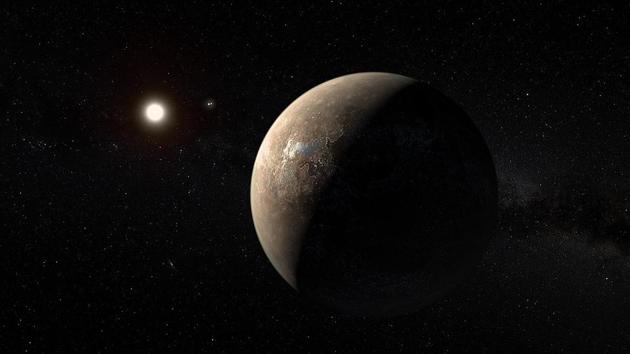
The planet could possess liquid water and even conditions favourable for life. The findings in this regard were published in the Astronomy and Astrophysics journal.
Though the scientists could not directly observe the planet, monitoring changes in the wavelength of light emissions from the star helped them deduce the presence of another body in its planetary system.
“The discovery of the planet around Ross 128 is undoubtedly an important discovery. But the star’s mass is quite small, and it is situated very close to the parent star,” said Manasvi Lingam, a scientist at the Harvard-Smithsonian Centre for Astrophysics. “Both these factors have been shown to have detrimental effects on the potential habitability of planets, although a lot of factors still remain unknown at this stage.”
Planets that orbit around stars other than the sun are called exoplanets. Though the closest exoplanet to the sun is the Proxima Centauri b (located 4.22 light years away), NASA scientists concluded in August that it held scant likelihood of habitability due to harmful radiation emitted by the host star.
NASA announced the discovery of seven earth-sized planets, three of which are potentially habitable, earlier this year. The declaration pertaining to the TRAPPIST-1 star system, located about 39 light years away, threw everybody from scientists to planet hunters and the general public into a tizzy.
Unlike this star system, there is only one planet encircling the Ross 128.
Till now, about two dozen planets have shown promise of harbouring life. The Kepler-452b, considered a potential “Earth twin” because it lies in a habitable zone, measures about 1.5 times the diameter of Earth and orbits a star (Kepler-452) similar to the sun.
The closest candidate is Proxima b, which circles the red dwarf star Proxima Centauri, at a distance of four light years. Even so, it would take NASA’s New Horizons probe about 54,400 years to reach the star system.
Liquid water is necessary for planets to support any form of life. There is a band around stars that create conditions conducive for hosting liquid water on a planet’s surface, which is sometimes referred to as the habitable or “Goldilocks” zone.


