
 E-Paper



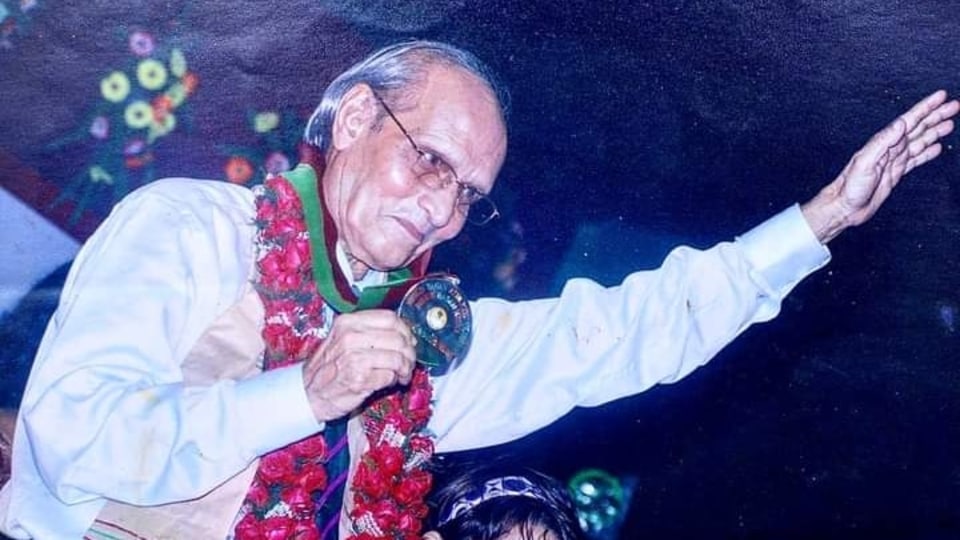
Samar Banerjee, India football captain in 1956 Olympics, dead
The forward was a decorated player for Mohun Bagan


Samar Banerjee, the former India football captain, who led the team to a fourth-place finish in the 1956 Melbourne Olympics—the country’s best performance in the quadrennial showpiece—died at a city hospital early on Saturday. He was 92.
Tulsidas Balaram is the only player living from that squad.
Banerjee, Badru to everyone on the Kolkata Maidan where the tradition of referring to people by their pet names endures, had Covid-19, high blood pressure and Alzheimer’s.
A forward, Banerjee was named captain for the 1956 Games but played only in the 4-2 win against Australia where Neville d’Souza scored a hat-trick and J Krishnaswamy (Kittu) scored the other goal. He was injured for the games against Yugoslavia and the third-place play-off against Bulgaria. India lost 1-4 to Yugoslavia and 0-3 to Bulgaria.
Banerjee played for Mohun Bagan from 1952 to 1960, being named captain in 1958. According to a media release from AIFF, he scored 78 goals for the green-and-maroons. He won the Calcutta League five times, the IFA Shield thrice, three Durand Cups, including the first time the club won the coveted trophy in 1953 with Banerjee scoring in the semi-final and final, and the Rovers Cup once. He was given the Mohun Bagan Ratna, the club’s highest award, in 2009.
Born on January 30, 1930, Banerjee was among many from Kolkata’s suburbs to make the grade as a footballer. He started with local club Bally Protiva before moving to the team of the Bengal Nagpur Railways (BNR) and to Mohun Bagan. Banerjee was part of the Mohun Bagan team that won the local double, the league and the IFA Shield, for the first time in 1954. He won the Santosh Trophy as a player in 1953 and 1956, when he was Bengal captain, and as coach in 1962.
State chief minister Mamata Banerjee mourned Banerjee’s death. He is survived by his daughter-in-law.


