
 E-Paper



Table tennis taps into AI: India star Sharath ups the numbers game for Olympics
Days prior to that in the national camp for the Tokyo-bound paddlers Sharath, Manika Batra and Sutirtha Mukherjee in Sonepat, Sharath had his training sessions recorded.

 Prefer HTon Google


Days before his departure to Tokyo, India’s seasoned table tennis player Sharath Kamal was poring through three different excel files comprising almost 20 spreadsheets. Each of those spreadsheets had numbers galore—on Sharath’s head-to-head record with every possible opponent at the Tokyo Olympics; results of those opponents’ matches in the last one year; how many of them were won after taking the first set; how many after sealing the first two; how many when the game went the distance.
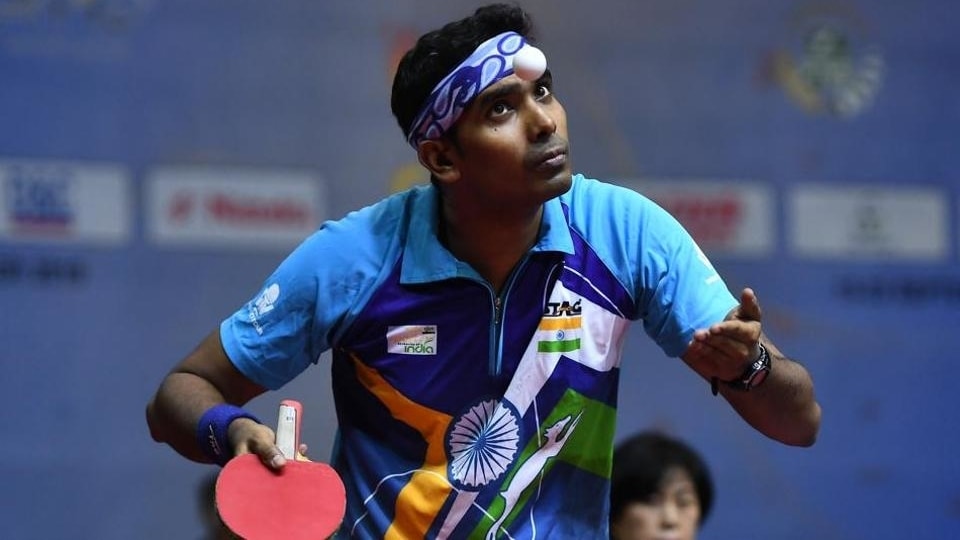
Days prior to that in the national camp for the Tokyo-bound paddlers Sharath, Manika Batra and Sutirtha Mukherjee in Sonepat, Sharath had his training sessions recorded. After each session, he had at his disposal Artificial Intelligence (AI)-enabled data analysis of his practice; real-time data analytics was in use for the first time at a table tennis national camp, with Stupa Sports Analytics tying up with the Table Tennis Federation of India (TTFI) for it.
Stupa—an Indian start-up co-founded by Megha Gambhir and her husband, table tennis coach Deepak Malik—will also provide opponent-specific data and match play analysis of the opponents mixed doubles pair Sharath and Batra is likely to run into at the Games.
While constant technological advancement is the norm in almost every sport in the modern world, real-time data analytics is still in its adolescence in table tennis, especially in India. “It is only in the last 2-3 years that it has gained attention globally,” Malik, a former national-level paddler, said. “I have seen specialised data analysts travel with the Japanese and Chinese teams for major tournaments. Now, players and coaches around the world are recognising the importance of data analytics in our sport.”
Sharath recalled his brother, Rajat, doubling up as video analyst for him around a decade ago. “Back then, it wasn’t that advanced. He had to personally sit down and break down the videos and crunch the numbers,” said the 39-year-old, preparing for his fifth Olympics.
In Sonepat, AI took over. All that the players had to do was download the Stupa app on their mobile phones, set up their mobile camera on a tripod, place it on a certain angle to the table and hit the video record button during training or practice matches. A wide range of instant data and video analysis would then pop up on the mobile screen: shot speed trends, heat map of the ball cluster, stroke analysis, stroke placement analysis, rally analysis, serve analysis, receive analysis and video highlights, among other things.
“I did a lot of practice analysis in the camp, where I could get details like “how I’m hitting, this is how fast I’m hitting, this is where my balls are landing, this is when I'm missing a particular shot,” etc.,” Sharath said. He is in touch with Malik for data analysis of him and Batra as doubles partners.
The players can also pre-set specific drills in the app before a training session to work on a particular aspect of their game. “Let’s say you want to work on your weaker forehand side,” Gambhir, a seasoned technologist, said. “In the app, you can decide on a specific movement drill required to improve that area. While you’re training, the app gives you the trends and results of how your movement was: were you too slow moving from the backhand to forehand side? Were you missing too many balls moving from backhand to forehand? The speed you were maintaining on the forehand side.”
A couple of months ago, Stupa tied up with ITTF to provide performance analytics inputs to its 226 members. The pre-Olympic camp was the first in which they offered their tools in India. “We recently tied up with TTFI as their official analytics partner and began working with the players in the Olympic camp. We’ve received great support and interest from TTFI,” Gambhir said.
Earlier this year at his training base in Chennai, G Sathiyan—India’s fourth paddler in Tokyo who wasn’t part of the recent camp—also experimented going more high-tech, using the ball-tracking software to study some of his practice sessions before the nationals in February.
Sharath felt while AI-enabled data analysis was the “next big thing” with regards to use of technology in the sport, it can only be optimally utilised with a team of professionals studying it and relaying it to the players.
“Let’s say, Sharath has lost four times in a set from the backhand side. For me, I need to get into more details—what exactly happened those four times, was it the same balls, what happened before that missed shot, how did I get into that situation?” Sharath said. “Unlike in cricket, which has one shot per event, in table tennis every shot is connected to the earlier shot after the serve. It has a trickle-down effect. And for that you need a human touch.”
For all the numbers and excel-sheets being fed to him, Sharath will also revert to old-school pre-match analysis in Tokyo—sitting and watching his opponents’ matches.
“I can have all the data with me, but I also know what they’re going to do in the crunch, pressure moments. That’s something I try and read by watching the matches.
“When you don’t have data, you’re more or less going with your gut feel.”


