
 E-Paper



IIT graduate explains why he joined AI startup instead of a secure finance job: 'I'm in an uncomfortable seat but happy’
The 25-year-old said he was initially drawn to quant roles because of the high salaries and prestige.

 Prefer HTon Google


Varun Goyal, a 25-year-old Indian-origin engineer, has revealed why he chose to leave a secure, high-paying career in quantitative trading to join an artificial intelligence startup. Goyal, who graduated from the Indian Institute of Technology (IIT) Kanpur before moving to the US for his master’s in computer science at the University of Illinois Urbana-Champaign, spoke to Business Insider about his unconventional career choice.
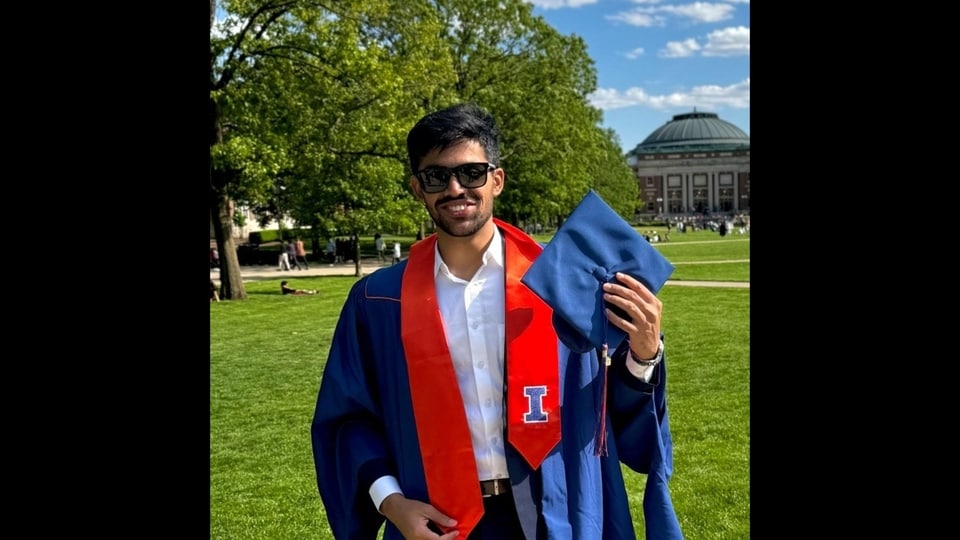
The 25-year-old said he was initially drawn to quant roles because of the high salaries and prestige. “Blinded by the initial high salary and prestige, I joined a firm as a quantitative strategist for the summer,” he recalled.
However, after speaking with industry professionals, his perspective shifted. He explained that the collaborative culture of startups appealed to him more than the competitive, siloed structure at large quant firms.
“At bigger firms, teams often compete, and you can't really discuss your work outside your group. As an extrovert who thrives in a collaborative environment, that felt restrictive. The exit options in quant felt more constrained, too,” Goyal told Business Insider.
“I applied for both industries and had a few quant interviews, but I decided to join an AI startup. Quant reminded me of a single-lane speed track: fast, sharp, but narrow, while AI felt more like a racing track with a lot of turns and curves,” he said.
(Also Read: Amazon analyst Sooraj Kumar reveals how he cracked intense ‘loop’ interview)
Difference between quant and AI roles
Goyal acknowledged that joining an AI startup meant longer hours and lower base pay, but he said the opportunities for learning outweighed the drawbacks. “In AI startups, the base salary still provides a good standard of living, but the real upside comes from equity. The opportunity to learn is everywhere in an AI startup,” he said.
“The biggest surprise at the startup this past year has been how much I'm learning outside coding. I'm learning to hire, adapt, lead the product direction, and sell. These skills make me more than just an engineer. I'm trying to jump on customer meetings, understand their needs, contribute to hiring decisions, and shadow and learn from the founders where I can,” he explained.
Moreover, according to Goyal, the fast-moving AI sector also brought intensity. “If we don’t launch the features and tools in a new research paper within a few days, we’ve basically lost that one to the competition,” he noted.
“In AI, I'm in an uncomfortable seat every few months trying to keep up with the market pace, but I'm happy with my decision. I've been pushed to grow so much,” he said.
Why does he see AI as the future?
For Goyal, the decision was about long-term impact. He explained that quant narrows your skills down to a specialty very quickly, and if you want to expand outside that, it's hard. Whereas in AI, he believes “we’re like the builders of the machines in the Industrial Revolution, laying the foundations for how the world will actually use AI.”
“There’s a lot left to be built, and this is the opportunity the brightest graduating minds should take,” he said.


