
 E-Paper



3 killed as Taliban face first protests; airlifts ramped up
The deaths mar the Taliban’s efforts to consolidate Islamist rule and their promises of peace following their sweep into the capital. They have said they will not take revenge against old enemies and will respect the rights of women within the framework of Islamic law.

 Prefer HTon Google


At least three people were killed in anti-Taliban protests in the Afghan city of Jalalabad on Wednesday, witnesses said, as the militant group moved to create a government and Western countries ramped up evacuations from a chaotic Kabul airport.
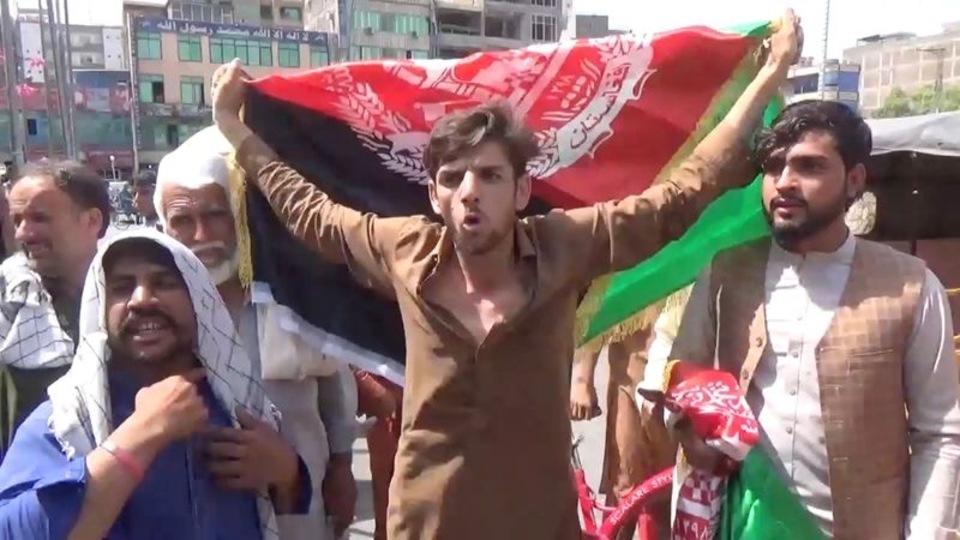
The deaths mar the Taliban’s efforts to consolidate Islamist rule and their promises of peace following their sweep into the capital. They have said they will not take revenge against old enemies and will respect the rights of women within the framework of Islamic law.
The witnesses said the deaths in Jalalabad took place when local residents tried to install Afghanistan’s national flag at a square in the city, some 150km from the capital on the main road to Pakistan.
There were also more than a dozen people injured after Taliban militants opened fire on protesters in the eastern city, two witnesses and a former police official told Reuters.
Video footage also showed the Taliban firing into the air and attacking people with batons to disperse the crowd. Babrak Amirzada, a reporter for a local news agency, said he and a TV camera aman from another agency were beaten up by the Taliban as they tried to cover the unrest. Taliban spokesmen were not immediately reachable for comment.
The Jalalabad incident also had a domino effect, and protests soon spread to other regions, reports said. Hundreds took to the streets in Khost province in the east, according to Al-Jazeera.
It was a rare resistance to their rule. In the days since the Taliban seized Kabul on Sunday, the militants faced one other protest by a few women in the capital.
Meanwhile, videos from the Panjshir Valley north of Kabul, a stronghold of the Northern Alliance militias that allied with the US against the Taliban in 2001, appear to show potential opposition figures gathering there. It is the only province that hasn’t yet fallen to the Taliban.
Those figures include members of the deposed government — vice-president Amrullah Saleh, who asserted on Twitter that he is the country’s rightful president, and defence minister General Bismillah Mohammadi — as well as Ahmad Massoud, the son of the slain Northern Alliance leader Ahmad Shah Massoud. It’s unclear if they intend to challenge the Taliban, which seized most of the country in a matter of days last week.
The Taliban, meanwhile, pressed ahead with their efforts to form an “inclusive, Islamic government”. They have been holding talks with former president Hamid Karzai and Abdullah Abdullah, a senior official in the ousted government. Mohammad Yusof Saha, a spokesperson for Karzai, said preliminary meetings with Taliban officials would facilitate eventual negotiations with Mullah Abdul Ghani Baradar, the top Taliban political leader, who returned to the country this week.
Chaotic evacuations, chaos outside
Amid the uncertainty, thousands of Afghans have tried to flee the country in recent days, and the US and its allies have struggled to manage a chaotic withdrawal from the country.
Taliban commanders and soldiers fired into the air on Wednesday to disperse the crowds outside the airport, a Taliban official said. “We have no intention to injure anyone,” he said.
About 5,000 diplomats, security staff, aid workers and Afghans have been evacuated from Kabul in the last 24 hours, a Western official said on Wednesday.
The evacuations by military flights will continue around the clock, he said, adding that clearing the chaos outside the airport was a challenge. “It’s absolutely hectic and chaos out there.” the official said.
US troops guarding the evacuation effort from Afghanistan at Kabul airport also fired some shots in the air overnight to control the crowds, but there were no indications of casualties or injuries, Pentagon spokesperson John Kirby said on Wednesday at a press briefing.
Symbolic return
One of the Taliban’s leaders and co-founders, Mullah Abdul Ghani Baradar, returned to Afghanistan for the first time in more than 10 years and a Taliban official said the leaders would show themselves to the world, unlike in the past when they lived in secret.
“Slowly, gradually, the world will see all our leaders,” the senior Taliban official said.
The Taliban’s first news briefing since their return to Kabul suggested they would impose their laws more softly than during their harsh 1996-2001 rule. Women would be allowed to work and study and “will be very active in society but within the framework of Islam”, Zabihullah Mujahid, the Taliban’s main spokesperson, said.
Many Afghans are afraid. Many said they could only wait and see.
“My family lived under the Taliban and maybe they really want to change or have changed but only time will tell,” said Ferishta Karimi, who runs a tailoring shop for women.
The Taliban have promised to maintain security, but residents say groups of armed men have been going door to door inquiring about Afghans who worked with the Americans or the deposed government. It’s unclear if the gunmen are Taliban or criminals posing as militants.
On Wednesday, the United Arab Emirates also acknowledged that President Ashraf Ghani, who fled the country as the Taliban closed in last week, and his family were in the Gulf country. “The UAE has welcomed President Ashraf Ghani and his family into the country on humanitarian grounds,” it said.


