E-Paper



A 2020 study of 157 treated curves in West Virginia, Pennsylvania and Kentucky found that wet-road crashes fell 83% and total crashes fell 57%
An FHWA study of 157 curves found HFST cut wet-road crashes 83% and total crashes 57%, improving safety where curves, rain and geometry raise friction demands.

 Prefer HTon Google


A road surface can look ordinary to drivers, but its grip on tires can change when rain begins. On sharp curves, that loss of grip can increase the risk of a roadway-departure crash. A 2020 Federal Highway Administration (FHWA) study examined what happened when transportation agencies addressed that problem with high-friction surface treatment (HFST).

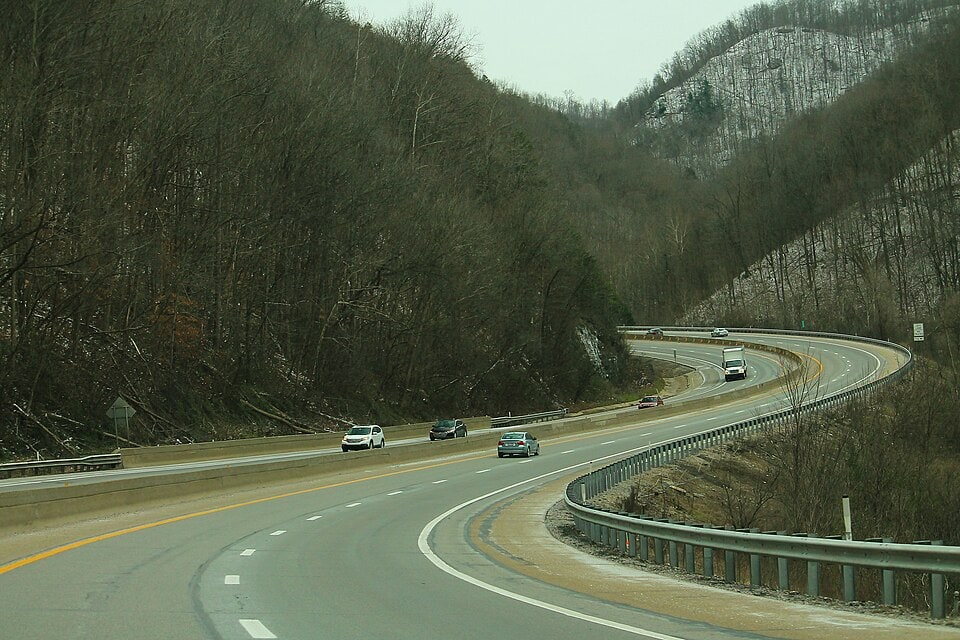
Researchers analyzed 157 treated curves across West Virginia, Pennsylvania, and Kentucky and found that wet-road crashes fell by an estimated 83%, while total crashes declined by 57%. The reductions were statistically significant. The findings strengthen the case for HFST as a targeted safety measure at curves where wet pavement, speed and road geometry raise friction demands.
Why curves can become dangerous in the rain
A vehicle negotiating a curve relies on the pavement to provide enough friction for its tires to maintain their path. When the surface becomes wet, available friction can fall, leaving drivers with less margin for error. HFST is designed specifically for such locations. According to FHWA, the treatment uses high-quality aggregate bonded to the pavement with a polymer resin binder. Calcined bauxite is commonly used because it provides high and durable friction. Rather than being intended for entire highway corridors, HFST is generally used at specific locations such as curves, ramps, and intersections where friction-related crashes are concentrated.
Deep Dive

The 2020 FHWA study was especially significant because it used an empirical Bayes before-and-after methodology, a statistical approach intended to account for factors such as regression to the mean and changes in traffic conditions. Across the three states, the treated sites had an average annual traffic volume of roughly 6,000 to 8,000 vehicles, depending on the state.
Wet-road crashes showed the biggest improvement
The strongest result was in the type of crash HFST is designed to prevent. FHWA reported an 83% reduction in wet-road crashes at the combined curve sites. Roadway-departure crashes declined by 72%, injury crashes by 48%, and crashes involving head-on or sideswipe collisions with vehicles traveling in the opposite direction by 31%. Total crashes fell by 57%. The underlying numbers show why the researchers considered the findings significant. Across the three states, the analysis recorded 329 crashes after treatment, compared with an empirical-Bayes estimate of about 768 crashes that would have been expected without HFST. For wet-road crashes, 82 occurred after treatment against an estimated 496 expected without it.
The crash modification factor for wet-road crashes was 0.168, meaning the post-treatment crash rate was about 16.8% of the expected level without treatment. That corresponds to an approximately 83% reduction . A research paper published in Transportation Research Record reached a similar conclusion, finding substantial and statistically significant safety benefits for HFST at curves, particularly for wet-road and roadway-departure crashes. The researchers also found that the treatment's effectiveness was related to the amount of friction improvement, traffic volume, and the number of crashes expected before treatment.
From a pavement upgrade to a safety strategy
In addition, researchers looked at whether HFST could preserve its friction performance after installation. In another FHWA study conducted concurrently, friction was measured both prior to and following the application of the HFST at 99 sites in Georgia and Pennsylvania. The study found that HFST significantly improved friction and maintained high friction levels even under heavy traffic over time. This ability to sustain high friction values is crucial since HFST is applied only in specific locations.
More recent research has also examined the treatment. A 2024 study in Accident Analysis & Prevention analyzed HFST on horizontal curves in Pennsylvania using propensity-score matching combined with an empirical Bayes before-and-after approach. It found statistically significant reductions across the crash types and severities examined, adding further evidence to the earlier FHWA findings.
Still, the 83% figure should not be treated as a guarantee that every treated curve will see the same reduction. Crash rates depend on several factors, including traffic levels, weather, driver behavior, and roadway type. However, the FHWA research itself showed that the level of safety gain was site-specific. Rather than rebuilding every dangerous site, highway authorities can use HFST where extra tire grip is most critical.