
 E-Paper



Are east African governments colluding to stifle dissent?
A raft of recent cases raises a disturbing suspicion


 Prefer HTon Google


When Agather Atuhaire, a Ugandan lawyer and journalist, was arrested in Tanzania in May, she says she was held incommunicado, tortured and raped. Three days later she was dumped at the border between the two countries. Her supposed crime? Attending the trial of Tundu Lissu, a Tanzanian opposition leader charged with treason. A Kenyan activist who went with her was also abducted and tortured. Ms Atuhaire says their tormentors warned them never to return and “interfere” in Tanzanian politics again. Tanzania’s police denied mistreating them. After the incident William Ruto, Kenya’s president, apologised to Tanzania for “anything that Kenyans have done that is not right”.
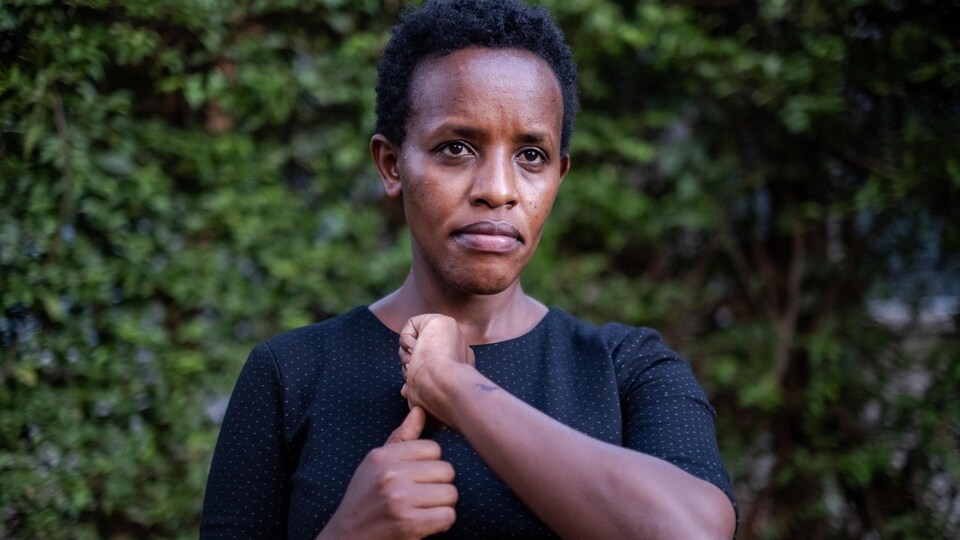
Repression is not uncommon in Tanzania, which has been run by the same party since independence in 1961. With elections due in October, the regime headed by Samia Suluhu Hassan is in no rush to allow her jailed opponent, whose party has been barred from competing, more publicity. (On August 18th a judge banned live coverage of Mr Lissu’s latest court appearance.) Yet the alleged brutal treatment of Ms Atuhaire and her colleague and the Kenyan government’s response raises the disturbing suspicion that security forces in Kenya, Tanzania and Uganda may be colluding to crush dissent.
It is just one of several recent cases. The most prominent example is Kizza Besigye, a Ugandan opposition leader who was kidnapped on a visit to Kenya in November and now stands accused of plotting to overthrow Uganda’s government by force. Because Mr Besigye was unlawfully rendered to a military jail in Uganda, “there has to have been a high level of co-ordination” between the two countries’ security agencies, says Roland Ebole of Amnesty International, a rights group. Kenya’s government has since admitted that it co-operated with the Ugandan authorities, saying Mr Besigye’s treatment may have been “different” had he claimed asylum.
Other cases suggest collusion at a lower level. Mwabili Mwagodi, a Kenyan critic of Mr Ruto, whose rule is increasingly authoritarian, was seized in July by unknown assailants while working at a hotel in Tanzania. He was handed over to the Kenyan authorities, battered and bruised, several days later, and admitted to hospital.
In January Maria Sarungi Tsehai, a Tanzanian democracy activist, was kidnapped by masked men on the streets of Nairobi, Kenya’s capital, which until recently was a relatively safe haven for dissidents. She is sure at least one of her abductors was Tanzanian. “Either Ruto doesn’t control the security services, or he is assenting to it,” says a former American official. “Neither scenario is remotely reassuring.” Mr Ruto and the Kenyan government have not commented on the allegations.
Even where there is no evidence of collusion, leaders scratch each others’ backs. Ms Atuhaire notes that although the Ugandan authorities may not have asked Tanzania to arrest her and her Kenyan colleague, none objected to their treatment.
Jeffrey Smith, founder of Vanguard Africa, a pro-democracy outfit in Washington, sees a “convergence of authoritarian tactics across east Africa”. Mr Ruto is said to have a personal bond with Yoweri Museveni, Uganda’s president since 1986. The Kenyan leader’s harsh response to recent anti-government protests feels familiar to Ugandans. Mr Museveni is “an example and encouragement” to his regional peers, says David Lewis Rubongoya of the National Unity Platform, a Ugandan opposition party. The Ugandan president in turn may have been influenced by the ruling party in Tanzania when he lived there, first as a student and later as a rebel leader, argues Erick Kabendera, an exiled Tanzanian journalist.
Why might these governments be tempted to team up against their opponents? For one, they share a common predicament. Though only Kenya has recently had mass protests, leaders in Uganda and Tanzania are also unpopular with their young and increasingly restive voters. Mrs Samia, who took office after the death of her predecessor in 2021, will face them for the first time in October. Mr Museveni, who is 80, is planning to run again in January. But his authority is beginning to slip. Some observers reckon that fear of an uprising is what prompted the regime to go so hard after Mr Besigye.
Meanwhile the international order has grown more permissive. Last month Marco Rubio, secretary of state in the Trump administration, told American officials to avoid opining on the credibility of elections overseas. Diplomats who might once have spoken out when regimes threaten or even kill opponents are increasingly staying mum. “A single statement from Washington can make people here very fearful,” says Godwin Toko, a lawyer in Uganda. “But now you don’t have any.”
Britain’s foreign office wants its diplomats to spend less time lecturing African governments about democracy and human rights. A European ambassador in Nairobi says that “three generations after independence, I think we’re done telling them what to do.” Donors are slashing funds for election monitors and civil-society groups. Chapter Four, a human-rights group in Uganda, says its budget has halved since the Trump administration closed USAID.
Western efforts to boost democracy in Africa were never consistent or faultless. Still, Western diplomats sometimes used to push for tweaks to draconian laws or help endangered dissidents get to safety. “The West was actually a strong restraining hand on the government here,” acknowledges Andrew Mwenda, a Ugandan journalist with ties to the government.
Now, though, authoritarians across the continent are discovering just how much they can get away with. “I fear it is going to get worse,” says Marion Kirabo, a lawyer who plans to stand for local government in Uganda next year. “We are basically on our own now.”
Sign up to the Analysing Africa, a weekly newsletter that keeps you in the loop about the world’s youngest—and least understood—continent.


