
 E-Paper



Bangladesh votes yes in referendum to adopt July charter: What now? Explained
Bangladesh’s interim leader Muhammad Yunus, in the run up to the general elections, urged people to say yes to adopt the July charter.

 Prefer HTon Google


The Thursday's election for Bangladesh delivered a massive mandate for Tarique Rahman's BNP. The voters also endorsed sweeping democratic reforms in a national referendum.
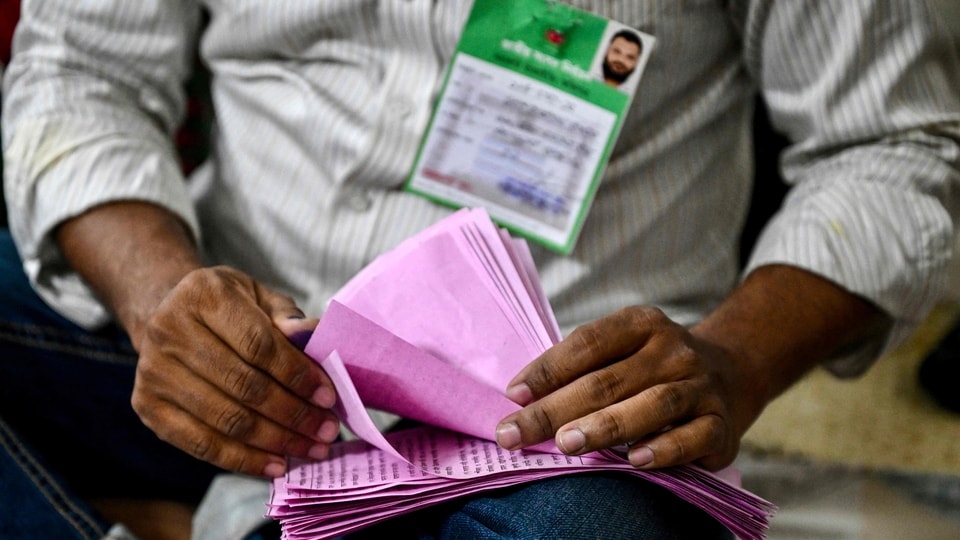
During the February 12 elections, along with voting for the next prime minister, the voters also said yes to adopting the July National Charter in the national referendum held alongside the general elections.
According to Bangladesh’s election commission, the referendum saw voter turnout of 60.26 percent and the “yes” vote won a clear majority.
Akhtar Ahmed, senior secretary of Bangladesh’s election commission said on Friday while talking to the reporters that according to official figures, 4,80,74,429 people voted “yes” in the referendum while 2,25,65,627 voters went for “no”
As per the official figures, 4,80,74,429 votes were cast in favour of “yes”, while 2,25,65,627 voters chose “no”, Election Commission (EC) Senior Secretary Akhtar Ahmed, said today while talking to reporters at the EC.
Track live updates of Bangladesh poll results here.
What is Bangladesh’ national referendum and what changes?
The national referendum was conducted in Bangladesh to decide whether the July National Charter 2025, which is a proposed constitutional reform package, should be adopted or not.
The July Charter was formed after the ouster of Sheikh Hasina as Bangladesh’s PM following uproar, protests, and violent clashes in 2024. It lays out several reforms for good governance, democracy, and social justice through institutional reforms, so as to avoid "recurrence of authoritarian and fascist rule", reported news agency Reuters.
Also read: PM Modi dials Tarique Rahman after BNP's Bangladesh win, reaffirms commitment to peace
Bangladesh’s interim leader Muhammad Yunus, in the run up to the general elections, urged people to say yes to adopt the charter as he said that public approval is necessary to implement key reforms.
The people of Bangladesh on Thursday voted for major reforms proposed in the charter, including a limit to the terms of prime ministers, an upper house of the parliament should be created, presidential powers should be strengthened, and more independence of the judiciary.
Now that the people have voted ‘yes’ for the adoption of the July charter, a Constitutional Reform Council to execute the reforms within 180 working days of its first session.
What are the key reforms proposed in the charter
Among the key reforms proposed in the July charter, which was named after the July 2024 uprising that led to the ouster of Sheikh Hasina, is creation of an upper house with 100 seats, which will be allocated in accordance with each party’s national voter share.
It also proposes putting a limit to the number of terms a prime minister can have, more representation of women in the parliament, election of opposition leaders as deputy speaker and parliamentary committee chairs, enhanced powers of the President, among others.
(With inputs from AFP, Reuters)


