
 E-Paper



China defends Canadian’s death sentence, Ottawa issues travel advisory as tension deepens
A Chinese court in the northeastern city of Dalian on Monday gave the death penalty to Robert Lloyd Schellenberg for smuggling drugs.


China on Tuesday defended the death sentence handed out to a Canadian for smuggling drugs and warned Canada’s Prime Minister Justin Trudeau against making “irresponsible” remarks about Chinese law.
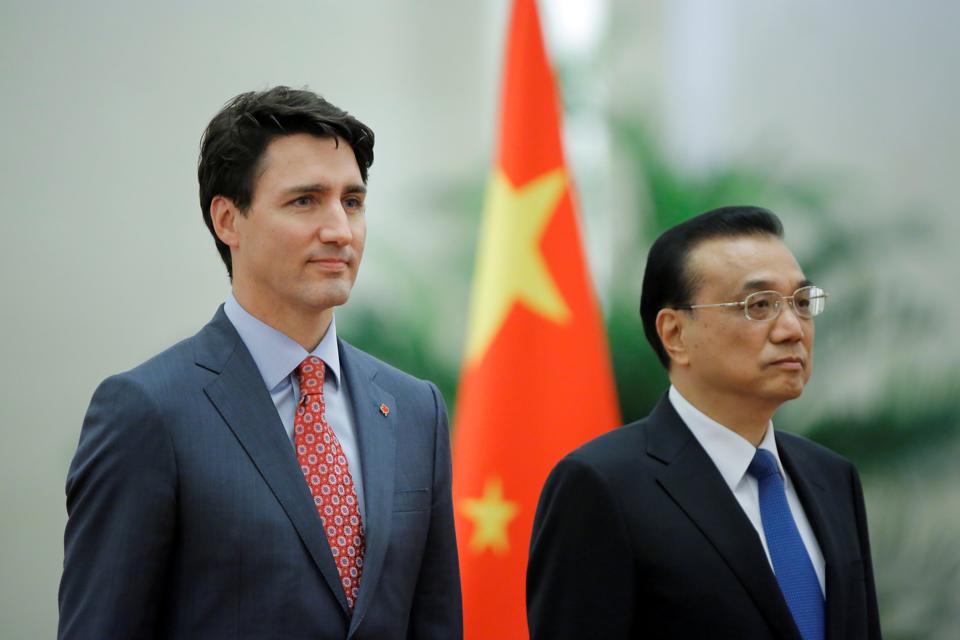
A Chinese court in the northeastern city of Dalian on Monday gave the death penalty to Robert Lloyd Schellenberg for smuggling drugs, aggravating tensions between Beijing and Ottawa who are locked in a dispute over Canada’s arrest of telecom giant Huawei’s chief financial officer, Meng Wanzhou.
The evidence against Schellenberg is “…compelling and ample, and the criminal charges are well founded,” the court said.
Reacting to the death sentence, Trudeau said: “China chose to arbitrarily apply the death penalty” on Schellenberg.
Late on Monday, Canada’s foreign ministry updated its travel advisory for China to warn citizens about “the risk of arbitrary enforcement of local laws.”
It added: “We continue to advise all Canadians travelling to China to exercise a high degree of caution.”
Schellenberg’s aunt, Lauri Nelson-Jones, was quoted by foreign news agencies as saying the family’s worst fears had been confirmed.
“Our thoughts are with Robert at this time. It is rather unimaginable what he must be feeling and thinking,” she said in a statement, adding: “It is a horrific, unfortunate, heartbreaking situation.”
The Chinese foreign ministry on Tuesday, in turn, strongly criticised Trudeau’s remarks, calling it “irresponsible”.
“I think this is wrong. I don’t know if the relevant person has carefully read the notice issued by the Dalian’s Intermediate People’s Court and Chinese law,” foreign ministry spokesperson, Hua Chunying said at the regular ministry briefing.
Hua added that there was enough evidence against the 36-year-old Canadian who was part of an international syndicate and smuggled 222 kg of methamphetamine into China.
“Drugs smuggling is a grave crime in other countries of the world... and it is the same in China. All people are equal before the law,” she said.
“The relevant remarks made by the Canadian side are full of double standard and lack the spirit of rule of law. We are highly dissatisfied with the remarks and we urge the Canadian side to respect China’s rule of law and sovereignty and stop making such kind of irresponsible remarks,” Hua added.
Schellenberg was detained in China in 2014 and sentenced to 15 years in prison in 2016 for drug peddling in China. However, the court deemed the quantum of punishment for Schellenberg was lenient given the nature of his crime and ordered a retrial of the case.
Schellenberg’s case was the most recent in a series of incidents between Canada and Beijing, which began with Meng’s arrest at the request of the US.
Washington had sought her extradition late last year for fraud and violating the US sanctions on Iran.
The tension between the two countries was heightened when two Canadian citizens, Michael Kovrig and Michael Spavor, were arrested in China, suspected of activities that Beijing said put the country’s national security at risk.


