E-Paper


In 1904, Newfoundland released 4 moose for hunting; by the 1950s, numbers reached 150,000–200,000, leaving swathes of treeless meadows in Gros Morne
Moose introduced to Newfoundland in 1904 multiplied rapidly, with heavy browsing now hindering forest regeneration and creating treeless meadows in Gros Morne.

 Prefer HTon Google


A century ago, moose were not part of the landscape of Newfoundland. Today, they are so deeply woven into the island’s identity that it can be easy to forget they arrived there through deliberate human intervention. The animals were brought in with hopes of creating a new big-game hunting opportunity and supporting the island’s developing interior economy.

According to Newfoundland and Labrador’s 2022-2026 Moose Management Plan, four moose were brought from New Brunswick and released near Howley in western Newfoundland in 1904. The animals found abundant food and few natural checks, allowing their numbers to rise rapidly. The provincial plan estimates that the island’s population may have reached 150,000 by the late 1950s.
Four animals become a population
The 1904 introduction was not Newfoundland’s first attempt to establish moose. Two animals from Nova Scotia had been released near Gander Bay in 1878, although the fate and contribution of that population remain uncertain. The later introduction involved two bulls and two cows from New Brunswick. The animals were released near Howley in western Newfoundland, close to what is now Gros Morne National Park. Historical records indicate that seven moose had initially been captured for the journey, but three died before the surviving four reached Newfoundland.
Once established, the moose encountered conditions that were unusually favorable for population growth. Newfoundland had extensive forests providing food, while there were no other large herbivores competing for the same resources. Wolves, the principal predator capable of controlling moose numbers, were also disappearing, and the Newfoundland wolf was extinct by around 1930. This combination proved to be advantageous as moose spread across the island and their numbers climbed rapidly. A 2004 paper in Alces described the introduction as highly successful and linked the animals’ expansion to the availability of new habitat and the loss of wolves.
When abundance began changing the forest
For years, the growing moose population was seen as a success story. The moose provided opportunities for hunters and served as a vital food source. However, the increase in their numbers posed challenges to the forestry of Newfoundland. That is because moose are heavy browsers that feed on leaves and other plants in summer.
As mentioned in Parks Canada’s account of moose management in Gros Morne National Park, a single moose can consume roughly 20 kilograms of twigs in a day. The consequences became particularly visible in Gros Morne National Park after it was established in 1973, when hunting was prohibited within its boundaries. The local moose population climbed to about 7,800 animals by 1998. At those densities, repeated browsing prevented young trees from growing into the next generation of forest.
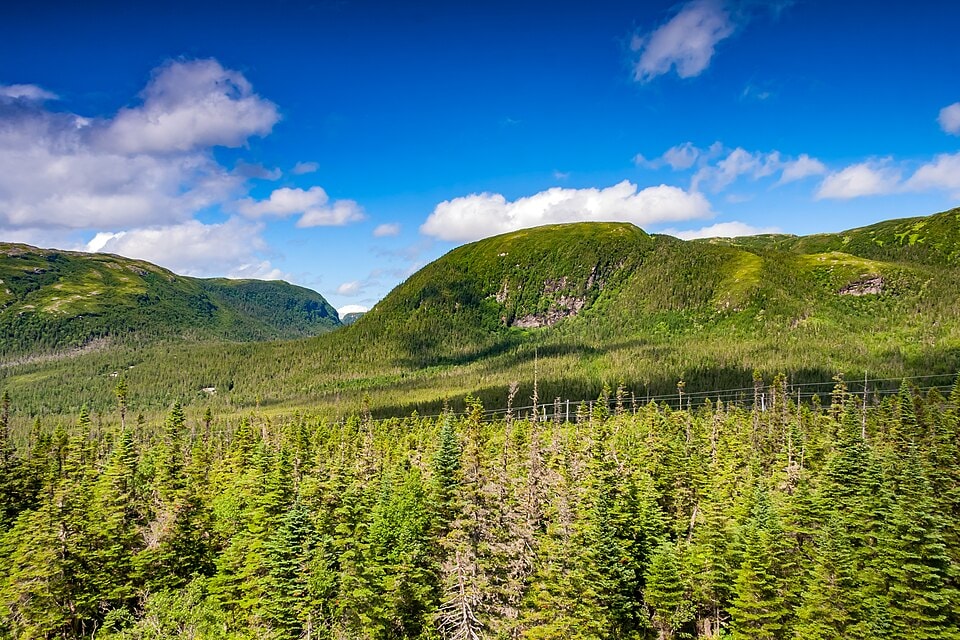
More than 65 square kilometers of once-healthy forest in Gros Morne has been transformed into treeless meadows and remnants of forest stands. About 75% of disturbed forest stands no longer contain enough young trees to replace mature trees as they die. The changes extend beyond trees. The loss of forest structure has affected plants and wildlife that depend on it. Forest-floor plant diversity has declined by 25% in monitoring plots, while the abundance of preferred moose food plants has fallen by 72%.
A lesson in unintended consequences
The Newfoundland case study demonstrates that the true ecological impacts of an invasive species introduction can remain hidden for decades. What began as a hunting initiative became a notable North American example of an introduced herbivore reshaping its environment.
A study in Forest Ecology and Management found that heavy moose browsing can interfere with forest regeneration in Newfoundland, particularly after disturbances create openings where young trees would normally establish. Under sustained browsing pressure, balsam fir and other woody plants can struggle to progress toward a mature forest. The situation does not mean moose are simply a problem to be eliminated. They remain an important part of Newfoundland’s culture, economy, and recreational hunting tradition. The challenge is keeping their numbers at levels the forests can support.
According to the provincial plan, widespread over-browsing, combined with localized over-hunting, caused moose numbers to decline throughout the 1960s, with the population possibly falling below 50,000 by the early 1970s. An area-based quota system introduced in 1973 helped halt the decline, after which moose abundance grew rapidly for about 25 years.
By the 1990s, the population had again surpassed 150,000, marking a second population peak after the first occurred in the late 1950s. Since then, management has focused on keeping numbers in balance with available habitat and other environmental considerations. The island's moose population was estimated at 110,000 in 2022, following a relatively stable period from 2012 to 2022.