E-Paper



In 1969, Panama stocked 60 to 100 peacock bass for sport fishing; after they escaped into Gatun Lake, 60% of native fish species were found wiped out
In 1969, peacock bass were stocked for sport fishing in Panama. They escaped into Gatun Lake, and a 2017 study found native fish still hadn’t recovered.

 Prefer HTon Google


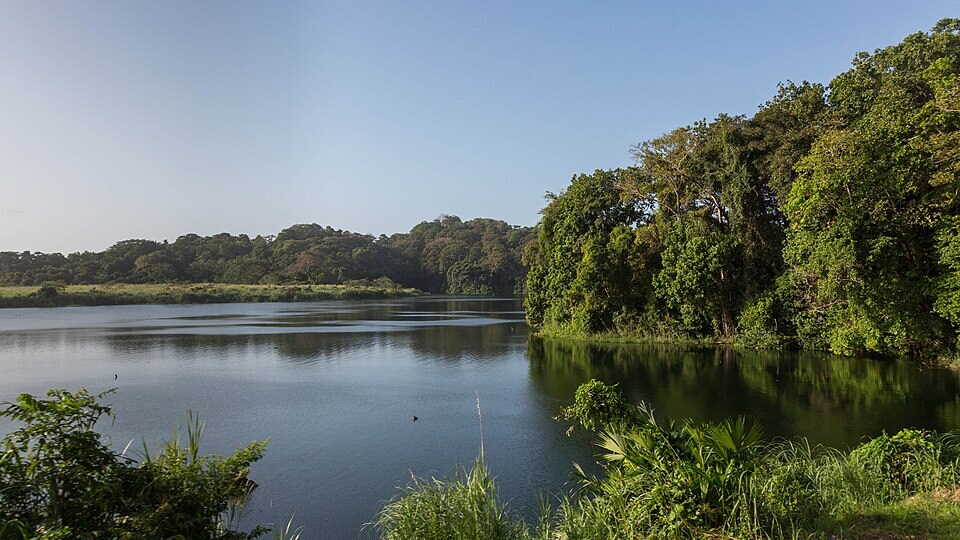
It all started with about 100 fish and a plan for a better weekend of fishing. Decades on scientists are still tallying the damage. In 1969, between 60 and 100 peacock bass from Buga, Colombia, were introduced into a pond in Panama. The objective was sport fishing. But some of the fish escaped. According to a Smithsonian Institution news release, by the early 1970s, they colonized Gatun Lake. The lake is the main passage of the Panama Canal. Years later, scientists found that its native fish had not yet recovered.

A prized game fish becomes a predator
Peacock bass, scientifically known as Cichla monoculus, are native to the Amazon River and its tributaries. They are voracious predators and are considered excellent game fish by anglers. Many places around the world have been deliberately stocked with them for recreational and commercial fishing. But in Gatun Lake, they became a new top predator. The native fish were suddenly sharing the lake with a new predator. According to Diana Sharpe, a researcher at the Smithsonian Tropical Research Institute, very few studies have followed the long-term outcome of an invasion by a predatory fish.
The study that sounded the alarm
In 1973, scientists Thomas Zaret and Robert Paine published a paper in the magazine Science. They were working at the Smithsonian Tropical Research Institute’s field station on Barro Colorado Island. Their study revealed that 60 percent of the native freshwater fish in Gatun Lake were extirpated, or wiped out from the lake, following the accidental release. It was one of the first studies to show the devastating impact of introducing predators. It is still one of the most cited studies on the topic. Zaret and Paine also anticipated that some species would never reappear in the lake. Decades later, a team decided to test that prediction by repeating their work.
What the follow-up study showed
Deep Dive

Working with two Panamanian scientists, Luis Fernando De León and Rigoberto González, Sharpe set out gill nets and beach seines to catch fish. They took photographs and measured and weighed most of the fish before releasing them. The work was not always simple. Crocodile numbers in the lake have increased since the 1970s, and the team had to abandon its netting more than once after spotting them. They published their results in the journal Ecology in 2017, titled ‘Tropical fish community does not recover 45 years after predator introduction.’ Peacock bass are still the most plentiful predator in the lake, the paper says. Native fish living near the coast at the two study sites are now 96 percent less abundant than before the introduction. Species richness fell 64 percent, and some native species appear to be locally extinct.
More clues, a wider pattern
One example stands out. Zaret and Paine had recorded 12 native fish species in the Trinidad arm of the lake in 1972, before the peacock bass invasion reached that part of the lake. Sharpe’s group cast a broad net but could only recover three of the species. The team also compared Gatun and Alajuela, both of which have peacock bass, to Lake Bayano, which has none. Bayano had a lot more native fish. Other non-native fish, such as the jaguar cichlid, Oscar, and Nile tilapia, also became more abundant over time; none were present in the lake in 1972. In Africa in the 1980s, the release of Nile perch into Lake Victoria led to the presumed extinction of 250 native cichlid fish. This is only one lake, so it does not mean every fish-stocking effort goes wrong. However, it shows how one little decision can have repercussions for decades.