
 E-Paper





The Hindustan Times US Desk brings you the latest news and developments from across the United States. The team covers everything from breaking news and politics to sports, business, entertainment and stories that are trending across the country. Our coverage includes the White House, Congress, US elections, immigration and visa updates, H-1B, green cards, Social Security, education, jobs, layoffs, the economy, technology and major policy changes. We also closely follow stories that matter to Indian and South Asian communities in the US. The desk covers major US sports, including the NFL, NBA, MLB and NHL, along with player news, injuries, schedules, results and major events. Entertainment coverage includes Hollywood, celebrities, television, streaming, music and pop culture. We also report on breaking developments, major incidents, weather, public safety, court cases and other stories making headlines across the country. When a major policy or news development affects people's everyday lives, the team works to explain what happened, what it means and what readers need to know. Alongside breaking news, the US Desk produces explainers and practical stories on topics such as immigration, Social Security, taxes, education, employment and government programmes. The team also works on science, tech, business and AI stories analyzing the impact they may have on people. The team follows developments throughout the day, keeping an eye on official announcements, public records, reliable news sources and what people are talking about across the US.
 Trending News
In 1990, Seiko and AT&E put a pager in a wristwatch, bringing Dick Tracy’s wrist radio closer to reality
Seiko and AT&E’s 1990 pager watch could receive messages and display numbers, but it could not send replies or carry conversations.


In 1990, a wristwatch started doing what comics had long fantasized about: receiving remote messages. Seiko, in partnership with American Telephone & Electronics Corp., better known as AT&E, introduced a pager watch, bringing the Dick Tracy wrist radio closer to reality. The only downside was that while the watch could receive messages, it couldn't transmit any replies.

On June 16, 1990, the Los Angeles Times wrote about how Seiko and AT&E presented the world’s first paging service that used a wristwatch as its receiver. The technology could transmit both letter and numeric data to the wearer. The companies planned to begin marketing the device in Portland, Oregon, before expanding into 52 cities across the United States over three years.
Pager small enough to be worn as a watch
TIME said that in June 1990, Seiko launched the Receptor-Message Watch. It was a digital timekeeper that could show long-distance messages sent through radio waves. Just like a normal pager, it could tell the wearer to contact his or her office or home or display a particular phone number on its screen. Its price was set at $275.
Deep Dive

Messages were transmitted through the telephone network and an FM transmitter before reaching the small receiver in the watch band, TIME reported. It served as the end point of a larger communication network and was not a miniature two-way radio.
According to the Washington Post article, the Seiko-AT&E watch weighed about two ounces, making it heavier than an ordinary wristwatch. It could display and store telephone numbers received by radio, but could not transmit messages. The newspaper put its expected price at $225 and reported a battery life of up to one year.
There was some discrepancy in the price estimates and plans for the roll-out as well. According to TIME, its price was $275, and it would be marketed in Portland starting in July 1990, with coverage in 16 other American cities before the end of 1991. The Washington Post listed its expected price at $225, reported that the device was being tested in three cities, and predicted that it would become available in Washington in early 1991. The Los Angeles Times reported that the company planned to cover 52 American cities within three years. These were the companies' projected rollout targets at the time.
The Washington Post also reported that more than 8 million conventional pagers were in use in the United States in 1990, primarily among professionals such as doctors and service workers. Companies anticipated that wrist pagers would attract consumers looking to keep in contact with family and friends while using a separate clip-on phone for voice communication.
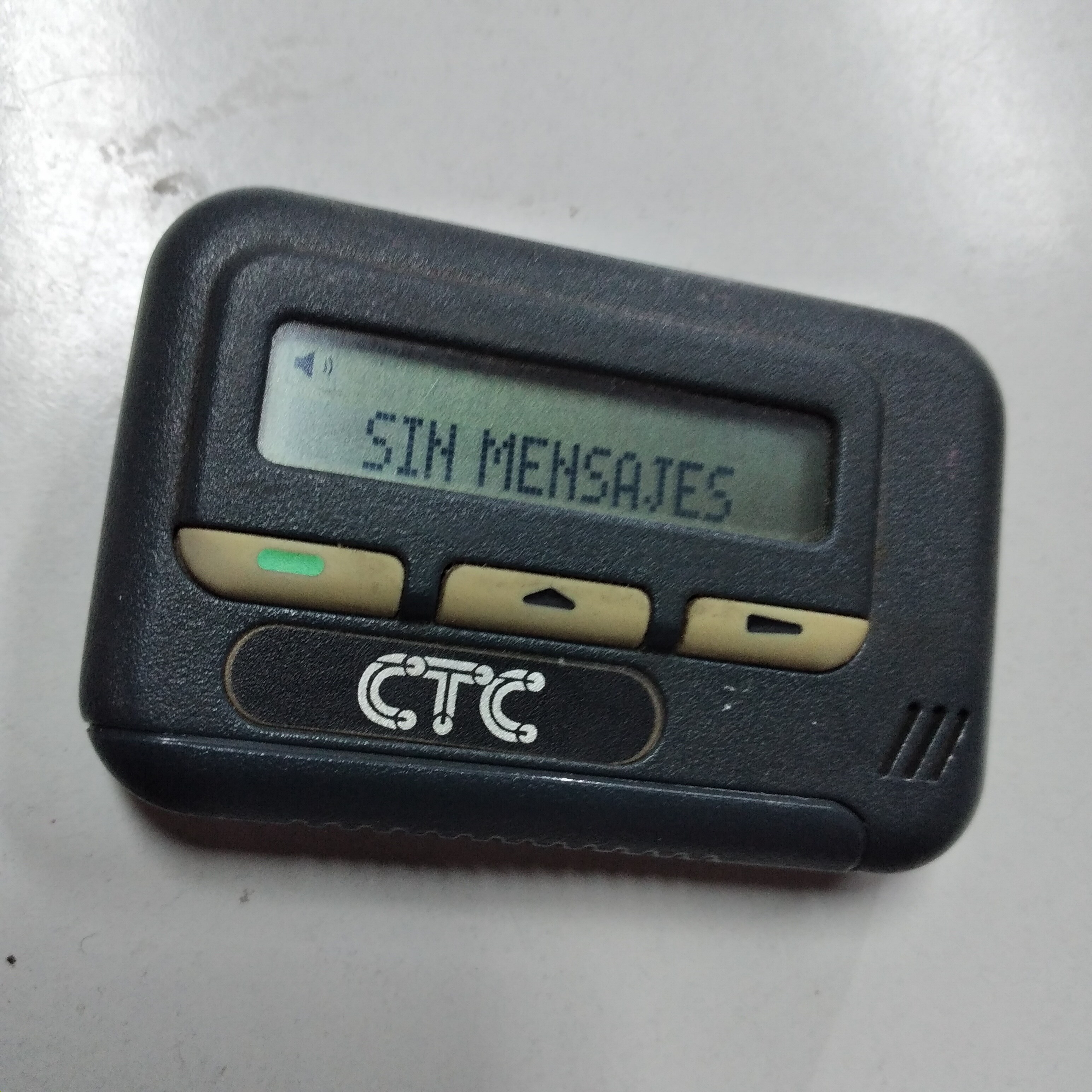
The missing voice of Dick Tracy's wrist radio
In the comic strip, the wrist radio enabled the private eye to talk through a watch-like device. However, the pager adopted the design of the wrist radio but failed to emulate its conversational function. It was a step closer to the beeper than to the telephone.
The lack of voice transmission was also a limitation that companies would have to overcome. TIME observed that the watch pagers would not be able to offer the same voice capability as the cartoon version for some time. AT&E President Charles Skibo commented that adding voice transmission would drain power from the battery very quickly. The Washington Post reported that industry experts agreed that, although watch pagers might become technically feasible within the decade, consumer demand for the product remained uncertain.
The Washington Post also reported that the first watch pagers were expected to retail between $200 and $300, despite being limited to receiving messages rather than transmitting them. Seiko and AT&E were not the only companies developing the technology. Motorola and Timex had jointly developed another watch pager, which about 30 people tested in the Washington area in spring 1990. The device was compatible with many existing paging systems and was claimed to operate for up to 40 days without a battery change.
The Receptor-Message Watch sought to transform the wrist into a locus of personal communication when the pager was still primarily a utilitarian instrument. It downscaled an already known one-way service.


