E-Paper



In 2003, China planted native tree patches along a degraded riverbank; 20 years later, they held 19-30% of a rainforest's diversity
In 2003, China planted tree patches along a degraded river. By 2023, forest cover was up 36%, but diversity and biomass sat at 19-30% of a rainforest's.

 Prefer HTon Google


Most of us have seen the tree-planting photo ops. A group of happy volunteers, some seedlings, a hashtag. But what happens to those trees in 20 years? That’s what a 2026 study in Restoration Ecology looked at using monitoring data collected through 2023. Researchers from the Xishuangbanna Tropical Botanical Garden in China went back to a riverside where their team had planted native trees in 2003. They found that the site had only 19% to 30% of the tree diversity and biomass of a nearby intact rainforest.
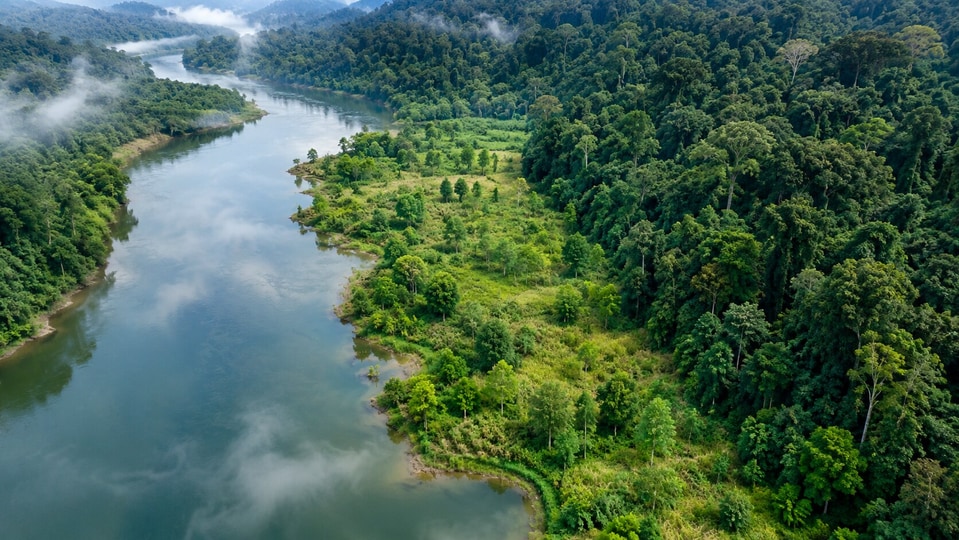
What the researchers did in 2003
In 2003, the researchers planted small clusters of native trees along a degraded riverside corridor about 12 kilometers long. This method is called applied nucleation. Instead of planting the whole area, you plant small patches and let the forest spread from them. The patches were then left to expand naturally, and the team monitored the site from 2003 to 2023, the period the study covers, looking at both single communities and the wider landscape. They also studied how planting strategies built around fig trees as core species affected recovery. They compared three kinds of sites: the planted patches, the areas where forest spread on its own from those patches, and reference plots in a nearby seasonal rainforest.
The wins are real
Some results were strong. Forest cover increased by 36 percentage points across the landscape, adding about 64 hectares of forest along the 12-kilometer corridor. Shoreline with natural vegetation increased from 38% to 90%. Connectivity increased by 119%, suggesting a better linkage between forest patches. The site also performed well on China's Ecological Restoration Index. Fig trees played an important role as well. In the planted patches, figs were 76.8% of total tree biomass. Applied nucleation worked well at restoring forest cover and structure across the landscape, but biodiversity recovery has lagged behind.
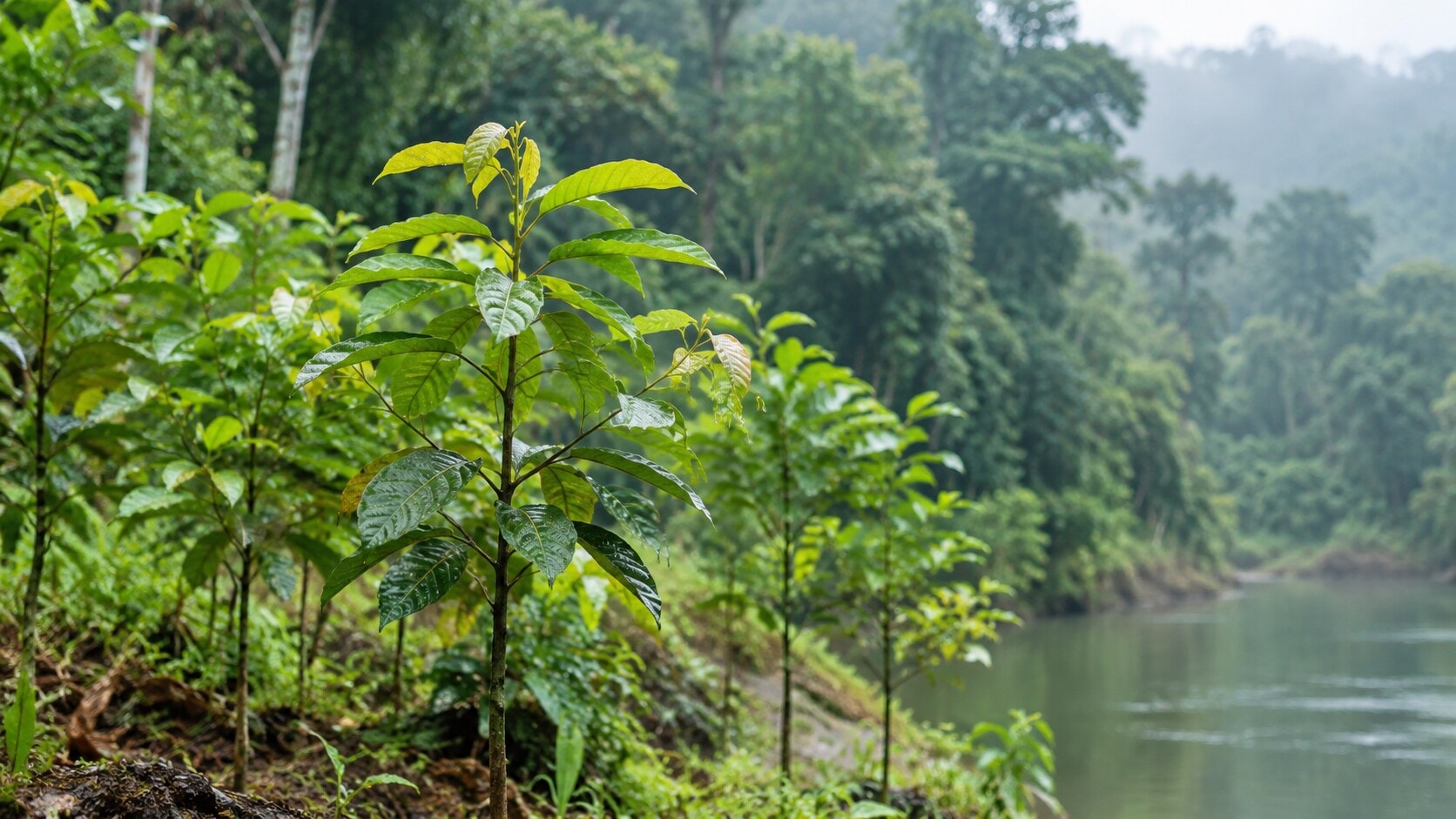
Why the forest is still young
After 20 years, the restored forest as a whole, meaning the patches planted and the areas that spread from them, had only 19% to 30% of the tree diversity and biomass of the reference rainforest. Its species composition was dominated by pioneer trees. At least 75% of the species were light-demanding species. This is different from the reference forest and reflects an early stage of recovery. The authors refer to this as a successional bottleneck, which is a stage of slowed progress. This means forest structure and function are recovering faster than biodiversity. Think of a new town. Structures such as buildings and roads can be quickly built. But to fill it with schools, shops, and a real community takes a lot longer.
What comes next for restoration
The researchers recommend basing tree patches on high-biomass foundation species and actively managing the gaps between early and later stages of forest recovery. They note that applied nucleation requires less land management and is less expensive than traditional large-scale planting, but recovery takes decades, and restoring biodiversity may require continued effort.
A 15-year study in Costa Rica, published in the Journal of Applied Ecology by Karen Holl et al. in 2020, points the same way. Tree islands were about as effective as full-scale plantations for most plant and animal communities, at lower cost, and better than natural regeneration at seed dispersal. Because it is a single case study in a different ecosystem, its results may not transfer directly to this site. The message is clear. Planting trees is only the first step, and a young forest needs time, care, and follow-up before it looks like an old one.