
 E-Paper



Pakistan blames India for suicide car bomb attack, New Delhi responds with contempt
An initial probe found that approximately 800 kilograms (1,760 pounds) of explosives were used in the bombing, according to an AP report.

 Prefer HTon Google


Ministry of external affairs on Sunday ‘rejected with contempt’ the Pakistan Army’s statement blaming India for the attack in Waziristan. “We have seen an official statement by the Pakistan Army seeking to blame India for the attack in Waziristan on 28 June. We reject this statement with the contempt it deserves,” the ministry said in a statement.
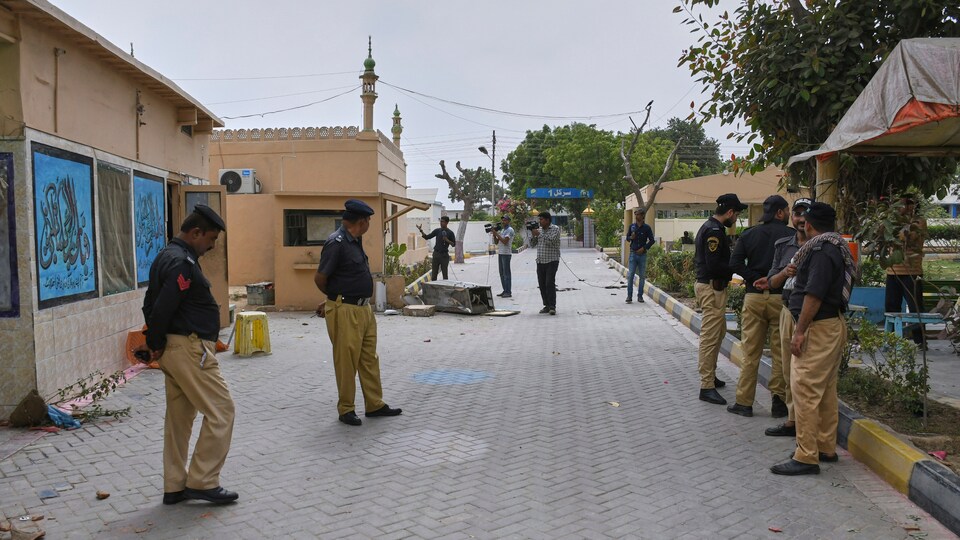
At least 14 soldiers were killed and 25 others, including civilians, injured in a suicide car bombing in northwest Pakistan’s North Waziristan district on Saturday, making it one of the deadliest recent attacks in the restive region.
Pakistan blamed the attack on India, however, it did not present any evidence.
The blast struck a military vehicle around lunchtime in Khadi village, despite a curfew that had been imposed in the area to facilitate the movement of security forces.
An initial probe found that approximately 800 kilograms (1,760 pounds) of explosives were used in the bombing, causing severe damage to several nearby houses, according to the news agency Associated Press.
Among the injured were 15 soldiers and 10 civilians, including children. However, Pakistan’s military, in its official account, put the death toll at 13 soldiers and reported that three civilians had been wounded, the report added.
"In this tragic and barbaric incident, three innocent civilians including two children and a woman also got severely injured," said Pak army in a statement, reported Reuters.
Pakistani Taliban faction claims responsibility
The Hafiz Gul Bahadur group, a faction of the Pakistani Taliban, has claimed responsibility for the suicide attack.
Northwest Pakistan’s Khyber Pakhtunkhwa province hosts several banned militant groups that often target security forces. Pakistan accuses Afghanistan of sheltering these groups, an allegation Kabul denies.
In March, Pakistani analyst Abdullah Khan told Associated Press that the Hafiz Gul Bahadur group was “more dangerous” than the Pakistani Taliban and actively vying for influence.
The Pakistani Taliban, or Tehreek-e-Taliban Pakistan (TTP), an umbrella group of several Islamist militant factions has long fought to topple the Pakistani government and establish its own version of Islamic rule.
With Reuters, AP inputs.


