
 E-Paper



Israel sees record voter turnout as Netanyahu fights to retain power
The election is the first since the Hamas-led attacks on Israel in October 2023, which killed around 1,200 people and saw 251 others taken hostage.

 Prefer HTon Google


Israelis turned out in record numbers on Tuesday to vote in a closely contested election that could determine the political future of Prime Minister Benjamin Netanyahu.
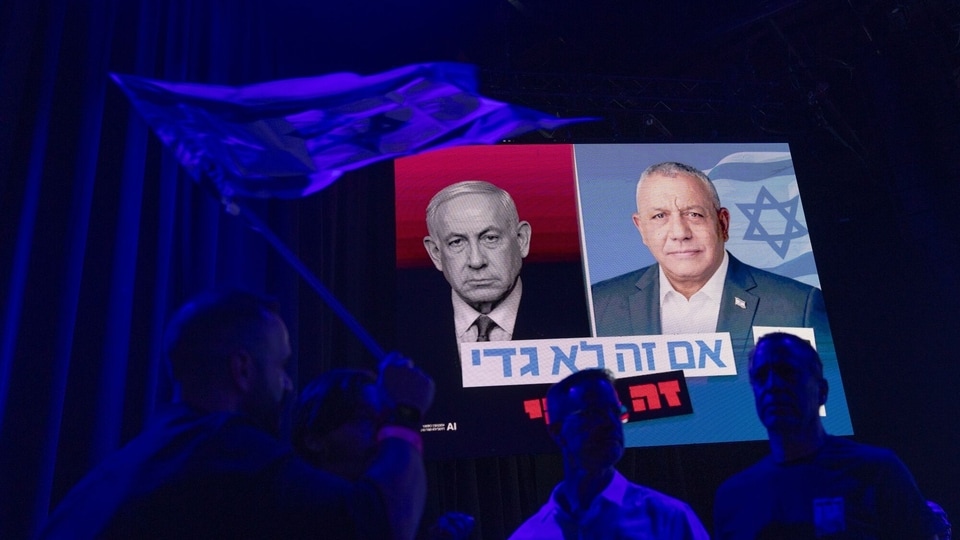
According to Reuters, 55.7% of eligible voters had cast their ballots within the first nine hours of polling, marking a record turnout for that point in the day. Voting was scheduled to continue for another six hours, with long queues reported outside polling stations across the country.
The election is the first since the Hamas-led attacks on Israel in October 2023, which killed around 1,200 people and saw 251 others taken hostage. The subsequent wars in Gaza, Lebanon and Iran have become central issues in the election campaign.
Netanyahu, Israel’s longest-serving prime minister with 19 years in office, has defended his record, calling himself the only leader with the mettle to face down Israel's foes. However, his right-wing coalition has faced criticism over security failures, its policies towards Palestinians and Israel’s growing international isolation.
Netanyahu is facing a challenge from Gadi Eisenkot, a former military chief of staff and security hawk seeking to unite opposition parties across the political spectrum.
Opinion polls have indicated a close contest, with neither side having a clear path to securing a governing majority in Israel’s 120-seat parliament. The country’s fragmented political system means that forming a coalition could prove as challenging as winning the election itself.
Netanyahu urges supporters to vote
Netanyahu urged his supporters to turn out in large numbers, warning that high participation among opposition voters and Israelis of Arab heritage could affect the result. “You all need to stream to the polls,” he said, adding, “This is a fateful moment.”
The prime minister has also highlighted his relationship with US President Donald Trump, who has backed Israel’s military campaign against Iran and called for the country to “finish the job”.
Eisenkot sees ‘new spirit’
Despite Netanyahu’s political resilience, opponents have focused their campaign on accountability for the security failures surrounding the October 7 attacks. Opposition groups have pledged to establish a national inquiry, a move resisted by Netanyahu’s government.
Eisenkot expressed confidence that the election could mark a turning point for the country.
"I am convinced that by the end of today, we will see a change — a new spirit for the State of Israel — that will serve as a rectification for the past three years and for that terrible day," Eisenkot said during a visit to kibbutz Nir Oz in southern Israel, targeted in the October 7 attacks.
Eisenkot also reiterated his commitment to dismantling Hamas’ military and governing capabilities in Gaza within 18 months of forming a government. He has criticised Israel’s military campaign, arguing that it has failed to remove Hamas from power despite the heavy Palestinian death toll.
Arab voter turnout could be key
The participation of Israel’s Arab minority, which makes up about a fifth of the country’s population, could influence the election outcome. Ahmed Tibi, a candidate from an Arab party, said record turnout from Israel's Arab minority would "pave the way for an alternative government and change the grave reality".
However, Eisenkot has ruled out partnering with Arab parties, although some possible scenarios envision him relying on them to prop up a minority government to topple Netanyahu.
Netanyahu has repeatedly drawn criticism for his remarks about Arab Israelis. On Tuesday, he posted an image on X showing a queue of Arab women purportedly at a polling station. According to OpenAI's verification website the image was prepared using its AI tools.
Cars with flags of Netanyahu's Likud Party also drove through the Jerusalem streets with loudspeakers blaring the Islamic call to prayer and saying: "Get out of your houses now. Arabs are voting."
Meanwhile, Itamar Ben-Gvir, the far-right national security minister and leader of a party in Netanyahu’s coalition, predicted that Netanyahu would return to office. Ben-Gvir cast his ballot in the Kiryat Arba settlement in the occupied West Bank.
The election also comes amid tensions over Jewish settler violence against Palestinians in the Israeli-occupied West Bank, which has increased since 2023 and strained Israel’s relations with Western countries. Eisenkot has criticised the violence and opposed Netanyahu’s far-right coalition partners.
If neither Netanyahu nor Eisenkot can assemble a governing coalition, Netanyahu could remain as caretaker prime minister until another election is held. His opponents have succeeded in removing him from office only once since 2009, after four inconclusive elections over two years. But he returned to power 18 months later.
(With inputs from Reuters)


