
 E-Paper





Follow the latest breaking news, major developments and agenda-setting stories from India and around the world with the newsdesk at Hindustan Times. Operating round the clock, the desk brings together experienced editors, reporters and correspondents to deliver fast, accurate and contextual reporting across subjects that influence public policy, governance, business, society and international affairs. The HT News Desk covers politics, elections, government policies, the economy, business and markets, science and technology, the environment, law and order, infrastructure, education, climate issues and geopolitics, while closely tracking developments across states, institutions and global capitals. The team also leads coverage of major breaking news events, policy announcements, court proceedings, natural disasters, public emergencies and significant international developments. Reports published by the newsdesk are based on information gathered from reporters on the ground, official statements, government agencies, court records, regulatory filings, recognised institutions and other authoritative sources. Stories undergo editorial scrutiny and verification processes to ensure accuracy, fairness and relevance, and are updated as events evolve and additional information becomes available. Whether covering a key political decision in New Delhi, an economic policy shift affecting millions, a landmark court ruling or a major global event, the HT News Desk aims to provide readers with reliable, fact-based journalism that delivers not only the latest developments but also the context and analysis needed to understand their wider implications.
 Trending News
Israeli military says 4 rockets fired from Syria intercepted
Israeli air defense systems captured the projectiles, the military said, and no harm was caused to Israeli communities in the Golan Heights after warning sirens awoke residents there early in the morning.


The Israeli military said it intercepted four incoming rockets from Syria on Tuesday and explosions were heard shortly after that in Damascus, a week after another Israeli strike targeted a top Palestinian militant in the Syrian capital.
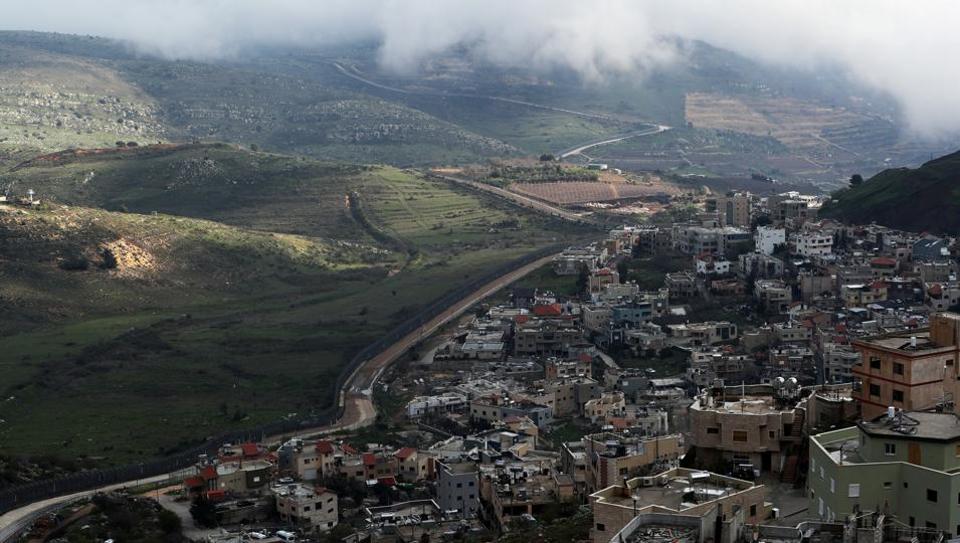
Israeli air defense systems captured the projectiles, the military said, and no harm was caused to Israeli communities in the Golan Heights after warning sirens awoke residents there early in the morning. There was no immediate official comment from Syria but the SANA state news agency reported explosions were heard near Damascus International Airport, indicating a potential Israeli retaliatory strike.
The Israeli military would not comment on the explosions in Syria, but Defense Minister Naftali Bennett was convening the top military brass in Tel Aviv to discuss the latest developments.
Speaking on Israel Army Radio, Foreign Minister Israel Katz was equally vague, saying only that “Israel will act in the way it sees fit.”
The rare rocket fire comes a week after an Israeli airstrike against a top Palestinian militant based in Syria. Akram al-Ajouri, a member of the leadership of the militant Islamic Jihad group who is living in exile, survived the attack but his son and granddaughter were killed.
Israel frequently strikes Iranian interests in Syria. But last week’s airstrike appeared to be a rare assassination attempt of a Palestinian militant in the Syrian capital. It came the same day as another Israeli airstrike killed a senior Islamic Jihad commander in Gaza, settling off the fiercest round of fighting there in years.
It all comes amid heightened tensions between Israel and Iranian proxies along its borders. Israeli Prime Minister Benjamin Netanyahu has issued a series of warnings recently about Iranian aggression throughout the Middle East.
Iran has forces based in Syria, Israel’s northern neighbor, and supports Hezbollah militants in Lebanon. In Gaza, it supplies Islamic Jihad with cash, weapons and expertise.
Netanyahu also has claimed Iran is using Iraq and far-off Yemen, where Tehran supports Shiite Houthi rebels at war with a Saudi-led coalition backing the government, to plan attacks against Israel. Hamas also receives some support from Iran.
At the same time, Iran’s regional influence is being challenged by unprecedented, economically-driven mass protests in Iraq and Lebanon — two countries where Tehran wields major influence. The protests are creating unrest that Tehran fears would spark a backlash against Iran-backed proxy militias in those countries.
Iran’s Supreme Leader Ayatollah Ali Khamenei has accused the U.S. and its regional allies of fomenting the Iraq and Lebanon unrest.


