
 E-Paper



Land, resources or missile defense: Why Trump wants to take Greenland?
The Trump administration is preparing for a high-stakes meeting with Danish officials next week.

 Prefer HTon Google


The White House confirmed this week that all options were on the table, including use of force, if the United States wanted to take over Greenland.
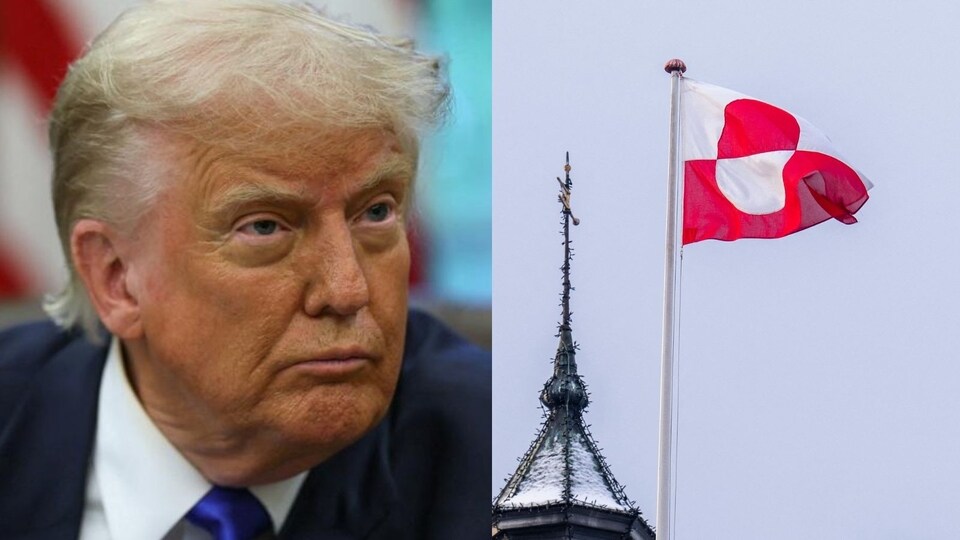
This comes even as the Trump administration is preparing for a high-stakes meeting with Danish officials next week, CNBC reported. The White House has repeatedly spoken about taking over the world's largest island after the US capture of Venezuelan President Nicolas Maduro.
While US President Trump has made public his intentions regarding Greenland, Danish Prime Minister Mette Frederiksen has urged him to “stop the threats”, warning that the threats would destroy 80 years of transatlantic security links.
“If the United States chooses to attack another NATO country militarily, then everything stops. That is, including our NATO and thus the security that has been provided since the end of the Second World War,” Frederiksen told Danish broadcaster TV2.
Why does Trump want to ‘take’ Greenland?
Trump has repeatedly said he has intentions of taking over Greenland, while citing US national security as the reason.
Trump has insisted that the US needs the island for “missile defense”, something that US Vice President JD Vance has urged European leaders to take seriously, AFP news agency reported.
Apart from the national security point of view, Trump has also highlighted that the region is rich in minerals needed for advanced military applications, according to Reuters. He has further said that the Western Hemisphere broadly needs to be under the geopolitical influence of Washington.
“We need Greenland from the standpoint of national security, and Denmark isn't going to be able to do it,” Trump said. He further claimed that the island territory is “covered with Russian and Chinese ships all over the place”.
Located in the Arctic, Greenland is roughly six times the size of Germany and is sparsely populated, with only around 56,000 residents. The island territory's location, between North America and the Arctic, could be critical for early warning systems in the event of missile attacks, BBC reported, as well as for monitoring vessels in the region.
Moreover, its location between US and Europe, and extending across GIUK gap, a martime passage between Greenland, Iceland and the UK, could make the territory essential for controlling access to the North Atlantic, for both trade and security, according to CNN.
Moreover, in the recent years, there has been renewed interest in the natural resources in Greenland, including mining for rare earth minerals, uranium and iron, according to BBC. With global warming leading to melting of ice in the Arctic, there could be increased acessibility of such minerals.
Meanwhile, Greenland has repeatedly stated that it does not want to be a part of US, with the country's leader Jens-Frederik Nielsen calling the notion of US control over the territory as a “fantasy”.


