E-Paper



Nationalist Vigilantes Are Now Policing Russia’s Streets
Far-right groups are filling the vacuum left in Russian cities as many police officers serve in the Ukraine war.


 Prefer HTon Google


Vigilante groups are increasingly taking control of Russia’s streets and imposing their version of nationalist, pro-Kremlin order as police leave for higher salaries fighting in the Ukraine war.
Some towns and cities across the country are missing as many as half of their patrol and duty officers—and crime rates are rising.
One of the largest groups to step into the void, Russkaya Obshchina, or Russian Community, has 150 chapters across Russia’s 11 time zones. The group’s ranks have swelled as veterans join after returning from the front.
Russkaya Obshchina has boosted its presence on Russia’s biggest social-media platforms such as Telegram and VK, the country’s version of Facebook. It offers a mobile app for anyone to download, with a panic button for emergencies.
Videos on Russian social media show members intervening in everything from alcohol-fueled disputes between neighbors to cases of violence and harassment on the frozen streets of Siberia. Group members sometimes detain people they accuse of petty crimes until the police arrive. But they often go beyond the scope of typical police work, raiding the homes and workplaces of migrants, breaking up private gay parties and forcibly registering people for the military.
The war has sapped manpower from jobs throughout the Russian hinterlands as men are lured to the military by signing bonuses of sometimes more than a year’s salary. No void has undermined law and order quite like the one left by police officers for the front.
Authorities, particularly in far-flung places, need help. Russia’s domestic intelligence agency, the Federal Security Service, is largely focused on acts of sabotage by Ukraine and antiwar sentiment. The Interior Ministry said local police forces had lost some 33,000 police officers in the past year and were currently short some 172,000 new officers.
“I know that there is a growing shortage of personnel in the Ministry of Internal Affairs system, especially at the grassroots level,” President Vladimir Putin told police officers in Moscow in March. “The problem is, of course, complex.”
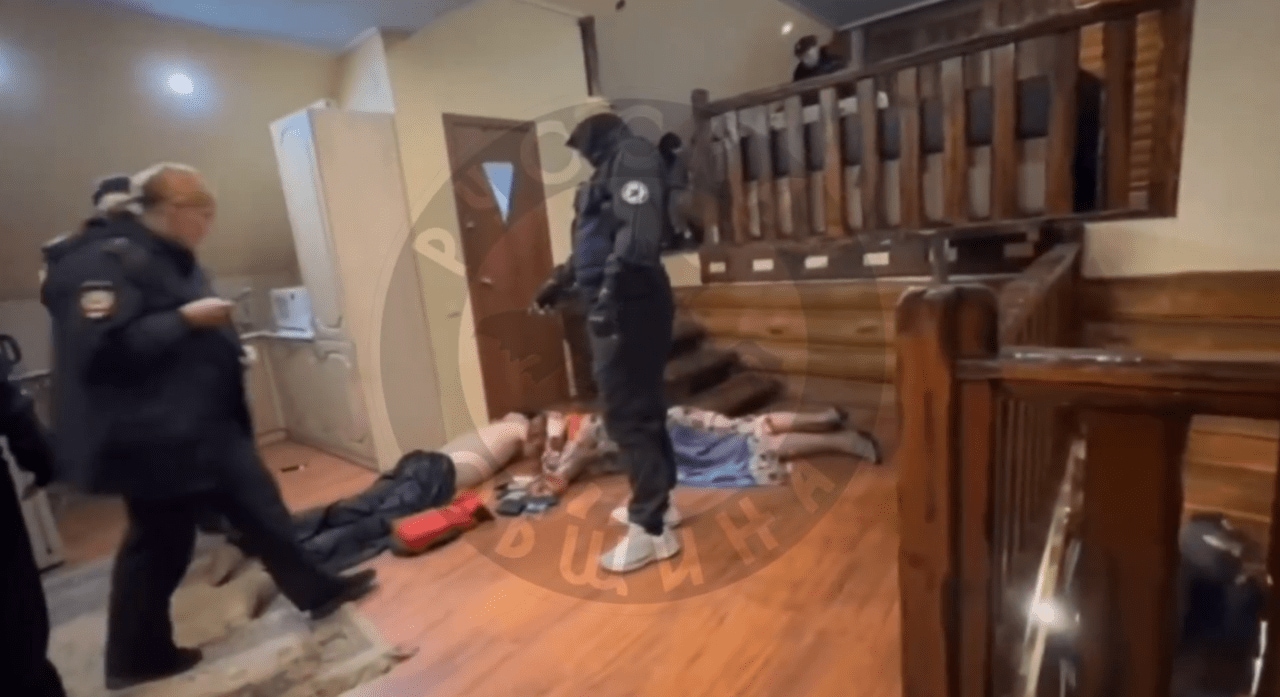
A screenshot from a video shows a raid at an LGBTQ party by members of Russkaya Obshchina and police.
Russkaya Obshchina didn’t respond to requests for comment. The group has previously said it isn’t a nationalist organization and subscribes to traditional values, helps clean up parks and celebrates conventional Russian holidays. The head of Russia’s Investigative Committee has publicly backed the group, fueling speculation that it operates with the approval of Russia’s law-enforcement bodies.
“We understand that the police are short on manpower,” said Andrey Tkachuk, a Siberian politician and one of the group’s founders, in an online video. “We’re ready to put a shoulder behind the wheel.”
But Tkachuk also regularly uses derogatory terms in public and in online videos to refer to Muslims. He founded the group along with a television presenter from the country’s most Russian Orthodox and conservative channels.
In the Siberian city of Novosibirsk, where 40% of patrol-officer positions are vacant, members of Russkaya Obshchina went to a construction site and rounded up migrant workers who were inside. Dressed in black and carrying batons, the members filmed the migrant workers as they led them on foot to a nearby police station to check their work status.
Some of the vigilante groups have powerful backers among businessmen and state officials. In Russia’s Far East, Primorsky Krai regional Gov. Oleg Kozhemyako created a unit of volunteers to maintain law and order named Tiger, made up of veterans from the 155th Naval Infantry Brigade based in Vladivostok.
Kozhemyako didn’t respond to a request for comment.
In the industrial Siberian city of Tyumen, fighters fresh from the front patrol the streets at night. The group, called Russian Druzhina, has the backing of powerful pro-Kremlin businessman Konstantin Malofeyev.
Malofeyev didn’t respond to a request for comment.
The use of nationalism in politics has always been a double-edged sword in Russia—especially for Putin, who glorifies service to the country in an attempt to tamp down opposition to the war, boost his own popularity and swell recruitment numbers at the front. But in a country with nearly 200 official minorities, he has cautioned against violent ethnic Russian nationalism, which has roots in neo-Nazi movements that took hold after the fall of the Soviet Union.
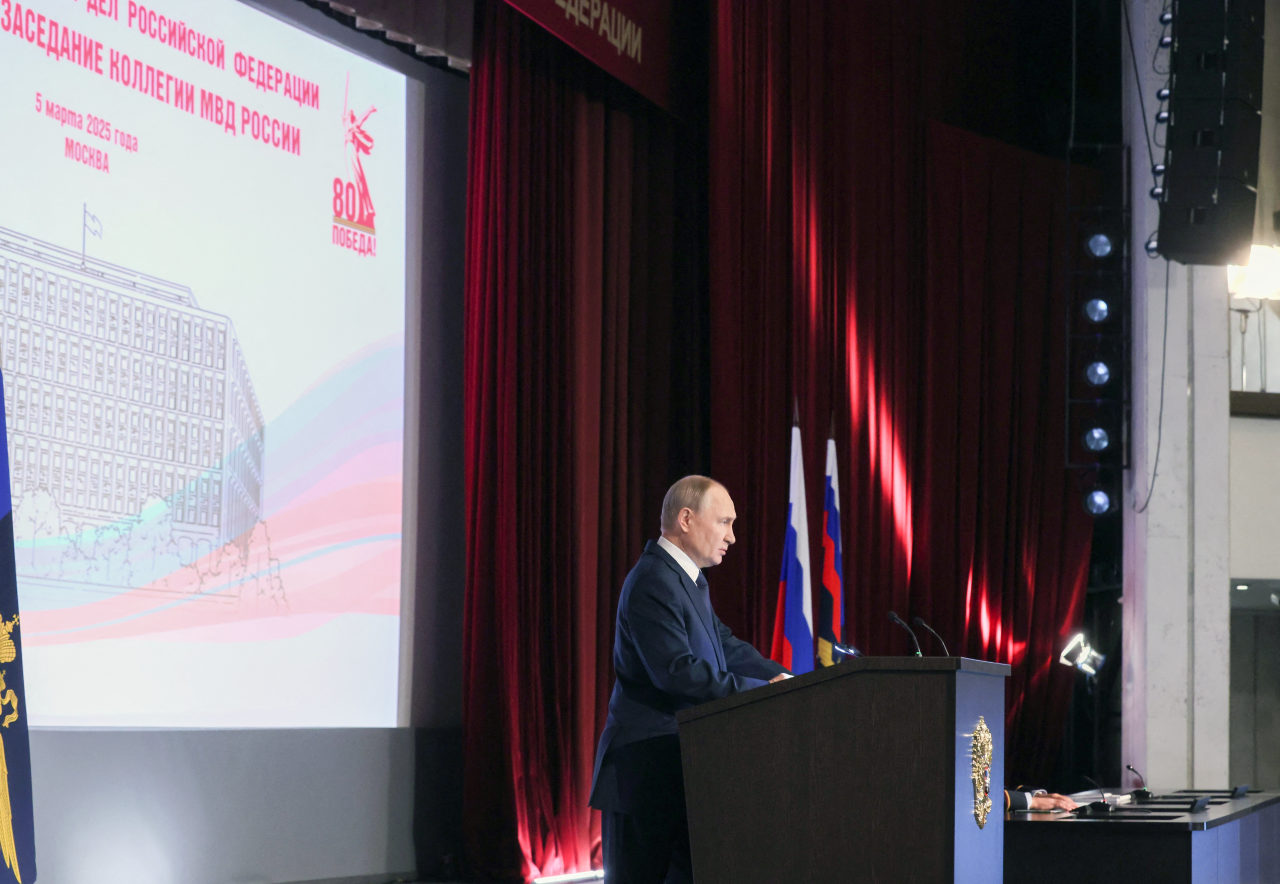
Russian President Vladimir Putin speaking at a meeting of the board of the Interior Ministry in Moscow.
The increasing reliance on vigilante groups may upset that delicate balance, especially with the presence of veterans, who are trained in combat and potentially traumatized by war. It also runs counter to propaganda that the Kremlin has used to justify its war in Ukraine: that it is fighting fascists.
“This could also backfire against the Russian state as it is effectively sharing its monopoly on violence,” said Vera Alperovich, a human-rights advocate at Sova, a Moscow-based nongovernmental organization that tracks extremism in Russia.
While the groups are helping police, they also appear to have wide latitude over whom to target in raids. Targets often end up being immigrants or those who have run afoul of the Kremlin’s embrace of what it describes as traditional values.
In the small, hardscrabble town of Kamensk-Uralsky, Russkaya Obshchina said that alongside police it raided a small private LGBTQ party, taking photos and videos of male participants with makeup on and naming some of them on social media.
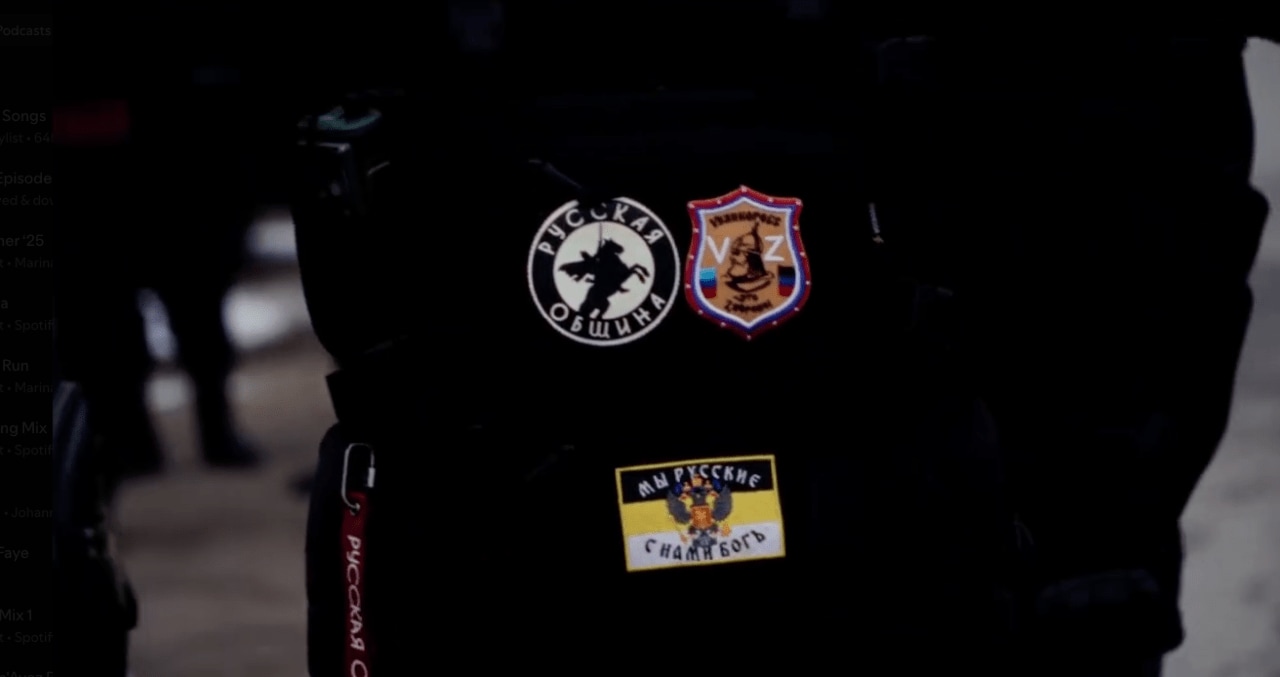
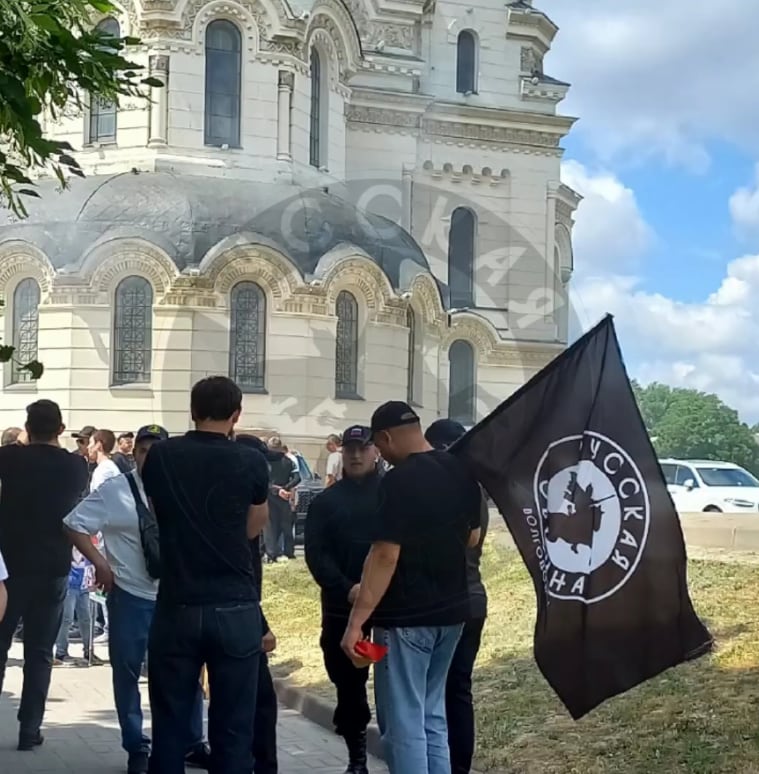
Members of Russkaya Obshchina take part in a religious commemoration in the Russian city of Novocherkassk, in an image taken from a video.A screenshot of patches on a bag, including the logo of Russkaya Obshchina and a modified version of the Russian imperial flag.
The nationalist group “Northern Man,” founded by a rapper and with dozens of regional chapters, often participates in raids to detain hundreds of migrants along with Russkaya Obshchina and police forces. Northern Man also exerts pressure on LGBTQ bars and nightclubs, and its raids have led to the closure of one such establishment in the city of Krasnoyarsk.
In the Russian-occupied Black Sea peninsula of Crimea, Russkaya Obshchina said its members broke into a nightclub, checking the documents of those inside. The group said that while no one at the club was breaking any laws, it had summoned 14 people to the military enlistment office, without elaborating.
“In a normal world, institutes meant to protect the rights of citizens must not be political…or ideological,” said Valery Vetoshkina, a lawyer associated with Russian nongovernmental organization OVD-Info, which focuses on law-enforcement agencies. But Russkaya Obshchina’s growing authority “is the result of this shortage of personnel in the police.”
Write to Thomas Grove at thomas.grove@wsj.com