
 E-Paper



Nepal govt in crisis after Maoists withdraw support
Prime Minister KP Sharma Oli’s nine-month-old government in Nepal plunged into crisis on Tuesday after the Maoists, a key coalition partner, withdrew support.


Prime Minister KP Sharma Oli’s nine-month-old government in Nepal plunged into crisis on Tuesday after the Maoists, a key coalition partner, withdrew support.
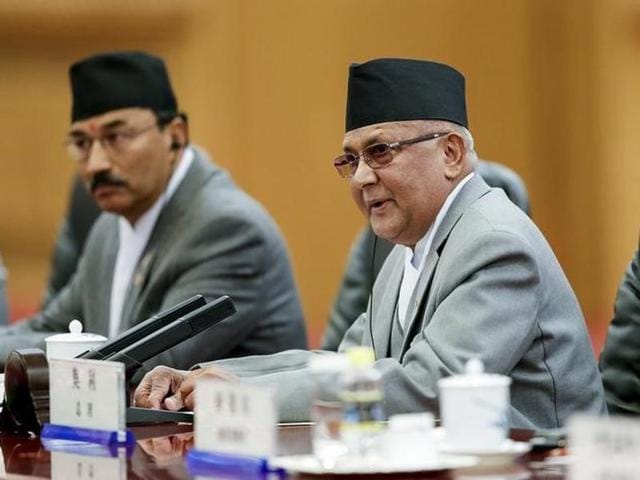
The Communist Party of Nepal-Maoist Centre recalled its ministers, alleging that the government had failed to implement agreements signed with it in May.
A letter from party chairman Pushpa Kamal Dahal Prachanda, which mentioned the CPN-MC‘s decision, was handed over to Oli on Tuesday.
“Since the present government isn’t interested in implementing the nine-point agreement and the three-point gentlemen’s agreement with us, we withdraw support to the government with immediate effect,” the letter said.
The CPN-MC is the second largest party in the government after Oli’s Communist Party of Nepal-Unified Marxist Leninist.
Senior Maoist leader Krishna Bahadur Mahara told journalists: “We already have an agreement with the Nepali Congress on formation of the next government. The details will be unveiled on Wednesday.”
Leaders of the Nepali Congress, the main opposition party in parliament, maintained it hadn’t entered into any agreement with CPN-MC on forming the next government.
Late on Tuesday evening, a news website posted what it said was a copy of a seven-point agreement between CPN-MC and the Nepali Congress on forming the next government. Besides addressing the demands of Madhesis and other communities by amending the constitution, the purported agreement dealt with implementing the statute and providing relief to those affected by last year’s earthquakes.
Though Oli’s government was reduced to a minority, he is unlikely to announce his resignation. Sources close to him said he planned to face a trust-vote in parliament.
This is the second time in two months that the Maoists have decided to topple the government. Their earlier move in May was shelved when Oli signed the nine-point deal.
The Maoists were unhappy the deal - which dealt with formation of a national consensus government, implementation of the constitution, solution to the Madesi problem and relief for victims of two earthquakes last year - wasn’t getting due attention.
There was reportedly another three-point “gentlemen’s agreement” between both parties on heading the government after the annual budget is passed by parliament. Oli’s party has denied the existence of any such deal.
On Monday, senior CPN-MC leaders had mandated Prachanda to decide on withdrawing support to the government and initiating the process to form a national consensus government.



