
 E-Paper



Netanyahu and His Main Opponent Disagree on Many Things—but Not Israel’s Security
The electorate’s move to the right on security issues leaves candidates little room to maneuver on Gaza, Iran and a Palestinian state.


 Prefer HTon Google


TEL AVIV—Israeli Prime Minister Benjamin Netanyahu and the leading opposition candidate, Gadi Eisenkot, couldn’t be more different in terms of style, background and a host of issues that matter to Israeli voters.
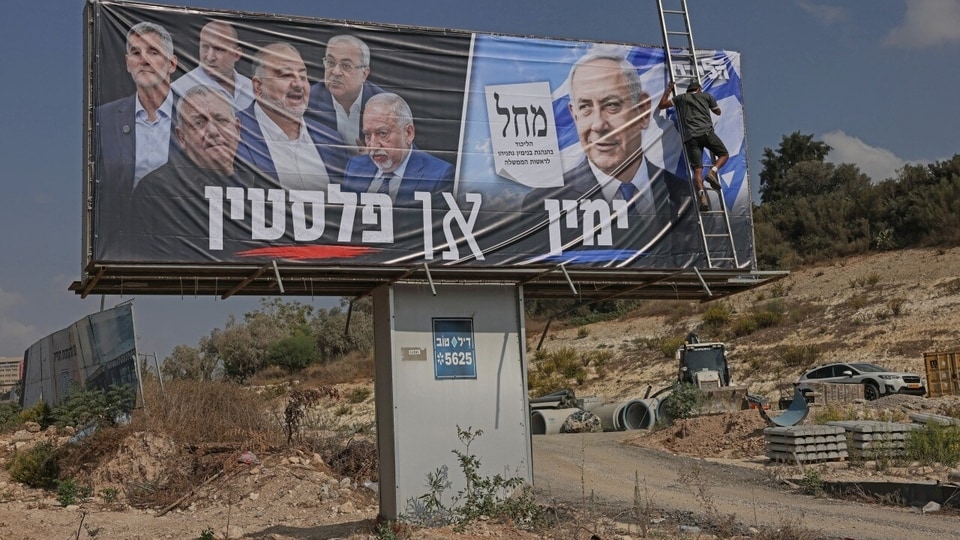
But on the questions that matter most to the rest of the world—the future of Gaza, the war with Iran and a Palestinian state—the substantive differences between the man who has governed Israel on and off for 19 years and his challenger are narrower.
Israelis will vote on Tuesday in the first national election since the Oct. 7, 2023, Hamas-led attacks. Polls show that while they are worried about growing settler extremism and threats to the country’s institutions, the public is practically united on many security-related questions, reflecting a lurch to the right on national security matters since the attacks that sparked the war in Gaza.
Deep Dive

That consensus is shrinking the room for maneuver for the 66-year-old Eisenkot, who formed his centrist party last year and is now Netanyahu’s main challenger.
Analysts say the lifelong military man whose youngest son died fighting in Gaza understands the limits and costs of military force. Still, he pushes tough positions. He has said he would end Hamas’s rule in Gaza within 18 months—whether through President Trump’s peace plan or by force—and told Israeli radio earlier in the month that he supported building settlements in the West Bank, though he says he would crack down on settler violence and opposes the establishment of a Palestinian state.
“I am adamantly opposed to a foreign army between the river and the sea,” Eisenkot added, referring to the Jordan River on the east side of Israel and the Mediterranean to the west.
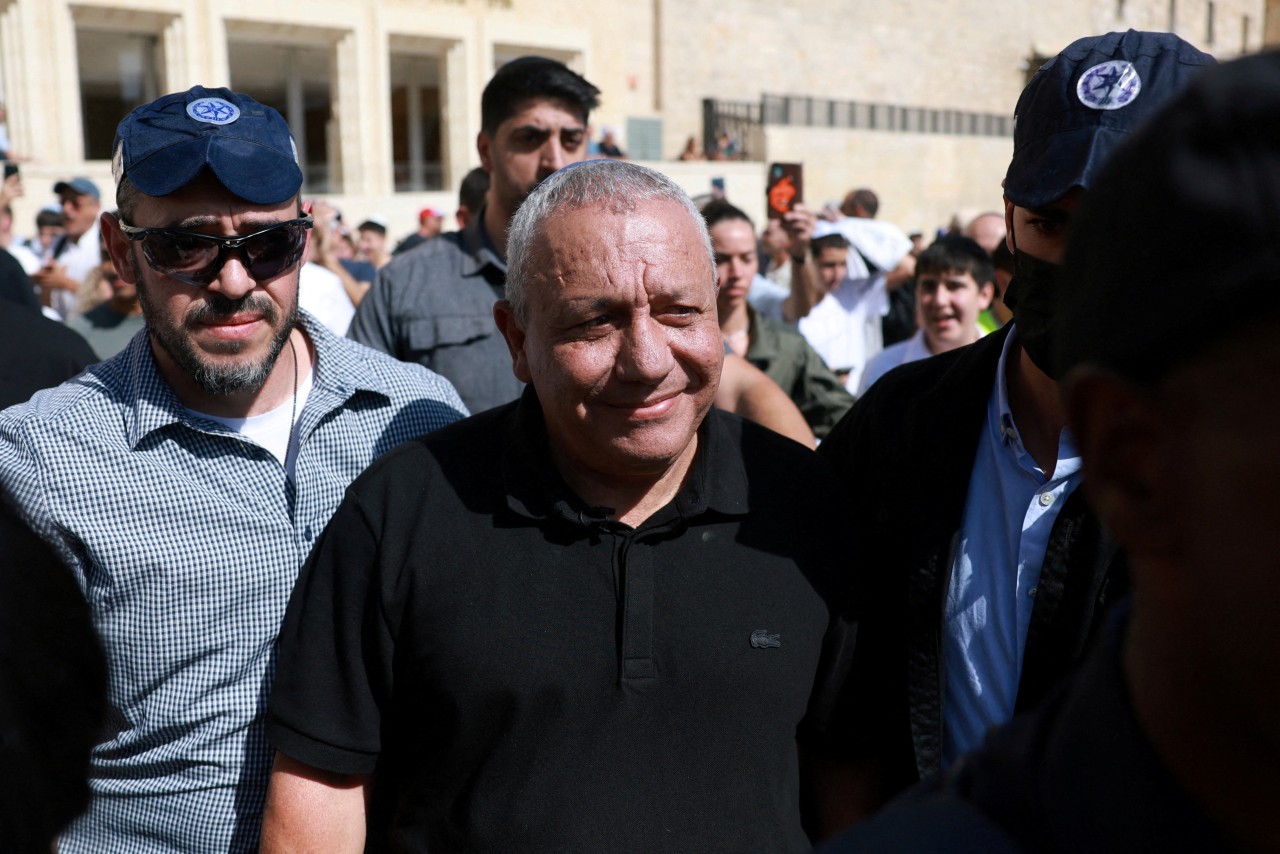

The statements leave little separating him on security issues from Netanyahu, whose right-wing Likud party has cast the election as a choice between him and an opposition that would support a Palestinian state and appear weak on security.
Netanyahu’s opponents “are basically saying the same thing in a more elegant way,” said Tamar Hermann, a pollster and senior fellow at the Israel Democracy Institute think tank in Jerusalem. “Their security agenda, except for the West Bank, is not substantially different from that of the right.”
For many Israelis, this election is the most consequential in the country’s history. It has become a referendum on 77-year-old Netanyahu’s handling of Oct. 7 and its aftermath.
The prime minister’s detractors say he has undermined democratic institutions, brought extremists into his government, prolonged wars for political gain and sacrificed Israel’s standing abroad amid an upswell of anger about Israel’s conduct in the Gaza war. The prime minister’s office didn’t respond to requests for comment. Netanyahu has repeatedly said he fights unapologetically for Israel.
An October poll by Agam Labs showed 60% of Jewish Israelis want a new prime minister.
Even so, under Israel’s parliamentary system, the elections are too close to call. The most recent polling showed Eisenkot’s Yashar party with just a slight lead over Netanyahu’s Likud party, with neither able to assemble a coalition that would secure a majority in the 120-seat Knesset. The seat count could trickle in for days, followed by weeks or months of horse trading to come up with a coalition that can govern.
In terms of style and background, the two leading candidates couldn’t be more different. Netanyahu is a TV-friendly, veteran political operator. Eisenkot, a former chief of Israel’s military, is a gruff political neophyte who lost a son in the Gaza war.
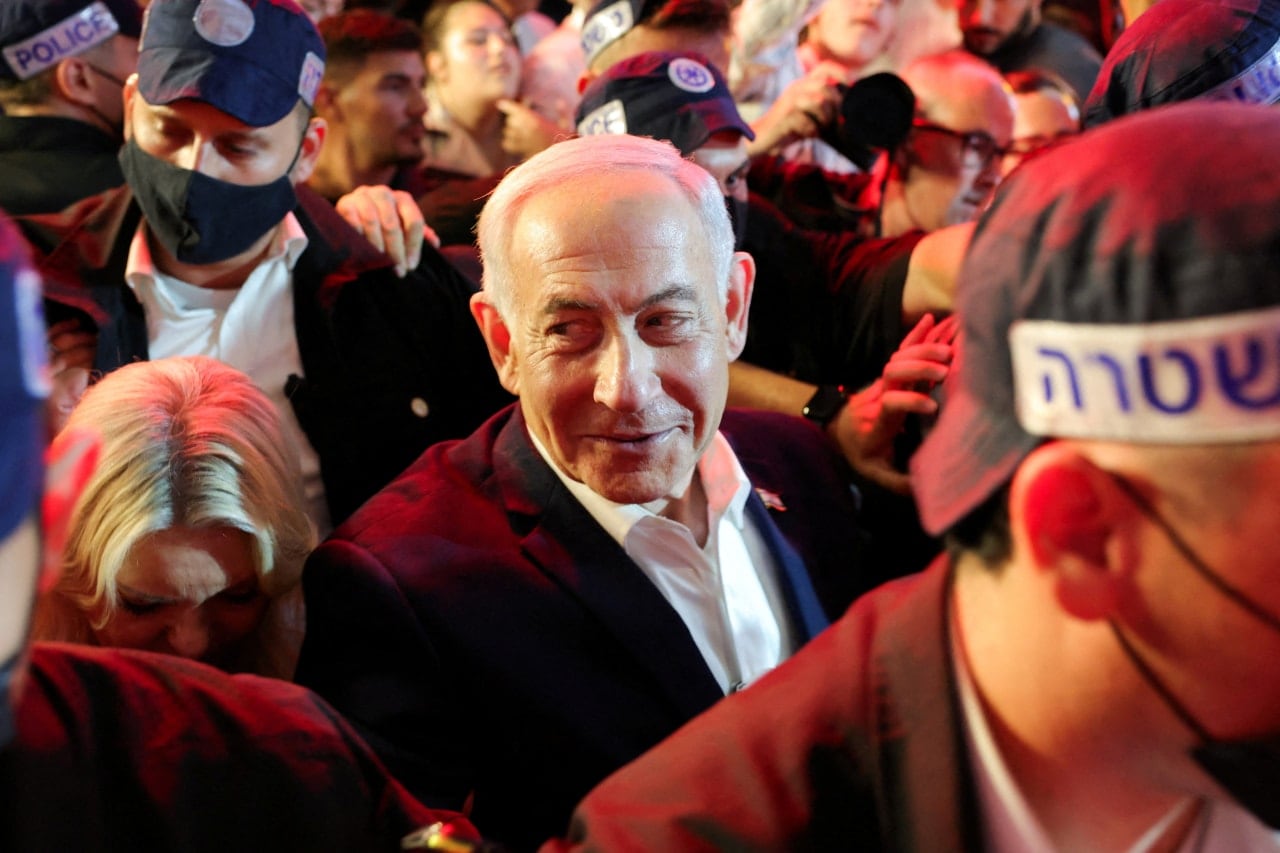
Born to Jewish Moroccan immigrants, Eisenkot grew up in the working-class Red Sea city of Eilat. He served in the military’s Golani infantry brigade. Later, as a leader, he was considered the architect of the Dahiya Doctrine—named for the Hezbollah stronghold in the southern suburbs of Beirut—which calls for striking urban areas with overwhelming force to deter militant groups.
It was Netanyahu who tapped Eisenkot as the military chief of staff in 2014. Even after the men became political adversaries, Eisenkot agreed to join Netanyahu in an emergency national unity government after Oct. 7 and sat on the war cabinet. He resigned months later, accusing Netanyahu of prolonging the war and sacrificing Israel’s hostages, which the prime minister denies.
On domestic issues, Eisenkot has carved out positions challenging Netanyahu and his coalition by criticizing violence by extremist West Bank settlers as “Jewish terror” and supporting drafting ultraorthodox Israelis into the military. He says he doesn’t support building controversial settlements in the West Bank E1 area opened for bidding by Netanyahu’s cabinet at this time given the international backlash.
On security issues, his differences with the prime minister would likely emerge in a distinct tone from the top.
Political analysts say Eisenkot would look for ways to steer the conflicts around Israel toward a resolution. He has spoken of turning military achievements into diplomatic ones, a nod to negotiated solutions, and has described Netanyahu’s goal of regime change in Iran during the U.S.-Israeli bombing campaign as too ambitious.
Public opinion might limit his options. Israelis remain concerned about the prospect of another Oct. 7-like attack and support continued troop presence in Gaza and Lebanon. There is now greater support for building settlements in the Israeli-occupied West Bank compared with previous years, according to polls, though many Israelis think settler violence is dealt with too leniently by the state.
Nearly a third of Jewish Israelis say they have become more right-wing as a result of the war, according to the poll by Agam Labs. Polls show that far-right National Security Minister Itamar Ben-Gvir, who has implemented much tougher conditions for Palestinian prisoners, is especially popular among Israeli youth.
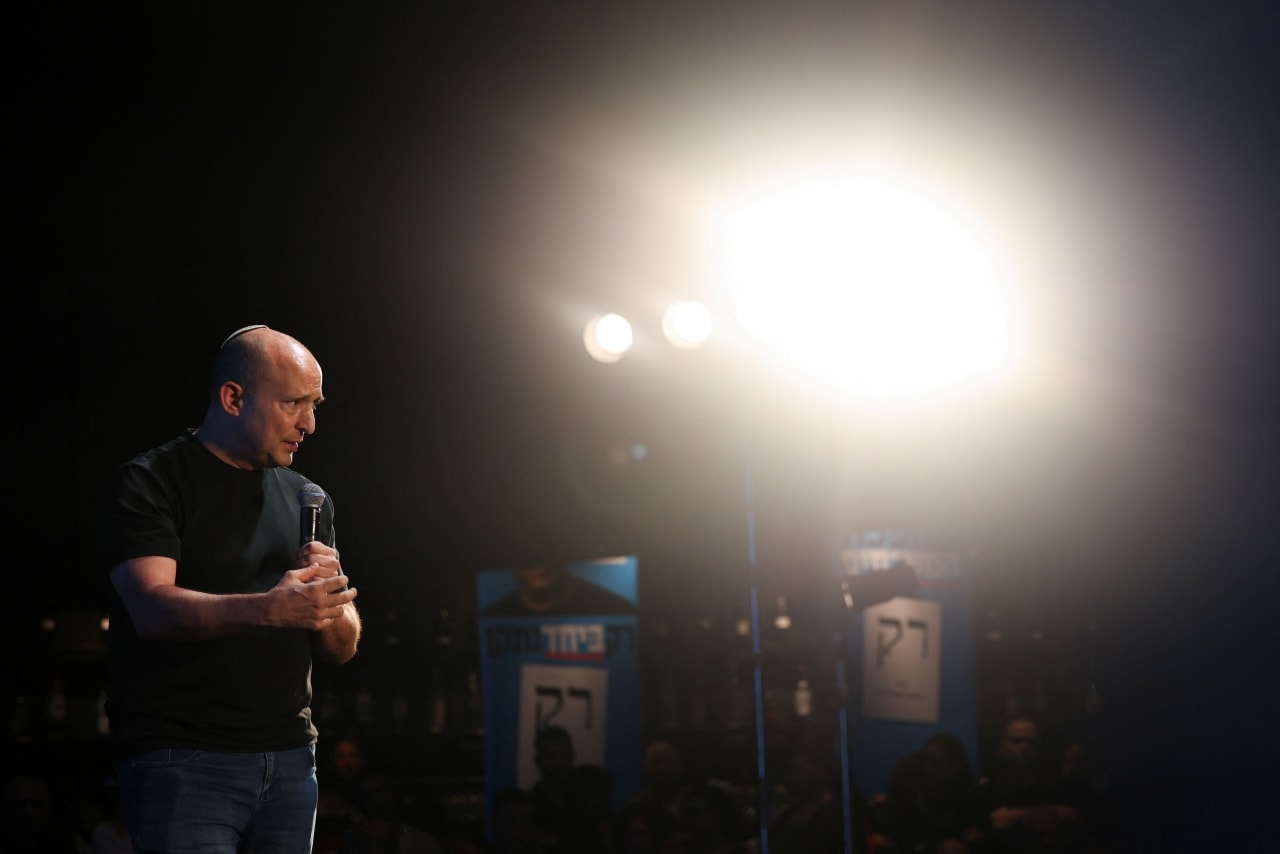
The candidates are competing for a narrow band of swing voters. At a recent campaign event, Naftali Bennett, another opposition leader who heads a center-right party, railed against concessions to Palestinians.
“The only way for the liberal camp to come to power is to bring between five to 10 seats who voted in 2022 for Netanyahu’s coalition,” said Gayil Talshir, a senior lecturer in political science at the Hebrew University of Jerusalem. “To bring voters from the other side, they have to speak in the language of the right.”
Foreign diplomats and some in Israel say different leadership could help the country mend international relationships by sidelining polarizing figures such as Netanyahu and his far-right ministers Ben-Gvir and Bezalel Smotrich, both of whom have been banned from several Western countries for allegedly inciting violence against Palestinians.
The offices of Ben-Gvir and Smotrich didn’t respond to requests for comment.
“Just changing the government, just changing the people in the government, it’s not going to be enough, we need to change policies,” said Offir Gutelzon, 51, an Israeli tech entrepreneur in Palo Alto, Calif., who is flying back to Israel to vote against Netanyahu. “But, obviously, the start is to get someone new holding the wheels on the train called Israel.”
Write to Anat Peled at anat.peled@wsj.com


