
 E-Paper



Pakistan's defence minister addresses ‘minority safety’ issue, calls it a ‘global embarrassment’
Khawaja Asif asserted that in Pakistan, no religious minorities, including smaller sects within Islam, are secure, despite constitutional safeguards.

 Prefer HTon Google


Pakistan defence minister Khawaja Asif raised concerns regarding “minority safety” in the country during a national assembly session, news agency ANI reported on Monday. He said that minorities in the nation are “facing targeted violence in the name of religion.”
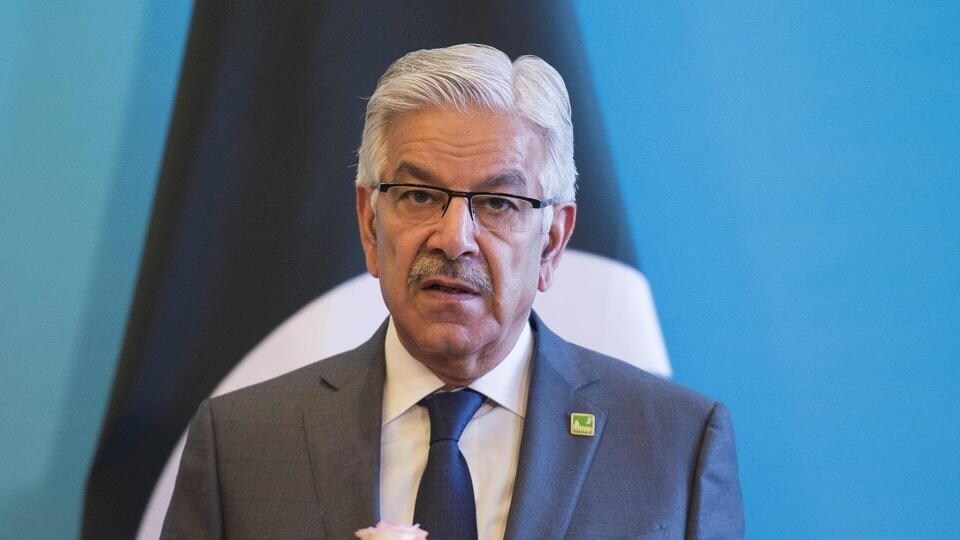
“Every day, minorities are being killed. They are not safe under the guise of Islam. I want to address the issue of minority safety, but the opposition is blocking my efforts. Pakistan is facing global embarrassment,” Khawaja Asif was quoted as saying by ANI.
Also Read | Pakistani teenage boy kills man over alleged blasphemy
Asif asserted that in Pakistan, no religious minorities, including smaller sects within Islam, are secure, despite constitutional safeguards. He emphasised the need for measures to protect minorities, pointing out that numerous victims of violence were targeted not because of blasphemy allegations but due to personal grudges.
He said, “Even smaller Muslim sects are not safe in Pakistan, which is a disgraceful situation. We intend to propose a resolution to protect minorities. While our constitution guarantees minority rights, there are incidents of violence occurring across various locations. Those who have been killed so far did not have any evidence linking them to blasphemy; rather, these killings seem to stem from personal vendettas.”
Based on reports from the Human Rights Commission of Pakistan (HRCP) and Human Rights Watch, Hindus, Sikhs, and other minority groups in Pakistan encounter ongoing difficulties, including coerced conversions, abductions, homicides, and assaults on their religious sites.
Religious persecution in Pakistan
According to ANI, incidents are widespread across different regions, indicating a precarious situation. The Ahmadiyya community confronts significant persecution, encompassing legal constraints on their religious practices, hate speech, and violent assaults, driven by their religious beliefs.
Christians encounter discrimination in various aspects, such as employment and education, and face blasphemy accusations that often lead to mob violence and church attacks, rendering them susceptible to societal and legal persecution.
A recent case of blasphemy
A mob in the Swat region of Pakistan lynched a man, accusing him of desecrating the Holy Book inside the Madyan police station, Dawn reported. The victim, identified as a tourist from Sialkot, was burned alive by an enraged crowd on Thursday, June 20, as seen in a purported video circulating on social media.
Dawn reported that individuals in a local market claimed the man had committed blasphemy, leading to a crowd apprehending him and turning him over to the police.
This incident represents the second instance of lynching over blasphemy allegations in recent weeks, according to ANI. Last month, another man faced similar accusations and was killed in Sargodha.
(With inputs from ANI)


