
 E-Paper





Follow the latest breaking news, major developments and agenda-setting stories from India and around the world with the newsdesk at Hindustan Times. Operating round the clock, the desk brings together experienced editors, reporters and correspondents to deliver fast, accurate and contextual reporting across subjects that influence public policy, governance, business, society and international affairs. The HT News Desk covers politics, elections, government policies, the economy, business and markets, science and technology, the environment, law and order, infrastructure, education, climate issues and geopolitics, while closely tracking developments across states, institutions and global capitals. The team also leads coverage of major breaking news events, policy announcements, court proceedings, natural disasters, public emergencies and significant international developments. Reports published by the newsdesk are based on information gathered from reporters on the ground, official statements, government agencies, court records, regulatory filings, recognised institutions and other authoritative sources. Stories undergo editorial scrutiny and verification processes to ensure accuracy, fairness and relevance, and are updated as events evolve and additional information becomes available. Whether covering a key political decision in New Delhi, an economic policy shift affecting millions, a landmark court ruling or a major global event, the HT News Desk aims to provide readers with reliable, fact-based journalism that delivers not only the latest developments but also the context and analysis needed to understand their wider implications.
 Trending News
Pilot had ‘emotional breakdown’ before crash that killed 51, says Nepal probe panel
US-Bangla Airlines plane skidded off the runway on to surrounding grass, quickly catching fire. Both pilots were among those killed in the March12 plane crash last year.


The captain of a Bangladeshi aeroplane “seemed to have an emotional breakdown” before a deadly crash last March, Nepali investigators said in a final report on the Himalayan nation’s worst aviation disaster in 26 years.
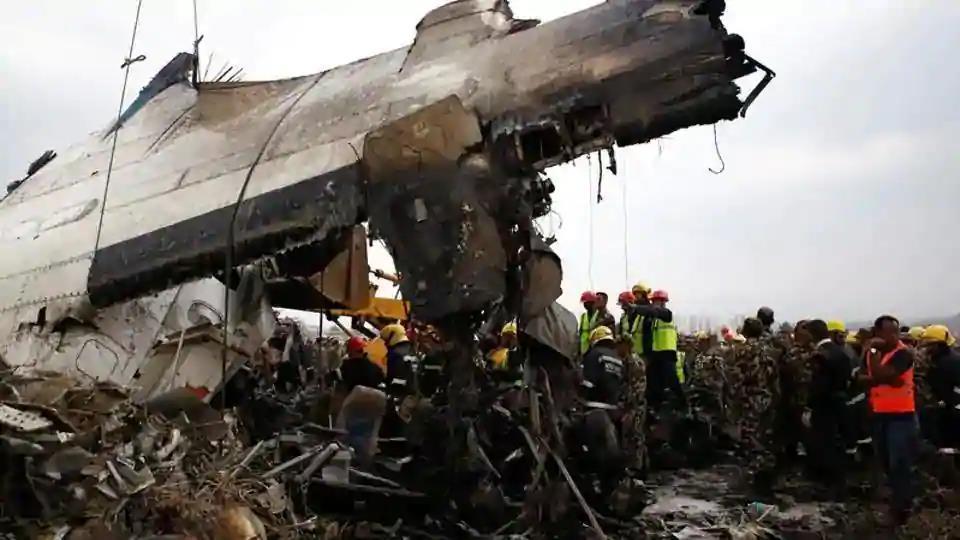
They blamed the crew’s loss of situational awareness for the crash of the US-Bangla Airlines flight to the Nepali capital from Dhaka that caught fire on landing in Kathmandu, killing 51 of the 71 people aboard.
“The pilot thought he could manoeuvre the aircraft and land. But he could not,” panel official Buddhisagar Lamichhane, told Reuters on Monday, referring to the captain.
The captain was under stress and “emotionally disturbed” because he felt that a female colleague who was not on board the flight had questioned his reputation as a good instructor, Nepal’s Accident Investigation Commission said in the report.
“This, together with the failure on the part of both the crew to follow the standard operating procedure at the critical stage of the flight, contributed to the loss of situational awareness,” the investigators said in their report.
This lack of awareness meant the crew did not realise the deviation of the aircraft, a Bombardier Inc Q400 turboprop, from its intended path, which in turn meant they could not sight the runway, they added.
Having missed the runway, the crew was flying very low north of it in an incorrect position near hilly and mountainous terrain around the airport, it said.
“Finally, when the crew sighted the runway, they were very low and too close to (it) and not properly aligned,” added the investigators, saying the captain should have halted the landing and initiated a go-around.
The plane skidded off the runway on to surrounding grass, quickly catching fire. Both pilots were among those killed.
US-Bangla Airlines CEO Imran Asif said in a statement that the report focused almost entirely on the captain’s state of mind and his distress over personal matters but disappointingly avoided recognising “serious lapses” on the part of air traffic control.
The Nepali investigators found that decisions by air traffic controllers, such as not calling for the aircraft to carry out a missed approach, were among the accident’s contributing factors, but not the cause.
‘Not done properly’
The flight’s captain, aged 52, was released in 1993 from the Bangladesh’s air force because he suffered from depression but was later declared fit to fly civilian aircraft, the report said, with recent medical reports mentioning no symptoms.
Citing the voice recorder and witness accounts of passengers, the report said the captain was smoking in the cockpit during the flight and “engaged in unnecessary, unprofessional and lengthy conversation even in the critical phase”, violating the norm of maintaining a sterile cockpit.
He shared the cockpit with a female first officer, 25, who had a total of just 390 hours of flying experience and had never landed at Kathmandu as crew, the report said, contradicting a US-Bangla spokesman who last year said she had made landings there before.
Landing in Kathmandu, which is surrounded by hills, is considered difficult. In 1992, all 167 on board a Pakistan International Airlines aeroplane were killed when it flew into a hill as it tried to land.
Bangladeshi investigators said on Monday the March crash could have been averted if air traffic controllers at Kathmandu had acted properly.
“Nepal airport is risky due to hills,” Air Vice Marshal Naim Hassan, chairman of the Bangladesh Civil Aviation Authority, told reporters.
“When the pilot missed the approach, it was the air traffic controllers’ responsibility to guide him. But it was not done properly.”
On the US-Bangla flight, the disparity in experience and added authority of the captain probably deterred the first officer from being more assertive during significant phases such as the final approach and landing, the investigators said.
They recommended that the airline emphasise proper crew resource management and set up a mechanism to monitor and assess the mental status of crew regarding professional development, financial, personal and psychological issues.
Pilot mental health was spotlighted by a 2015 crash in Europe after a Germanwings first officer deliberately flew a jet into a mountainside.
Last year, the European Commission adopted new rules on the mental health of pilots, for the first time requiring airlines to do a psychological assessment before hiring them.


