
 E-Paper



Post-Brexit tensions: UK says EU damaged vaccine programme, affects Britons
The latest chapter in the increasingly acrimonious new relationship between the UK and the EU began on Tuesday, when the British government reacted with dismay to comments from European Council President Charles Michel, who accused London of putting an outright ban on exports of coronavirus vaccines.


The UK accused senior European Union politicians of damaging its vaccination program by making “misleading” statements that cast doubt on the AstraZeneca shot, in an escalation of post-Brexit tensions between the two sides.
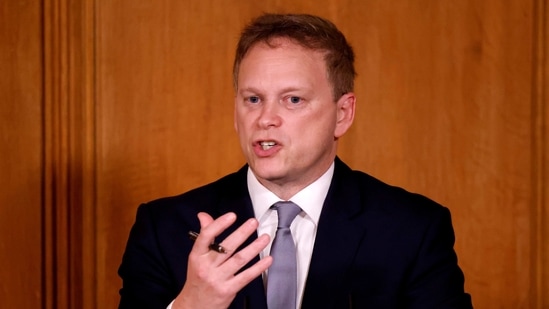
Cabinet minister Grant Shapps said fewer British people had taken up the offer of shots in the UK after EU figures questioned the efficacy of the AstraZeneca vaccine, a clear reference to remarks from French President Emmanuel Macron, among others.
Shapps’s intervention risks stoking an already heated row over vaccine nationalism and further souring the atmosphere between the EU and its former member state, who are in a separate dispute over Brexit trade rules that could end up in legal action.
The latest chapter in the increasingly acrimonious new relationship between the UK and the EU began on Tuesday, when the British government reacted with dismay to comments from European Council President Charles Michel, who accused London of putting an outright ban on exports of coronavirus vaccines.
The British side fiercely denied this, with Foreign Secretary Dominic Raab writing a letter of protest to Michel and summoning a senior EU diplomat in London for an urgent meeting.
On Wednesday, Prime Minister Boris Johnson weighed into the row, saying he wanted to “correct” Michel.
“Let me be clear, we have not blocked the export of a single vaccine or vaccine component,” he said in his regular weekly appearance in the UK Parliament. “We oppose vaccine nationalism in all its forms.”
European Commission spokesman Eric Mamer refused to comment directly on Michel’s remarks when asked by reporters in Brussels.
“We know that different countries have got different measures in place -- this doesn’t concern vaccines, as far as we understand, coming from the UK,” he said. “But we know as well that we, the EU, are a very, very active exporter of vaccines and this is not necessarily the case of all our partners.”
During broadcast interviews on Wednesday morning, Shapps, the transport minister, said he presumed Michel had “just a mistake” or didn’t have the right information.
“Unfortunately, there’s been a number of different statements made out of Europe, including misleading information on the effectiveness of some of these vaccines, which eventually have been unwound, but not until they’ve done damage to the number of people, the uptake on some of the vaccines, which I think is all very unfortunate,” Shapps told Times Radio.
“We just need to get on and vaccinate people,” Shapps said. “We want the rest of the world to vaccinate as well.”
At the end of January, President Emmanuel Macron raised doubts about the Astra vaccine’s benefits for the elderly, saying it was “almost ineffective” for those 65 and older. France subsequently endorsed the AstraZeneca vaccine for elderly people to use.
In a newsletter published Tuesday, Michel said he was “shocked” by accusations of “vaccine nationalism” against the EU. “The facts do not lie,” he wrote. “The UK and the U.S. have imposed an outright ban on the export of vaccines or vaccine components produced on their territory.”
‘Completely false’
Raab hit back in a letter to Michel, saying the claim is “completely false,” according to a person familiar with the matter. “The UK government has not blocked the export of a single Covid-19 vaccine or vaccine components,” Raab wrote.
Michel appeared to row back later Tuesday, writing on Twitter that he was “glad if the UK reaction leads to more transparency and increased exports.”
The spat marks an escalation in tensions between the two sides since Britain completed its departure from the bloc in December.
Johnson is facing a legal challenge from the bloc after unilaterally announcing he will not introduce export documents on food crossing the Irish Sea to Northern Ireland from April 1, as previously agreed.
European Commission Vice President Maros Sefcovic outlined details of the action to EU ambassadors meeting in Brussels on Tuesday. Measures could include imposing penalties on the UK that include trade tariffs, an EU official said.
Vaccines have become a flashpoint in the relationship as the EU’s program -- dogged by delays -- has struggled to keep pace with the British. About a third of the UK population has received a dose, compared with 6% in the EU, according to data compiled by Bloomberg.
In January, the EU briefly threatened to control the flow of vaccines into Northern Ireland, and thus the UK, by using an emergency clause in the Brexit agreement. In doing so, the bloc reopened one of the most sensitive disputes in the entire divorce: how to avoid the return of full customs checks on the island of Ireland.
On Monday, Johnson called the tensions “teething problems” which could be “ironed out” with “goodwill and imagination.”


