
 E-Paper



Prez Xi Jinping pushes limits, not just with neighbours but at home too | Analysis
President Xi Jinping has been laying the groundwork to consolidate his control over China’s politics and the armed forces for years

 Prefer HTon Google


Chinese President Xi Jinping isn’t only flexing muscles with neighbours but has stepped up efforts to consolidate his leadership in the Communist Party that meets later this month. President Xi is expected to get the Communist Party of China’s (CPC) central committee to sign off on a new set of regulations that will let President Xi dictate the agenda for meetings of the party’s top panels.
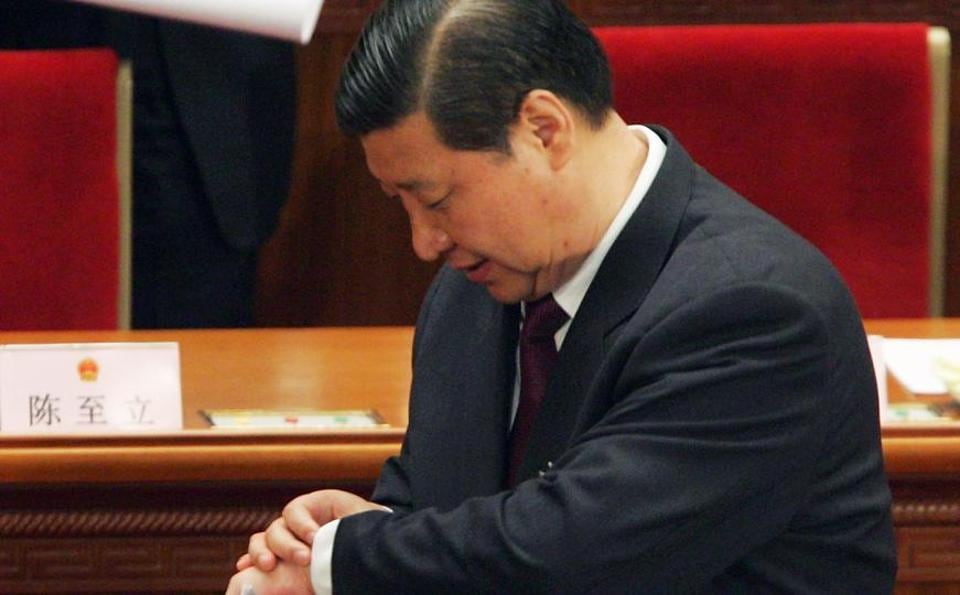
People familiar with the matter said this power appears to be a precursor to President Xi giving himself a huge promotion that would place him on par with communist China’s founding father Mao Zedong, the only leader in the party’s history to be designated as chairman. “President Xi Jinping’s actions to consolidate his power does suggest very clearly that he has decided to elevate himself,” a China watcher in New Delhi said.
President Xi would be the first chairman of the party in 45 years if he goes through with it. Xi, like Mao Zedong, is already designated as the PLA commander-in-chief and the Middle Kingdom’s paramount leader. In October 2017, Xi was only the second Chinese leader after Mao to have had an eponymous ideology included in the party’s charter while in office. This year, he had the Xi Jinping Research Center for Diplomatic Thought opened.
Also Read: From Mao to Xi, the changing Chinese positions on Ladakh
President Xi has been laying the groundwork to consolidate his control over China’s politics and the armed forces for years. As far back as 2016, according to one analysis, China’s commander-in-chief had ruthlessly purged 73 general-rank officers including 4-star generals and fast-tracked promotions to those loyal to him to ensure the PLA’s complete submission to him, not the party.
Xi had also been able to induct 18 of the 25 Politburo members from his personal network by 2017, up from the 5 members he could count as his own in 2012 when the party’s 18th Congress was held. The 20th Congress is proposed to be held in June next year.
That effort continues.
Early this month, Xi Jinping continued to target Vice President Wang Qishan, placing the vice president’s close associate Dong Hong under investigation on suspicion of what was described as ‘disciplinary review and supervisory investigation’. Dong, according to articles in China’s state media, had worked closely with vice president Wang since the 1990s when their paths first crossed and was a senior disciplinary inspector under Wang when he was chief of China’s anti-corruption agency and powered Xi’s anti-corruption campaign during his first five-year term that often targeted rivals. A recent analysis in Asian Nikkei Review suggested that the equation between Xi and Wang could be up for a change.
Dong Hong was the second close associate of vice president Wang to be implicated on October 2 after his high school friend and an ex-party member Ren Zhiqiang was handed an 18- year imprisonment. Ren Zhiqiang, the former chairman of state-owned real estate group Huayuan, was convicted for illegal gains totalling 112 million yuan ($16.5 million), a charge that was slapped on the 69-year-old after he called Xi Jinping “a clown stripped naked who insisted on continuing being emperor” in March.
Ren was promptly expelled from the communist party, investigated for a “serious disciplinary violation” and charged with offences such as using official funds on golf expenses and using office and residential spaces provided for free by businessmen. If Chairman Mao could purge his close associates such as Liu Shaoqi during cultural revolution, Comrade Xi is expected to follow his footsteps in pursuit of 2021 China Dream.


