
 E-Paper



QUAD to push back on belligerence in Indo-Pacific in Tokyo
The US affirmation of Senkaku Islands under defence treaty with Japan indicates that QUAD Tokyo summit will push back on belligerence in Indo Pacific.

 Prefer HTon Google


New Delhi: Expectations have been raised over QUAD’s pushback to belligerence in the Indo-Pacific at the May 24 Tokyo summit meeting with US affirming that Senkaku Islands, disputed by China, calls under the ambit of Japan-US security treaty and signaling that America would come to Tokyo’s military aid in the event of attack from Beijing.
In the meeting between US Defence Secretary of State Llyod Austin and Japanese Defence Minister Nobuo Kishi last Wednesday, the two countries have decided to align their security strategies and cement cooperation to deter any change of status quo in the Indo-Pacific by use of force.
The American affirmation over Senkaku Islands will bring relief to the Kishida administration as Washington since the time of Bill Clinton has been on and off over whether Senkaku Islands is covered under the Japan-US defence treaty.
Linking the Ukraine war to the Indo-Pacific, Kishi spoke against unilateral change of status quo by Russia in Ukraine and said this had similar implications in the Indo-Pacific in context of an armed emergency in Taiwan or Senkaku Islands. The US affirmation of Senkaku Islands under defence treaty with Japan indicates that QUAD Tokyo summit will push back on belligerence in Indo Pacific.
ALSO READ: Chinese strategic choke-points impact QUAD security
Kishi is younger brother of former Japanese Prime Minister Shinzo Abe, who last December in Taipei had said that any Taiwan contingency was an emergency for Japan and had asked the US to shed its strategic ambiguity over the breakaway Republic. The Japanese security concern over Taiwan stems from the fact that Yonaguni Island, Japan’s westernmost territory, is mere 110 kilometers from Taiwan, which the Chinese Communist Party wants to co-opt by force.
In the past one year, the Xi Jinping regime has not only exercised a massive show of force in the Taiwan air identification zone but also flexes military muscle near Senkaku Islands. Alarm bells are also ringing in Japan as China with its “no limit” ally Russia are exercising in the Sea of Japan using warships and fighter planes.
The recent test firing of a conventional ballistic missile from a Chinese Type 55 cruiser warship has also caused consternation among the QUAD partners as this delivery platform could be used by the Chinese Navy to target US, Japan, Australian or Indian warships in the worst case scenario.
The whole strategy behind the warship launched ballistic missile is to deny access to warships of China’s perceived adversaries in the Indo-Pacific and keep them out of the South China Sea and East China Sea. India has no answer to Chinese land or sea based conventional ballistic missiles.
Considering the above developments and with Japan deciding to update its National Security Strategy by 2022 end, the QUAD leaders are indicating a push-back to belligerence in the Indo-Pacific even though the ASEAN countries continue sitting on the fence as they don’t want to be on the wrong side of the Chinese Communist Party.
While countries like the Philippines have decided to strengthen their deterrence capabilities, other ASEAN countries including Indonesia feel that it is not their fight even though Chinese dominance of sea routes in the South China Sea is going to impact these countries which largely depend on international trade and tourism.
However, a former foreign secretary said the ASEAN position over the Indo-Pacific was nuanced and not unidimensional. “There are fence-sitters, there are thinkers and then there are silent operators, who will do something but will not utter a word, unlike South Asia,” the former diplomat said.
With Japan planning to double its defence budget and go for high end armed drones and India not backing down an inch in East Ladakh, the PLA will have to rethink its Indo-Pacific strategy as the US has made it clear that Indo-Pacific is as much a priority as the Ukraine war.
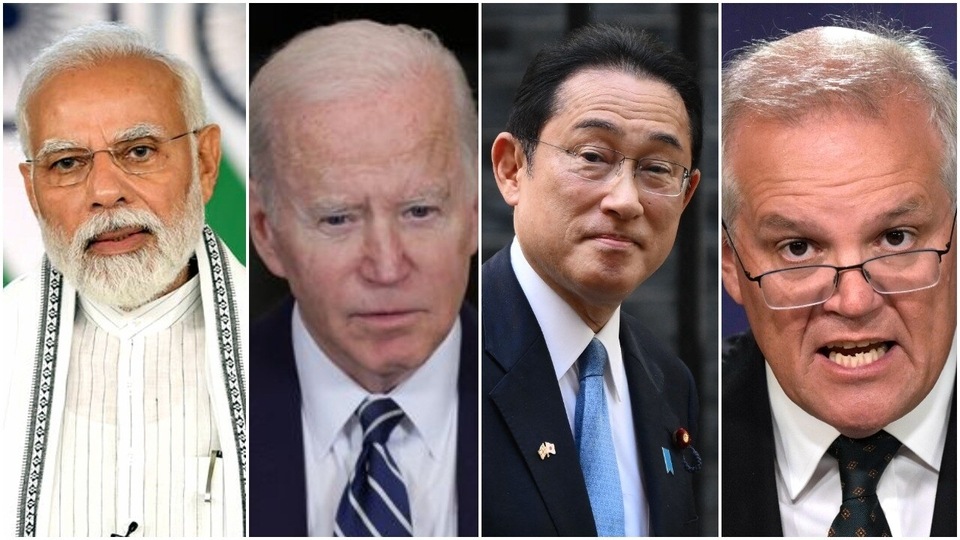
Even though the strong Australian PM Scott Morrison is facing a general election this month, even a change in regime will not change Canberra’s attitude towards belligerent China and their space in the Indo-Pacific. QUAD is expected to come of age in Tokyo.


