
 E-Paper



'Remove all threats': Israel prepares for 'Gaza-style' buffer zone in Lebanon with new order
The residents, who have been evacuated towards northern Lebanon, will be barred from returning near the Litani river "until the safety of Israel is guaranteed."

 Prefer HTon Google


As the war between the US and Iran spills over in the region, Israel has announced a plan to move deeper into Lebanon amid its escalating conflict with Hezbollah. In an announcement made by Israeli defence minister Israel Katz, the IDF is preparing to create a "Gaza-style" buffer zone in southern Lebanon.
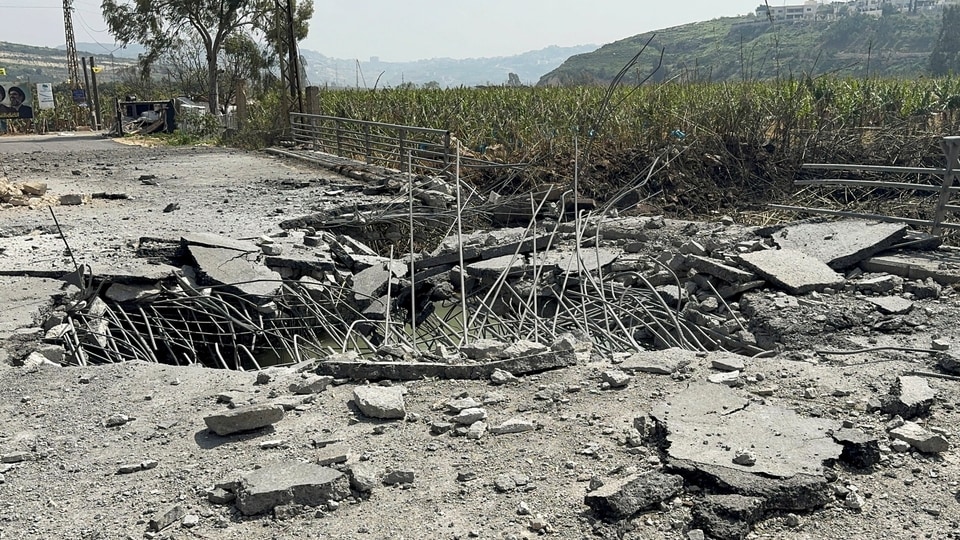
Speaking to reporters after a situation assessment with military officials, Katz announced that the IDF has received orders to create a new security zone, which will allow Israel to control the country till the Litani River.
"All homes in Lebanese villages near the border will be destroyed — in accordance with the Rafah and Beit Hanoun model in Gaza,” Katz was quoted as saying by Times of Israel, adding that this will be done "in order to remove, once and for all, the threats near the border.”
"At the end of the operation, the IDF would control the area up to the Litani River, including the remaining Litani bridges, while eliminating Radwan forces that infiltrated the area and destroying all weapons there," Katz added further.
Israel's buffer zone plan will also displace over 600,000 residents in Lebanon. The residents, who have been evacuated towards northern Lebanon, will be barred from returning near the Litani river "until the safety of Israel is guaranteed."
In a video shared on X last week, Katz said another factor into the expansion is to not let a repeat of Octber 7 happen. (October 7 refers to the Hamas terror attack in southern Israel in 2023, which triggered the start of Israel's war on Gaza.)
Major escalation from Israel
IDF's orders to move deeper into Lebanon come at a time when the Gulf region sees itself on the brink of an all-out war. Israel's plan also presents a dangerous precedent in the region, with many experts referring to its ground invasion in Beirut as part of the country's agenda to change Israel's border.
Furthermore, with the war between the US and Iran escalating daily, Israeli Prime Minister Benjamin Netanyahu has told US officials that even if a peace deal is signed with Iran, Israel will not stop its war against Lebanon, particularly Hezbollah.

Speaking to reporters, Katz added that the IDF's plan focuses on cutting off Lebanon from the influence of the Iranian regime.
"We are determined to separate Lebanon from the Iranian arena – to pull out the snake’s teeth and strip Hezbollah of its ability to threaten,” Katz said, adding that Israel will seek to “change the situation in Lebanon” through the IDF's presence in the region.
Since the start of the war with Lebanon on March 2, the Lebanese health ministry has stated that at least 1,247 people, including 124 children, have been killed, and around 3,680 people have been injured.
Furthermore, with Israel increasing its attacks, over one million people have been displaced.
Israel's various 'buffer zones'
Israel currently operates various buffer zones with its neighbouring countries. In Palestine, Israel implemented a "yellow line" or de facto border in the Gaza Strip as part of Trump's ceasefire plan for Israel and Hamas.
In the occupied West Bank, Israel operates a buffer zone, which is called the Seam Zone. This zone further isolates Palestinians and their land while growing settlements and military checkpoints for the IDF and Israelis.
Israel also has a buffer zone in the occupied Golan Heights in Syria. The zone was monitored by the United Nations. However, with the collapse of the Assad regime, Israel took control of the zone.


