
 E-Paper



Savvy staff are moving from China’s nurseries to its care homes
Last year there were 12m fewer pre-school pupils than in 2021


 Prefer HTon Google


LESS THAN three years ago Ms Jiang was tidying away toys and singing rhymes as a teacher at a nursery in Beijing. She remembers parents knocking on the door in an effort to sign their children up. That gradually became rarer, until last year Ms Jiang found herself distributing promotional leaflets for the nursery in her lunchbreaks. She realised that the alphabetical writing was on the wall. Last May Ms Jiang decided to move into a sector with better growth prospects: care homes. “Caring for the elderly is easier than caring for young children,” she reckons. And Ms Jiang’s abilities to teach handicrafts and play games come in useful.
Between 2017 and 2022 China’s total fertility rate, the number of births per woman, collapsed from 1.8 to 1. That is far below the replacement rate of 2.1, at which a population remains stable in size. To help boost births China just announced subsidies of 3,600 yuan ($500) each year for every child under the age of three. But the crash is already taking its toll on nurseries. From 2021 to 2024 the number of pupils in pre-schools fell from 48m to 36m, official data show. Around 42,000 of 295,000 pre-schools have closed down, and 360,000 of 3.2m pre-school teachers have left their jobs.
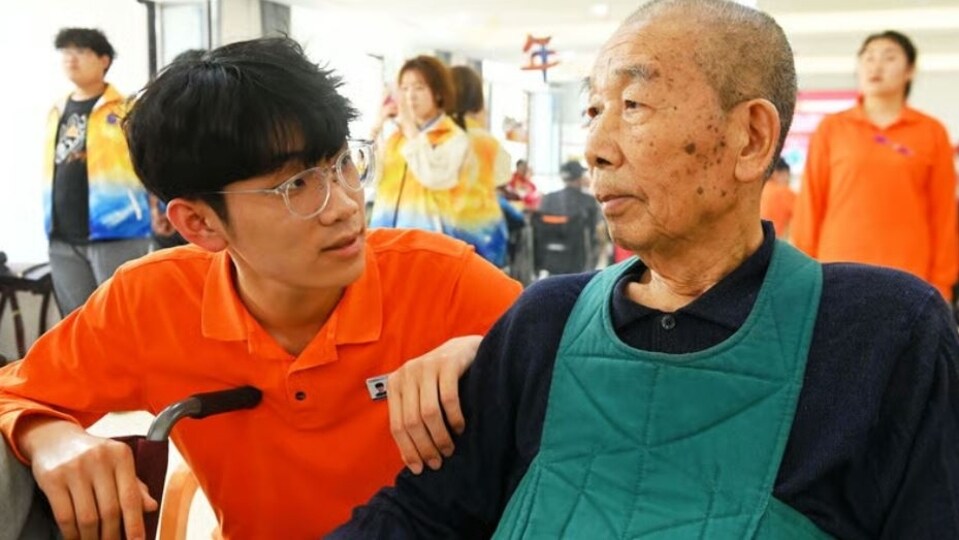
There is a very silver lining to all this for those savvy enough to adapt. Whereas China’s nursery-going cohort, from ages three to six, will fall from 49m to 35m in the next five years, the number of people aged 65 and above will rise from 211m to 256m in that time, according to projections from the UN, and will continue to increase. China badly needs more staff to care for them. In 2021 it had just half a million certified care workers, according to People’s Daily, a party mouthpiece. That made for just 0.27 care workers per 100 people aged 65 and above, a shockingly low number. (In the same year the figure for the OECD, a club of mostly rich countries, was on average 5.7.) Universities have also launched degrees in elderly care to help. The first batch of students graduated last year, to apparently hot demand.
All this motivated one Ms Wu to open her own care home in Jiangxi in 2023 after years in nurseries. She has nine residents who pay 2,600 yuan ($360) a month to be there. The outlook for the care industry is bright, she says. Right now those in care homes have multiple children, but those born in the 70s and 80s mostly only have one child, which means fewer people to look after them when they eventually get old. Ms Wu receives enquiries from prospective customers almost every day. She has also had a few from nursery teachers looking to make the switch she did.
The government likes “mixed-use” facilities where both young and old are looked after. Last year in Chongqing in central China, for example, an empty floor of a nursery was turned into an “elderly-care station”, according to a local report. It had facilities for sport (table-tennis tables) and the arts (calligraphy tables), and when the nursery teachers were free, they taught the elderly. A newspaper run by the National Development and Reform commission, China’s main economic planning body, has called for local governments to provide subsidies and tax concessions to such projects. And the old enjoy seeing the young; some grandparents even drop off tiny relatives at the nursery before heading to their own floor.
Subscribers can sign up to Drum Tower, our new weekly newsletter, to understand what the world makes of China—and what China makes of the world.


