E-Paper



Scientists tested a Chernobyl-linked black fungus on the ISS; it grew 21% faster in orbit, and a thin layer registered 0.84% less radiation below
A 2022 study sent a Chernobyl-linked black fungus to the ISS. It grew about 21% faster, and a thin layer saw slightly less radiation.

 Prefer HTon Google


Most of us think of black mold as something to scrub off a bathroom wall. Researchers saw it as a possible space shield. A 2022 study published in Frontiers in Microbiology described how a team sent a black fungus called Cladosporium sphaerospermum to the International Space Station to test its tolerance to cosmic radiation. The species has been found in the Chernobyl Exclusion Zone, where radiation levels are far above normal, although the strain flown was a commercial one. In the test, the fungus grew about 21% faster in orbit, and a thin layer of it sat above slightly lower readings of radiation. The results are interesting but have significant limitations.
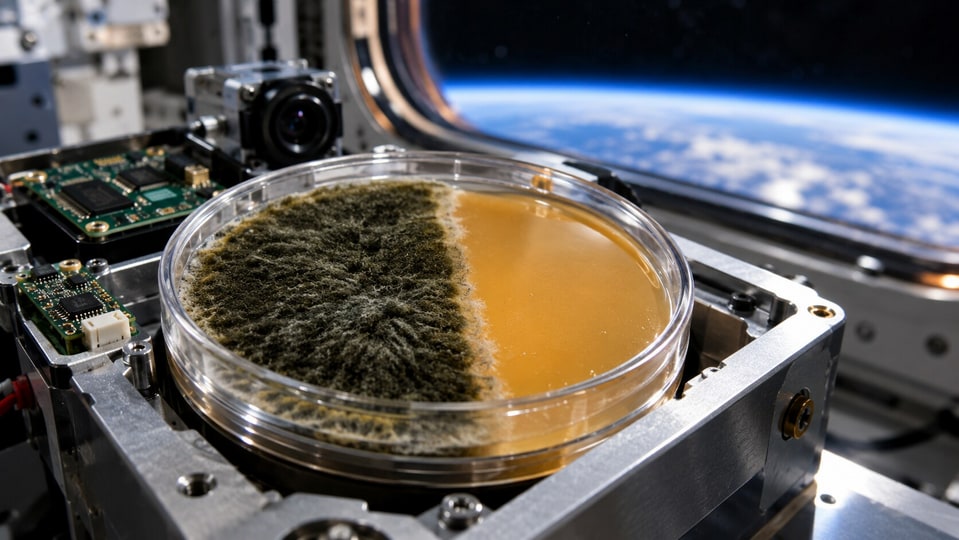
Why scientists are drawn to a Chernobyl mold
One of the biggest health hazards for astronauts who travel far from Earth is radiation. The authors note that an astronaut on the ISS receives some 144 millisieverts a year. The average person on Earth gets about 6.2. Heavy shielding is hard to launch, so the team looked at living materials that can regrow and adapt. Some of the molds in the Chernobyl zone seem to be attracted to radiation. The study suggests the pigment melanin might be involved. Melanin is the same pigment that colors human skin. That link made this mold a good candidate for a test in orbit. But the hypothesis still needed a test in space.
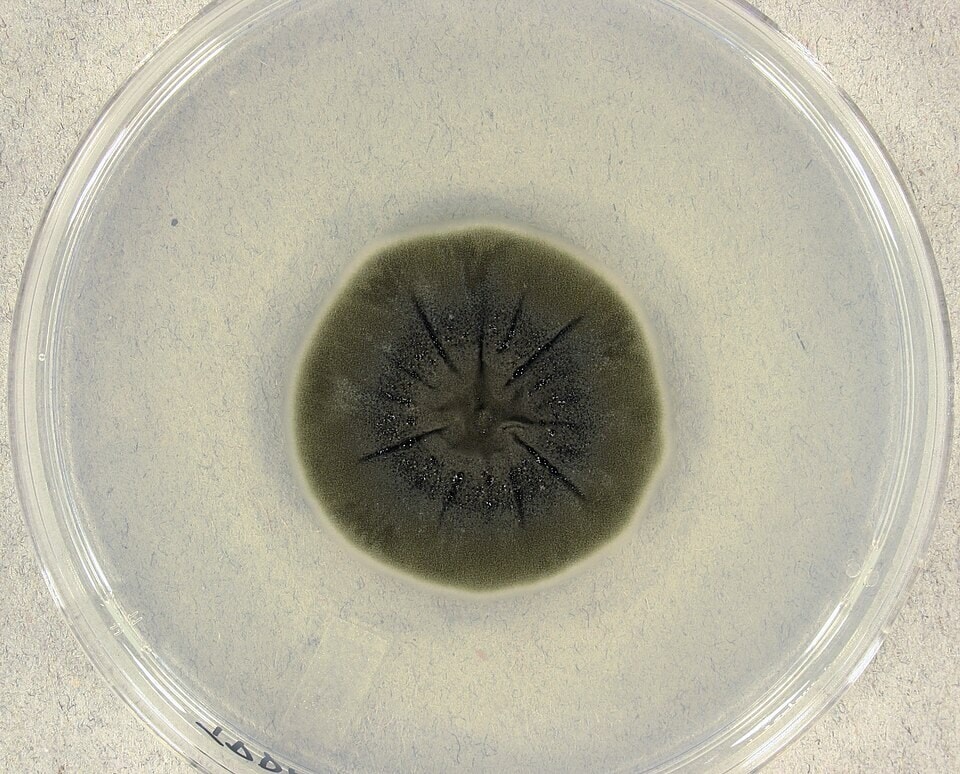
How the experiment worked
The team built a small, sealed box with just one split petri dish inside. Half of the dish contained the fungus on agar, a jelly-like substance that serves as a growing medium. The other half contained only agar and served as the control. Two radiation sensors were placed under the dish, one on each side. The box traveled to the ISS on a SpaceX cargo mission in December 2018. The experiment lasted about 26 days. The strain was purchased from a commercial culture supplier and does not appear to be a Chernobyl isolate. The team set up a camera to take a photo every 30 minutes, so they could track the rate of mold growth over time.
The 21% growth boost
In orbit, the mold grew fast. The paper says the entire agar surface was covered in about two days. Many molds take up to two weeks. Growth leveled off after that, but the team allowed about a week more for the mold to mature, and the sensors kept recording for the whole run. The authors found a growth rate 1.21 times higher than the ground controls, with an uncertainty of 0.37. That translates to roughly 21% faster, though the uncertainty is large relative to that gap. The researchers wrote that this might point to an adaptive response to space radiation. They also said they could not tell the effect of radiation from the effect of microgravity. The orbit run was performed only one time, while the ground tests were done three times. That makes the result encouraging, not a definitive answer.
The 0.84% radiation drop and its limits
The radiation results were smaller. A 2020 bioRxiv preprint from the team reported that radiation under a 1.7-millimeter fungal layer was about 0.84% lower than for the control, when fully grown. The peer-reviewed paper later reported 147 counts per minute under the fungus and 151 under the control, measured over the full run. As the mold aged, the gap widened, which is consistent with the idea that the fungus was responsible. The authors said the difference may be due to the amount of fungal biomass. They also mentioned a possible change in the dish as the mold consumed nutrients, but thought that cause was less likely. Since only one side of the sensors was covered, the drop is a clue, not proof. The authors called it a proof-of-principle test, and wrote that more studies are needed. They also noted that radiosynthesis remains to be shown. The idea is that a fungus can use radiation to help power its metabolism. A spacecraft wall made of mold is nowhere near ready, but the test gave researchers a clear starting point for future work.