
 E-Paper



‘Why didn't he…': Shehbaz Sharif questions Imran Khan's 'conspiracy' allegations
Khan had claimed that US diplomat Donald Lu had sent a threatening message to him through Pakistan's envoy ambassador to the US Asad Majeed.


Shehbaz Sharif, leader of the opposition in the National Assembly of Pakistan, rejected Prime Minister Imran Khan's allegations of the involvement of an "external force" in the no-trust resolution against him, and asked if he and his ruling party had an objection, why did not they raise it on March 24 in Parliament.
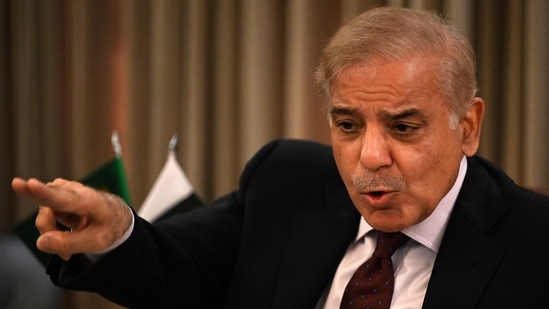
Sharif said the conspiracy theory was an afterthought of Khan and his party as they could not face the loss that was going to take place as per the Constitution and the Law.
"The Constitution was violated yesterday by Imran Niazi and his group. The motion (no-confidence) was submitted on March 8, if some message had come from the US -- as they claimed it came on March 7 -- why did they not raise it on March 24?" news agency ANI quoted Sharif as saying.
"This was all an afterthought of Imran Niazi and his group. They could not face the loss that was going to take place as per the Constitution and the Law. So, they hurt democracy and violated the Constitution," he added.
On Sunday, Khan had claimed that assistant secretary of state for south and central Asian affairs Donald Lu had sent a threatening message to him through Pakistan's envoy ambassador to the US Asad Majeed.
"The US had sent a threatening message through Pakistan's envoy," he said.
During his remarks that were televised, Khan said when the National Security Council (NSC) had condemned the involvement of an external force in no-trust resolution, counting (of votes on the motion) had become "irrelevant".
Lu had reportedly in a meeting with Majeed warned there could be implications if he survived the opposition's no-confidence motion in the National Assembly.
Also Read | Who is Donald Lu — US diplomat who allegedly ‘threatened’ Imran Khan?
The prime minister said he had reports that Pakistan Tehreek-e-Insaf (PTI) dissidents had frequented the [US] embassy. "What were the reasons that the people, who have left us, met people of the embassy frequently in the last few days," he said.
The United States has rejected Khan's allegations regarding Washington's role in the alleged "foreign conspiracy" to oust him from power.
Khan is the third PM to face the no-confidence motion in Pakistan.
However, Pakistan National Assembly deputy speaker Qasim Suri on Sunday had dismissed the no-trust motion against the PTI government, terming it a contradiction of Article 5 of the country's Constitution.
Moreover, Pakistan President Arif Alvi dissolved the National Assembly on the advice of Khan.


