
 E-Paper



What's happening now on Venezuela's streets? Uneasy quiet, an interim President, and Trump's plan to ‘run’ country
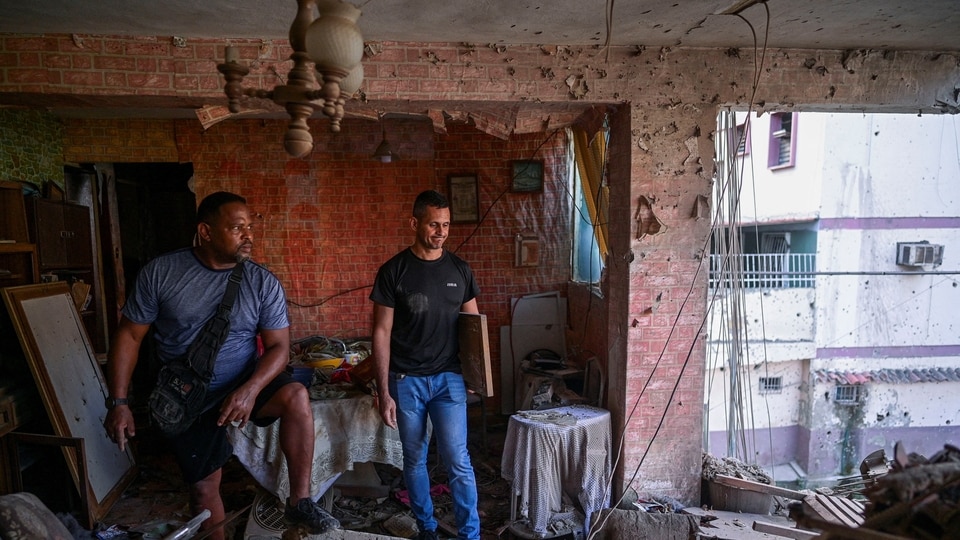
Some visible marks of the US operation were present as families cleaned up debris of houses damaged in blasts by US forces during its Saturday operation

 Prefer HTon Google


For a country that saw a shocking “capture” of its President and First lady in a foreign operation just a day before, Venezuela's capital Caracas was eerily quiet on Sunday. Only a few vehicles moved around, and convenience stores, gas stations and other businesses were mostly closed, reports from the ground said, even as President Nicolas Maduro and his wife face narco-terror charges in New York.
Follow | Live updates on the US operation in Venezuela
After the seismic shift in the Communist regime-run Latin American country, US President Donald Trump has said the United States would “run” Venezuela.
Maduro's Vice President Delcy Rodriguez reportedly has US backing for now — she has been named interim President by the top court, in line with the constitution — but no one in the country was sure of the present or what lay ahead, news agency AP reported.
The tense calm a day after the American military operation was in contrast with commotions seen on Saturday. Queues were seen outside stores and petrol pumps just hours after the swift early-hours operation on Saturday, as Venezuelans stocked up on goods in case turmoil broke out.
By Sunday, turmoil did not seem as imminent, though some queues were seen.

Roads usually filled with runners and cyclists were mostly empty. The presidential palace was guarded by armed civilians and some members of the military, said the AP report.
Also read | India breaks silence on US action on Venezuela
Some visible marks of the US operation were present just outside the capital, in La Guira, where families were cleaning up debris of houses damaged in blasts by US forces. Some buildings had large holes in their walls.
In a relatively poor area of eastern Caracas, construction worker Daniel Medalla sat on the steps outside a Catholic church. He told fellow parishioners that there would be no morning Mass.
Medalla theorised the streets remained mostly empty not because people are worried about another military strike, but because they are fearful of government repression if they dare celebrate.
Also read | 'Venezuela has oil, Greenland has...': Stinging jibe at US from Iceland Cricket
He was mindful still of the fierce crackdown during last year's fraught elections that had left Maduro teetering despite a win, amid allegations of rigging.
“We were longing for it,” Medalla, 66, said of Maduro’s exit.
The US government has, meanwhile, said it's ready to work with Venezuela's remaining leaders “if they make the right decision”, AFP reported.
Secretary of State Marco Rubio said on Sunday, "We're going to judge everything by what they do, and we're going to see what they do."
"I do know this: that if they don't make the right decision, that the United States will retain multiple levers of leverage," Rubio told CBS News.
Crude oil remains a major factor — Venezuela has the world's largest known reserves, though majorly untapped — and Trump has said American companies will “extract” the vast amounts that he claimed remained untapped because of Maduro's and the previous regimes.

Amid this, Venezuela's state-run oil firm, Petróleos de Venezuela or PDVSA, has asked some of its joint ventures to cut back crude output by shutting down oilfields. Oil stocks are mounting amid an export paralysis, sources close to the decision told news agency Reuters.
The oil exports remain at a standstill following the announced US blockade of all sanctioned tankers going in and out of its waters and the seizure of two oil cargoes.


