
 E-Paper



The U.S. Evacuated Them from Afghanistan—Then They Got Stuck in the Desert
Some 1,300 Afghans are in limbo at an American camp in Qatar, unable to continue to the U.S. but in danger if they go back home.


After three years evading the Taliban in Afghanistan, Mohammed Ibrahim thought he had made it to safety when the U.S. evacuated him, his wife and two of his children to a former American military base in Qatar.
Ibrahim had worked for over a decade with the U.S. military during America’s war in Afghanistan, putting him at risk for retribution by the Taliban. He had made it to the final stages of getting approved to permanently live in the U.S. as a refugee. He had been told it might take a few weeks for the final paperwork to clear.
Ten months later, he and his family members—along with some 1,300 other Afghans at the former base, known as Camp As Sayliyah—are stuck.
What had already been a narrow window into the U.S. has now all but shut. President Trump’s clampdown on migration has closed off most of the Afghans’ avenues to America, and many of the government officials in charge of relocating them have been let go.
Afghans with hopes of reaching the U.S. are stranded across the globe, but Camp As Sayliyah is unique: It’s the only place where the U.S. has direct custody. The Afghans there have grown increasingly fearful the U.S. government could eventually try to wash its hands of them and send them home.
“If there was a 50% chance the Taliban knew I was working for the Americans before, they will be 100% sure now,” Ibrahim said.

Ibrahim and his family arrived at the camp on Jan. 16, four days before Trump took office. The government was preparing to formally issue him paperwork as a refugee—a legal designation meaning the U.S. recognized his life was in danger in his home country—and made preparations to fly him to the U.S.
But Trump halted the refugee program when he took office, and Ibrahim’s paperwork was never completed.
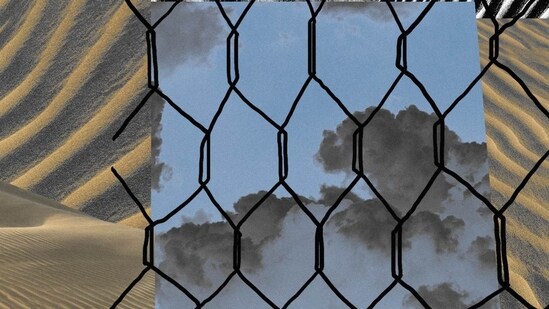
He and his family settled in a small room with bunk beds and a TV, one of many rooms in a large hangar in the sweltering desert. It’s often too hot to go outside, so people pass the time inside, wandering the converted hangars or browsing on their phones. The rooms have no ceilings and are instead covered in chicken wire. None of the Afghans are allowed outside of the camp.
The one fact that gives Ibrahim some comfort is also the primary source of his anguish: Four of his other children are already living in the U.S. The youngest is 13, a twin to a daughter with him in Qatar. The whole family had attempted to escape Afghanistan together during the chaotic U.S. withdrawal in 2021. Only half made it through the gates of the Kabul airport.
The saga of the Afghans at Camp As Sayliyah is the latest chapter in the aftermath of America’s troubled 20-year war in Afghanistan and its botched withdrawal.
The U.S. had promised hundreds of thousands of Afghans a pathway to the country for their work supporting American war efforts. Afghans aligned with the U.S. face imprisonment, torture or death at the hands of Taliban security forces now in charge of the country, current and former U.S. officials as well as human-rights groups have said.

Former President Joe Biden’s administration scrambled to evacuate Afghans from the country after its withdrawal ended in a Taliban takeover—a process that resettlement advocates criticized as too slow in its early years. By the time Biden prepared to leave office, the U.S. had evacuated and resettled around 180,000 Afghans, then-Secretary of State Antony Blinken said at a State Department event in December 2024. Most of those have since applied for green cards or asylum.
When Trump took office, an estimated 200,000 to 260,000 potentially qualifying Afghan families were still stuck abroad, according to advocates who analyze government data. Most are still in Afghanistan or neighboring Pakistan, which has repeatedly threatened to repatriate them.
Throughout the Biden administration, bipartisan efforts in Congress to fast-track a path to citizenship for Afghans already in the U.S. stalled over concerns about security vetting from some Republicans. That measure would have also expedited resettling Afghans from abroad. The Congressional push continues.
“The men, women and families still waiting at Camp As Sayliyah—and in other temporary locations around the world—stood by the United States at great personal risk,” said Sen. Jeanne Shaheen, the top Democrat on the Senate Foreign Relations Committee, who has co-sponsored such legislation. “We owe it to them to finish what we started.”
In a statement, the Trump administration said its priority is stringent vetting.
“Under the leadership of President Trump, our priority will always be the safety and security of the American people,” said State Department spokesman Tommy Pigott. He added that Trump “has a humanitarian heart and is committed to helping those who supported the United States.”
In July, the administration removed humanitarian protections for Afghans living in the U.S. under Temporary Protected Status, saying in a public notice that “Afghanistan has had an improved security situation, and its stabilizing economy no longer prevents them from returning to their home country.”
Some of the Afghans at Camp As Sayliyah have traded rumors that the U.S. might shut it down and repatriate them. One U.S. official said that option was one of several proposals put forward in internal agency discussions, but cautioned that no decisions had been made.
Ibrahim said his family and others constantly ask the U.S. contractors operating the camp, as well as visiting U.S. consular officials, about the status of their cases. Each time the answer is the same: No news.
‘Take us back’
Ibrahim sees the fact his family got out of Afghanistan at all as a miracle.
He said he had worked for a company that contracted with the U.S. Army on transportation logistics between 2003 and 2012. He then started his own transportation company with his father and brother-in-law, working with the U.S. military and Western embassies in Kabul.
In the summer of 2021, Ibrahim said, his brother-in-law was accompanying a bus with their company from Mazar-e-Sharif to Kabul. Taliban forces pulled the bus over, forced everyone out and torched it. The Taliban fighters kidnapped his brother-in-law. A week later, his body was sent back to the family.
Then came the U.S. withdrawal that August, and the swift collapse of the Afghan government that the U.S. had supported for decades.

Ibrahim and his family divided into two groups and joined the crush of people trying to get to Kabul’s international airport. They clasped hands to avoid being separated.
At one point, Afghan police officers attempting to control the crowd shoved Ibrahim to the ground. Ibrahim, who has heart issues, started feeling intense chest pain. His wife and two daughters who were with him rushed him to the hospital.
Meanwhile, his daughter Husnia Ibrahim, who was then 19, and three of her younger siblings had made it through the airport gates before they knew their dad was on his way to the hospital. Ibrahim’s sister, whose husband had just been killed, was with them, too.
“I told one of the U.S. Army officers, ‘Take us back. We don’t want to go. We came without our parents,’” Husnia recalled. “But he said, ‘Once you’re inside, you can’t go back out.’”
By the time Ibrahim was released, Husnia’s group was en route to an American base in Germany.

Downsized
Husnia and her younger siblings stayed in Germany a week for security screenings before being brought to Virginia and then New Jersey, where a nonprofit refugee organization helped resettle them. A local church provided a furnished home. The pastor’s family dropped in regularly to make sure they had groceries and enough money to cover their bills.
While her younger siblings enrolled in school and their aunt cooked meals for the children, Husnia worked at Burger King to support the family. She watched her siblings carefully and noticed when the twin, Fatima, struggled to adjust to their new life.
“I tried to take care of them like a mom would,” Husnia recalled.
In Afghanistan, Ibrahim spent his days in hiding, rarely leaving the house. Trusted shopkeepers delivered his family food and other supplies.
He said his employment should have qualified him for a Special Immigrant Visa, a class of green cards that Congress created to reward Afghans and Iraqis who worked with the U.S. military. But by the time he wanted to apply, he couldn’t locate his old boss to attest to his employment. He said he also destroyed some of his documents when the Taliban swept into power, for fear they would find proof of his work with the U.S. and allied governments—a step many Afghans at the time took for their own safety.
The U.S. government doesn’t comment on individual visa cases as a matter of policy.

The number of Afghans admitted through the SIV program has dropped significantly since Trump took office, State Department data shows. In December 2024, 3,433 Afghans were admitted to the U.S. under the program, including applicants and their family members. In May 2025, the most recent month available, 959 were admitted.
Those who don’t qualify for an SIV have sought to be certified as refugees. Trump has all but shut down the refugee program.
After the formal evacuation ended in 2021, the U.S. quietly worked with the Taliban to allow flights of evacuees to continue, overseen by the State Department’s office of the coordinator for Afghan relocation efforts, or CARE.
Evacuees were flown to Germany, Albania or Qatar before going to the U.S. They got background checks, including security and health screenings. Under Biden, the CARE office in Washington had around 200 staffers and contractors.
State department officials estimated it would take a decade to resettle all the Afghans potentially eligible for various programs after 2021, according to people familiar with the matter.
Now the CARE office has been significantly downsized under a State Department reorganization, current and former officials say.

The downsizing “was really the nail in the coffin for government efforts to continue resettling Afghans who are eligible to come here,” said Jessica Bradley, a former official in that office who was let go in July.
A senior State Department official said there are still more than 90 people working on Afghan relocation and 1,000 people total working on CARE-related issues between direct hires and contractors.
Trump vowed to help Afghans who aided the U.S. when asked about the matter at a July White House event. “We know the good ones, and we know the ones that maybe aren’t so good,” he said. “We’re going to take care of those people, the ones that did a job [for us], the ones that were told certain things.”
In limbo
After a few years in New Jersey, Husnia married a fellow Afghan refugee and now lives with her siblings in Seattle. She works at the International Rescue Committee—the nonprofit that helped resettle her family—managing the cases of more recent arrivals. She dreams of enrolling in college to study political science.
Fatima, now 13, feels guilty that she has been allowed to continue studying while her twin sister couldn’t attend school after sixth grade under Taliban rule. They call each other daily on WhatsApp, cry together and share their secrets.
“When I see my friends with their parents, I get emotional,” Fatima said. “I ask myself: Why aren’t mine here?”
Husnia has been working to bring her parents and two sisters left behind to the U.S. The International Rescue Committee helped her file paperwork for every plausible path for resettlement.
At the camp, Ibrahim said, adults and children alike often wander around in a sort of stupor. There are some school classes for children and occasional English classes, but no work or activities for the adults. The camp also offers counseling resources.

Among those at the camp are around 300 Afghans who have had their applications to enter the U.S. rejected. Some were turned down over security concerns or because they lacked proper documentation, while others were rejected because they made inaccurate claims, said officials and Congressional aides who track the matter.
Also there are at least 20 Afghan women who served in the Afghan military and would be at high risk of Taliban mistreatment if they returned, according to current and former U.S. officials. “If they go back, they’re facing imprisonment, rape and murder,” said Shawn VanDiver, founder and president of the nonprofit organization AfghanEvac, which has led advocacy on resettlement.
Roughly 50 Afghan families have given up and volunteered to return home, according to Ibrahim and officials familiar with the matter. He said one of the men he had kept in touch with was detained after returning to Afghanistan several months ago, and hasn’t been heard from since.
“If I go back to Afghanistan now, they will call me a spy. They will torture me,” Ibrahim said. “I’d rather die in this camp than die by Taliban hands.”
Write to Robbie Gramer at robbie.gramer@wsj.com and Michelle Hackman at michelle.hackman@wsj.com


