
 E-Paper



Up, up, and bumpier! Clear air turbulence surges by 55% on flights in the last 40 years
Discover how global warming is contributing to intensified turbulence during flights.

 Prefer HTon Google


Buckle up, flyers, as flights including the U.S. have become bumpier over the past four decades, and researchers now attribute the intensifying turbulence to global warming, according to a recent study.
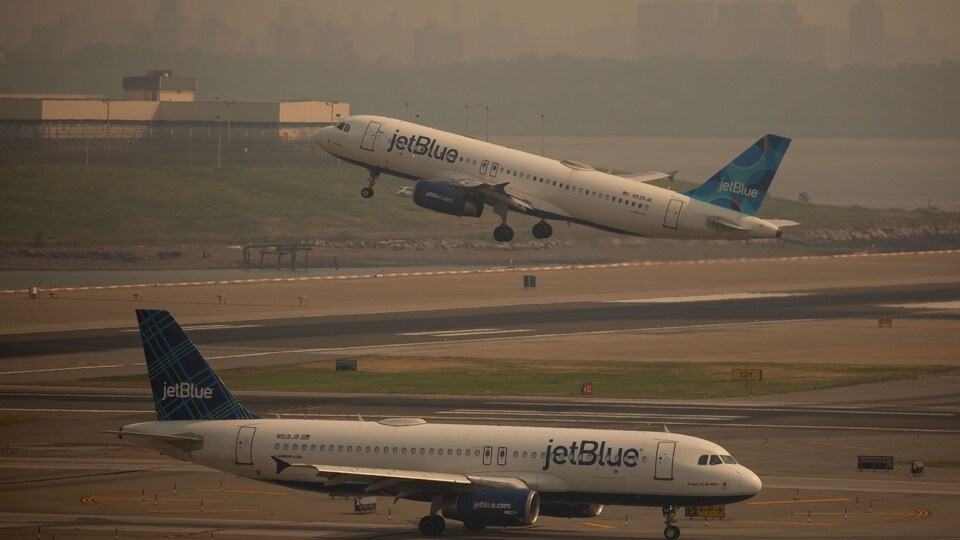
The study, published on Thursday, highlights that a specific type of flight turbulence known as clean air turbulence has increased by 55% from 1979 to 2020, with expectations of further escalation as climate change worsens.
Clear air turbulence, unlike turbulence caused by visible factors such as clouds or storms, is more challenging to detect and track, making it harder for pilots to navigate and avoid.
The recent study indicates that the most significant increases in turbulence were observed over busy flight regions like the USA and North Atlantic.
Ramalingam Saravanan, head of Texas A&M University’s Department of Atmospheric Sciences, explained the causes of flight turbulence to KXAN, stating, "There are several causes of flight turbulence. One is things like clouds that you can see, and they create turbulence. There are also waves created by mountains when wind flows over them, and they create turbulence.”
“The last two types, you cannot see as you can a cloud. You see clear air, and a plane flies through it, then you feel turbulent. That's why it's called clear air turbulence," he continued
The study suggests that the increase in greenhouse gas emissions, such as carbon dioxide and methane, has contributed to warming the atmosphere and cooling the stratosphere over the poles.
Consequently, a phenomenon called "wind shear" occurs, which refers to a change in wind speed and direction over a short distance.
This change in wind patterns leads to bumpier flights.
Computer models have been utilized to predict the impact of future greenhouse gas increases on turbulence. Saravanan noted that these models demonstrate a likely increase in wind shear and subsequently, turbulence.
“We can show with computer models that if you put an increase in greenhouse gases into the future, the wind shear is going to increase…Using [those models], we can predict the turbulence is likely to increase,” Saravanan told.
.The drastic climate change has also affected wind speeds globally, potentially impacting flight times.
Saravanan mentioned that turbulence wouldn't typically be among the top concerns related to climate change, but it remains an interesting effect worth noting.
“If you asked me to list the top things to worry about with climate change, turbulence wouldn’t be in the top five,” he stated.
As the aviation industry continues to grapple with the challenges posed by climate change, the study serves as a reminder of the need for ongoing research and mitigation strategies.


