E-Paper



Satellite images capture Middle East war fallout, show damaged Dubai hubs, Iran nuclear sites
Satellite images suggest the US-Israel strikes targeted entrances to the underground centrifuge halls where enrichment takes place at Iran's Natanz nuclear site

 Prefer HTon Google


Satellite images released this week show the extent of damage at Iran's key nuclear facility in Natanz following the US-Israeli strikes, providing the clearest visual evidence yet of the impact on Tehran’s nuclear infrastructure.
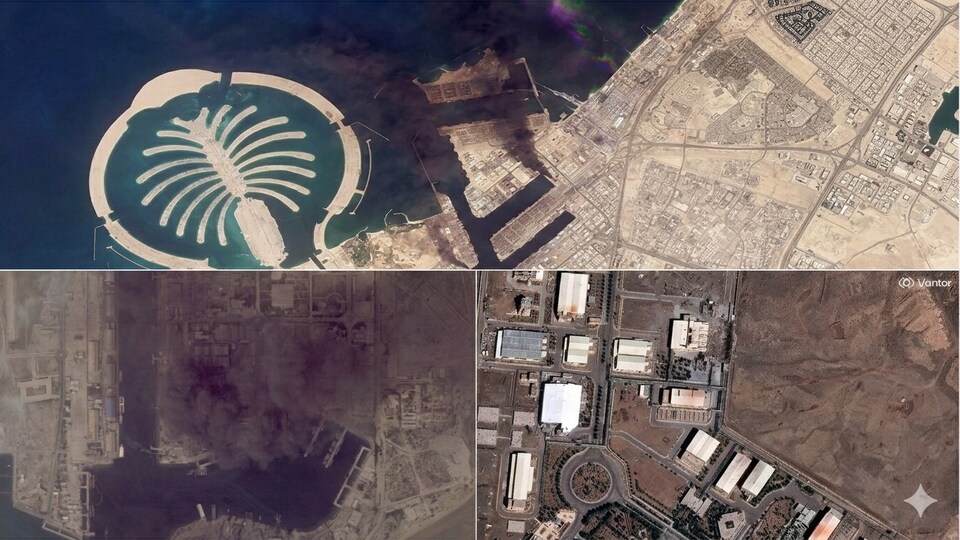
Images captured Tuesday by Colorado-based imaging company Vantor, formerly known as Maxar Technologies, show several buildings at the Natanz complex damaged compared with images taken the previous day.

The satellite imagery also indicates additional destruction across the facility, including structures believed to house personnel and vehicle access points linked to the underground fuel enrichment complex.

The United Nations’ nuclear watchdog has also confirmed the damage. The International Atomic Energy Agency (IAEA) said the Natanz enrichment site sustained “some recent damage” after the US-Israeli attack but added that there was “no radiological consequence expected.”
Located about 220 kilometres southeast of Tehran, Natanz is Iran’s main uranium enrichment facility and a central pillar of its nuclear programme.

Satellite images suggest the strikes targeted entrances and access buildings connected to the underground centrifuge halls where enrichment takes place.
Experts say damaging those access points could significantly disrupt operations even if the underground enrichment plant itself remains largely intact.
The attack marks the first confirmed strike on an Iranian nuclear facility during the latest round of fighting between Iran, Israel and the United States. Natanz had previously been targeted in Israeli airstrikes during the 12-day Iran-Israel war in June 2025 and in earlier US strikes.
Satellite imagery published by Reuters also shows the wider scope of the conflict across the region.

Images reveal damage to military installations and naval facilities in Iran, including destroyed storage bunkers and damaged vessels at the port of Konarak and strikes affecting Bandar Abbas harbour.


The images also show the aftermath of Iranian retaliatory attacks, including fire at Saudi Arabia’s Ras Tanura oil refinery following a drone strike.

The new images come as the US-Iran intensifies across the Middle East. Israel says it has struck Iranian missile launchers and nuclear-related facilities, while Iran has launched ballistic missiles toward Israel and carried out drone attacks on US diplomatic missions in the Gulf.

The war, now in its fourth day, has already killed hundreds. Iran’s Red Crescent Society says nearly 800 people have died in the country, while at least 11 people have been killed in Israel and six US service members have died in attacks linked to the conflict.
The renewed strikes on nuclear facilities come despite previous claims by the Trump administration that Iran’s nuclear capabilities had been “obliterated” during last summer’s conflict. US President Donald Trump has since warned that Tehran may be attempting to rebuild parts of its nuclear programme.
Complicating efforts to assess the situation, the IAEA has said it cannot determine the current size or location of Iran’s enriched uranium stockpile because international inspectors have been denied access to several sites hit in the strikes.