E-Paper


In 1903, rabbits devastated Laysan Island’s habitat, leaving just 7 adult ducks; in 2026, Midway counted a record 1,239 Laysan ducks
Laysan ducks declined after introduced rabbits damaged their Hawaiian island habitat. In 2026, Midway Atoll recorded a record 1,239 adults.

 Prefer HTon Google


A Hawaiian bird species has made a notable recovery in numbers at a location far from its native island. According to the U.S. Fish and Wildlife Service, staff and volunteers counted 1,239 adult Laysan ducks at Midway Atoll National Wildlife Refuge in 2026, setting a record for the refuge. The total was about 400 birds higher than any previous annual count. The result is particularly significant given how close the species came to disappearing from its native habitat more than a century ago.
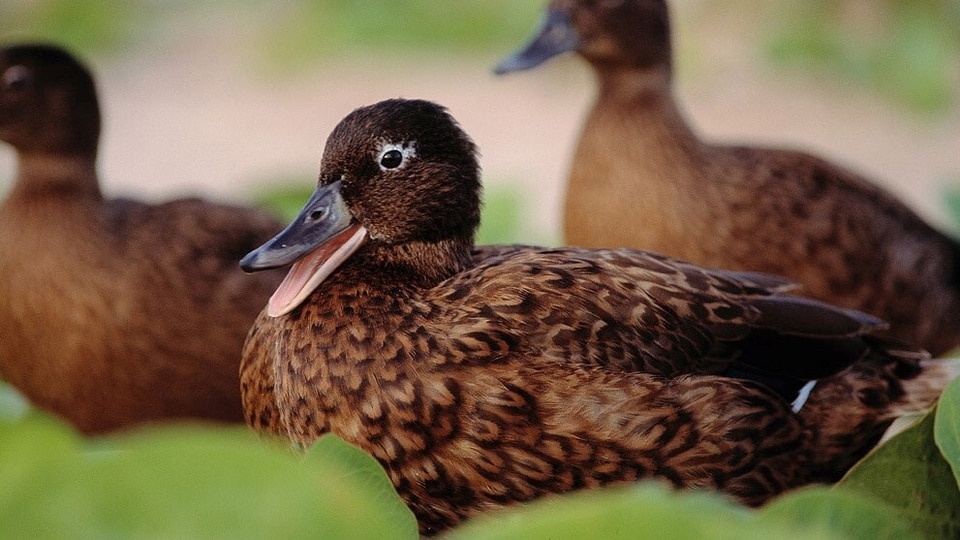
The count also revealed how the ducks were distributed across the refuge. About 600 Laysan ducks were recorded in and around Sunset Seep on Eastern Island. It was the second time that season the refuge's count had exceeded 1,200 birds. The U.S. Fish and Wildlife Service noted that the number at Sunset Seep alone exceeded the estimated total population on Laysan Island, the species' native habitat. However, the record at Midway does not mean the endangered species is no longer at risk.
How rabbits contributed to the destruction of the ducks’ native habitat
The Laysan duck, scientifically known as Anas laysanensis and called Koloa Pohaka in Hawaiian, is native to the Northwestern Hawaiian Islands. Its endangered status is linked in part to human activities that damaged its natural habitat. The Laysan Duck Profile published by Friends of Midway Atoll explains that guano mining took place on Laysan Island from 1891 to 1904. European rabbits were introduced in 1903, and their grazing subsequently stripped the island of much of its vegetation.
The population decline was severe. The conservation group's account records fewer than 100 Laysan ducks by 1902, although that date precedes the documented introduction of rabbits and therefore should not be attributed to their impact. By 1911 and 1912, the population had fallen to critically low levels. The Revised Recovery Plan for the Laysan Duck records seven adults and five juveniles in 1912, illustrating the species' precarious position.
The ducks' feeding habits make suitable habitat essential to their survival. Friends of Midway Atoll explains that insects form the bulk of their diet, supplemented by leaves, seeds, fruits, and maggots from dead animals. One distinctive feeding behavior, known as the “brine fly sprint,” involves the ducks running through groups of tiny shore flies or catching them in the air. Healthy wetlands and a reliable supply of food are therefore important to maintaining their populations.
Introduction of ducks to form new populations
To reduce the species' dependence on a single location, conservationists established additional populations on other islands. The U.S. Fish and Wildlife Service's recovery plan documents the transfer of 42 Laysan ducks from Laysan Island to Midway Atoll in 2004 and 2005. Twenty birds were relocated in the first year, followed by 22 in the second. Friends of Midway Atoll identifies this effort as the beginning of the species' second population. In September 2014, another 28 ducks were transferred from Midway Atoll to the Kure Atoll Wildlife Sanctuary.

These relocations distributed the species across multiple islands, providing some protection against a disaster affecting any one location. Midway's latest count highlights the refuge's importance to the duck's survival. Still, an increase at one site cannot establish that every population is secure or that all threats have been addressed.
TheMidway Atoll National Wildlife Refuge protects habitat used by seabirds, shorebirds, ducks, and other wildlife. Conservation work includes managing invasive plants, protecting habitats, and monitoring wildlife populations. These measures help maintain the conditions native species need to survive while allowing managers to track population changes over time.
Why the record is not the end of the story
Despite the encouraging count, the Laysan duck remains an endangered species. Friends of Midway Atoll identifies rising sea levels and flooding in parts of the species' range as potential long-term threats. The species' restricted distribution and the possibility of low genetic variability also leave its populations vulnerable to environmental changes and disasters.
The U.S. Fish and Wildlife Service's recovery plan identifies the species' limited range and exposure to environmental disasters as continuing conservation concerns. Continued monitoring is important to determine whether population gains can be sustained and whether the ducks remain secure across the islands where they have been established.
The contrast between the seven adult ducks recorded in 1911 and 1912 and the 1,239 adults counted at Midway in 2026 illustrates the scale of the species' recovery at the refuge. Translocation has helped establish additional populations, reducing dependence on a single island. Protecting suitable habitat, maintaining food sources, and monitoring populations across multiple locations remain essential to the Laysan duck's long-term survival.