
 E-Paper


Watch- Video of historic moment as Blue Origin successfully lands Mars-bound New Glenn rocket
Blue Origin successfully landed its Mars-bound New Glenn booster, a key step toward matching SpaceX’s reusable rocket model.

 Prefer HTon Google


Blue Origin has successfully landed its Mars-bound New Glenn booster, marking a major milestone in Jeff Bezos’ company’s push to compete in the reusable rocket market.
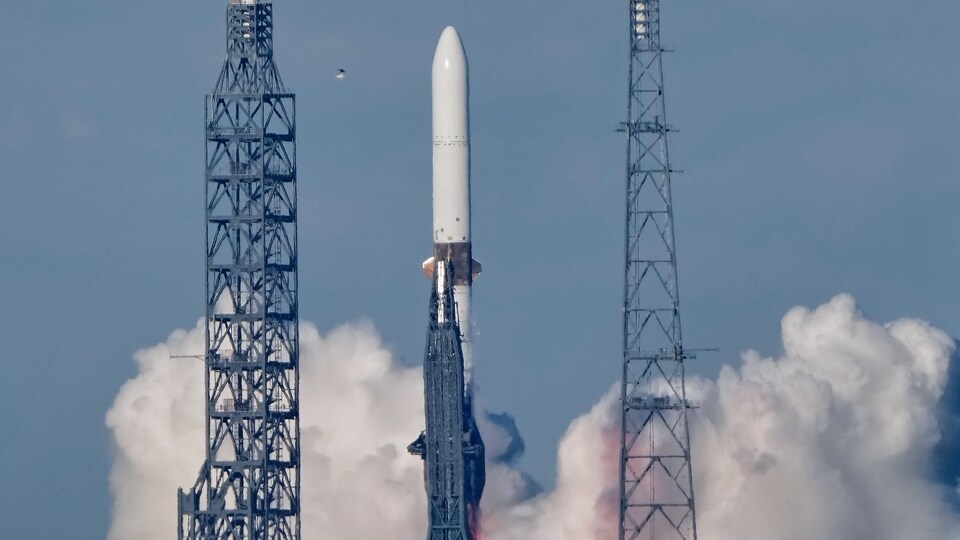
The achievement places Blue Origin closer to rival SpaceX’s Falcon 9 reusability model, advancing prospects for future commercial and NASA missions.
Blue Origin's 321-foot-tall New Glenn rocket launched from Cape Canaveral Space Force Station, Florida, on November 13, 2025.
The mission carried the twin ESCAPADE spacecraft for NASA and a demonstration payload for Viasat, the AP news reported.
The rocket's first-stage booster autonomously landed upright on the sea-based platform “Jacklyn”, which is approximately 375 miles downrange in the Atlantic. The AP marked this as a standout achievement in the recovery phase.
New Glenn's inaugural launch in January 2025 achieved orbit but failed to land the booster.
Read More: Jeff Bezos' Blue Origin to launch New Glenn rocket in first NASA mission
ESCAPADE will be stationed near Earth for a year
According to AP, the ESCAPADE is set to arrive at Mars in 2027. Next Fall, when Earth and Mars are in ideal alignment, Earth's gravity will help ESCAPADE travel to the red planet.
The spacecraft will examine the outer atmosphere and scattered magnetic fields of Mars after it has circumnavigated the planet. It will examine how these atmospheres interact with the solar wind.
The data is expected to help explain how the planet changed from being wet and warm to being dry and dusty by illuminating the mechanisms underlying the fleeing Martian atmosphere. Scientists are also expecting to figure out the most effective ways to shield astronauts from the intense radiation on Mars.
Also Read: Blue Origin’s all-women flight sparks hoax claims, Katy Perry trolled; read
“We really, really want to understand the interaction of the solar wind with Mars better than we do now,” Escapade’s lead scientist, Rob Lillis of the University of California, Berkeley, said ahead of the launch.
After the booster landed, company employees chanted “Next stop, moon!” AP reported.


