
 E-Paper



US sees ‘progress’ in Kashmir, but remains ‘deeply concerned’
While the United States has pushed India on Kashmir, it has also kept in its cross-hairs Pakistan-based terrorist groups that have created violence in the area and have been a “destabilizing” force.


The United States said on Thursday that while it has seen “progress” in Kashmir, it remains “deeply concerned” about the situation and would like India to release detainees and produce a a “roadmap” on the restoration of economic and political normalcy.
It also said Pakistan-based terrorist groups such as Lashkar-e-Toiba and Jaish-e-Mohammad are a “problem” as regards the situation in Kashmir, and the Khan government needs to follow it promises with action.
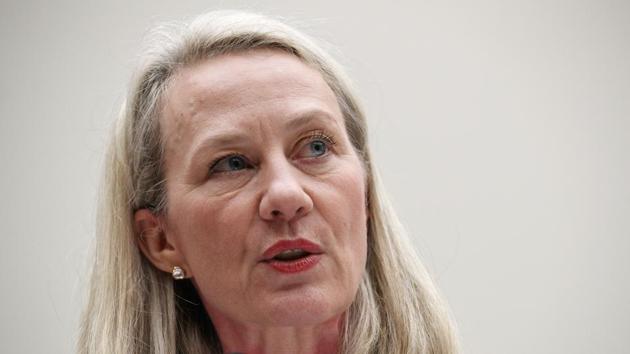
“We remain deeply concerned about the situation in the valley where daily life for nearly 8 million residents has been severely impacted since the decision to revoke Jammu and Kashmir’s special status and to detain without charge political leaders and restrict communications,” Alice Wells, the acting secretary of state for South and Central Asia, told reporters. But, there has been “progress”, she added, “citing the restoration of services for 4 million postpaid mobile phone users.
The US will, she stressed, “continue to press for the release of detainees, for the full restoration of everyday services, but most importantly for a roadmap to the restoration of political and economic normalcy”.
Wells had faced sharp grilling from US lawmakers at a congressional hearing earlier in the week on the administration’s policy on the Kashmir situation and whether it was doing enough to push India to remove restriction, restore phone and Internet services and protect human rights.
The Trump administration has indeed been pushing India publicly and privately to speedily restore normalcy in the valley — Wells had called for “rapid action” on this front at the time of the UNGA meetings last month — while it has maintained that the decision to alter the constitutional status of the state is an “internal matter” for India, much to Pakistan’s disappointment, which has argued that the changes are a violation of international laws.
While the United States has pushed India on Kashmir, it has also kept in its cross-hairs Pakistan-based terrorist groups that have created violence in the area and have been a “destabilizing” force, as Wells had told lawmakers at the hearing.
On Thursday she said, “Terrorist groups like Lashkar-e-Tayyiba (another way to spell LeT), Jaish-e-Mohammed (also an alternate spelling), Hizbul Mujahideen obviously are the problem.”
And she went on the put the onus for improving the situation directly on Pakistan’s Prime Minister Imran Khan saying, “We welcome Prime Minister Khan’s unambiguous statement in September that anyone who crosses from Pakistan to carry out violence in Kashmir are enemies of both Pakistan and the Kashmiri people.”
The top US diplomat for South and Central Asia also reiterated that Pakistan’s support for terrorism was an impediment to talks with India, as she had stated at the hearing. “The constructive dialogue that we’d like to see between India and Pakistan must be based on Pakistan taking sustained and irreversible steps against militants and terrorists on its territory,” she said.
Pakistan has sought to internalize the Kashmir issue and called for international mediation essentially to circumvent taking responsibility for not doing enough to combat terrorism. It has opted for sharp rhetoric instead, as demonstrated by Prime Minister Khan in his maiden UN general assembly speech.
Reminding Pakistan and Khan of their role in the normalization of ties, Wells said, “all sides have the responsibility to create the conditions in Kashmir for dialogue, including avoiding heated and unhelpful rhetoric”.


