
 E-Paper



Does scone rhyme with gone or cone? New Cambridge app to detect accent
The app launched on Monday tries to guess a user’s regional accent based on the pronunciation of 26 words and colloquialisms. Called English Dialects, it was developed by Cambridge expert Adrian Leemann with colleagues from the universities of Zurich and Bern.

 Prefer HTon Google


Indian English and its accent have emerged as one of the important variants of global English, but a new app developed by academics tries to track and guess regional accents within England, of which less is known since the last such survey 60 years ago.
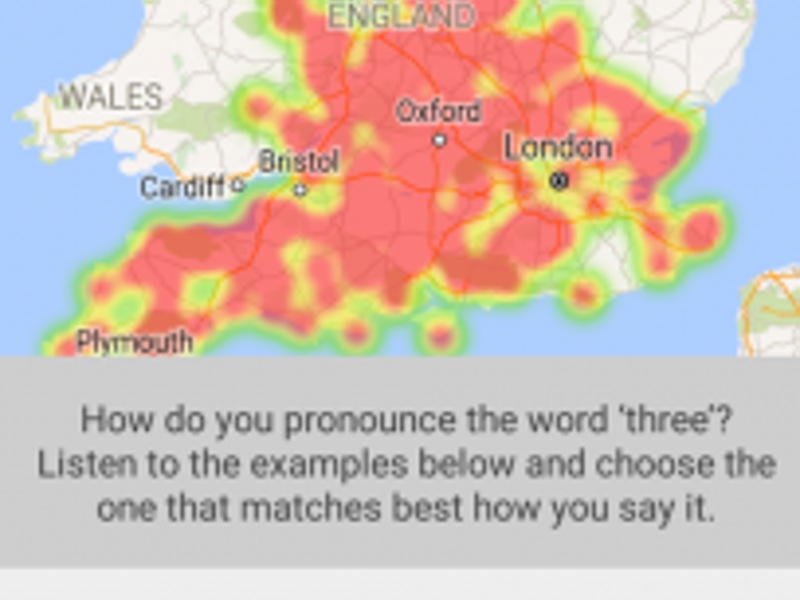
The app launched on Monday tries to guess a user’s regional accent based on the pronunciation of 26 words and colloquialisms. Called English Dialects, it was developed by Cambridge expert Adrian Leemann with colleagues from the universities of Zurich and Bern.
Among the questions the app asks is the endlessly contentious English question of whether “scone” rhymes with “gone” or “cone”. So far the app is confined to tracking accent and dialect within England.
Leemann said: “We want to document how English dialects have changed, spread or levelled out. The first large-scale documentation of English dialects dates back 60-70 years, when researchers were sent out into the field – sometimes literally – to record the public.”
The researchers used this historical material for the dialect guessing app, which allows them to track how dialects have evolved into the 21st century, a university statement said.
The app asks users how they pronounce certain words or which dialect term they most associate with commonly used expressions; then it produces a heat map for the likely location of a dialect based on the answers.
For example, the app asks how an user might say the word “last” or “shelf”, giving users various pronunciations to listen to before choosing which one most closely matches their own.
Likewise, it asks questions such as: “A small piece of wood stuck under the skin is a…”, then gives answers including: spool, spile, speel, spell, spelk, shiver, spill, sliver, splinter or splint. The app then allows users to view which areas of the country use which variations at the end of the quiz.
At the end of the 26 questions, the app gives its best three guesses as to the geography of a user’s accent based on dialect choices. Users are also invited to share with researchers their location, age, gender, education, ethnicity and how many times they have moved in the last decade.
This anonymous data will help academics understand the spread, evolution or decline of certain dialects and dialect terms, and provide answers as to how language changes over time.
“The more people participate and share this information with us, the more accurately we can track how English dialects have changed over the past 60 years,” said Leemann.


