
 E-Paper



Iraq Christians fleeing jihadists long for exile
Iraqi Christians who fled a jihadist onslaught and are packed several families to a room in a church in Kurdistan have lost hope in their country and long to emigrate.


Iraqi Christians who fled a jihadist onslaught and are packed several families to a room in a church in Kurdistan have lost hope in their country and long to emigrate.
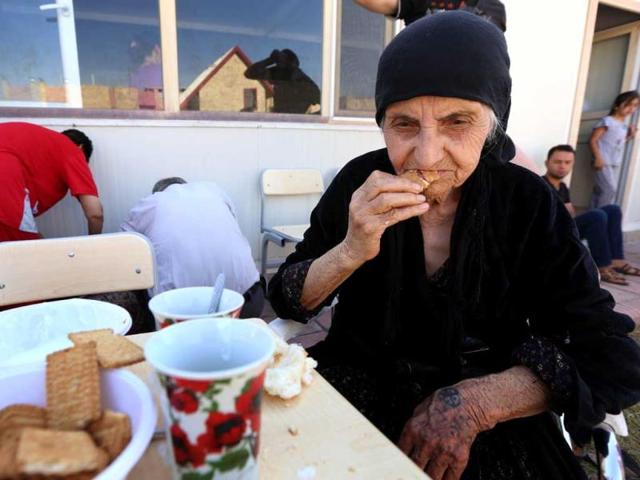
"This is our country. We have suffered before, but the attack by the Islamic State (IS) has been the worst," said Salwa, a 40-year-old civil servant and grandmother.
"I want to leave Iraq," she said.
Speaking to AFP in the garden of Ainkawa's Saint Joseph church, on the outskirts of Arbil, Salwa is among the tens of thousands of Christians who have in recent weeks sought refuge near the Kurdish capital.
She said most of her extended family fled Iraq's largest Christian town of Qaraqosh last week, as attacking jihadists offered them a bleak choice.
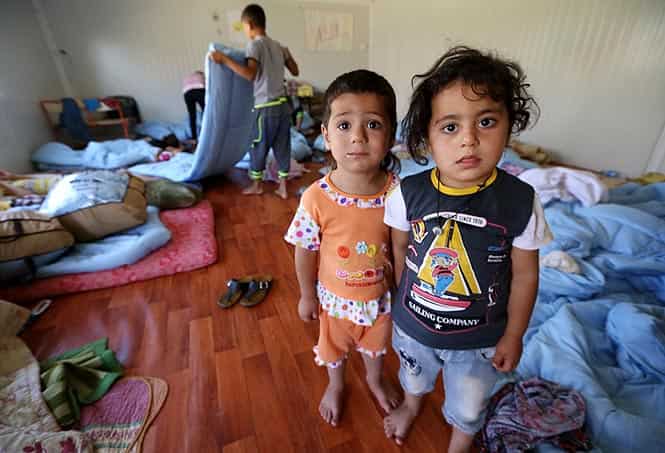
"They said either we convert or we flee," said Salwa. "Only a few stayed behind, because they were too sick or old to walk. They are locked up in the houses."
Salwa said she held little hope her lot would improve with the US air strikes on jihadist positions in the area.
"The IS has attacked Christians three times in the past three months alone. We are vulnerable here, we have no real guarantees. And I want safety for my children," she said, clad in a blue jalabiyah (traditional robe) as she sat at the entrance of the pre-fab shed she now calls home.
Her 22-year-old daughter Sarah, who is pregnant with her fourth child, echoed her despair.
"We fled the (jihadist) shelling on Qaraqosh with nothing except the clothes on our backs. We walked for hours in the dark, the children wailing with hunger," said Sarah, forcing a smile as she described the terror.
A 74-year-old nun, who spoke to AFP on condition of anonymity, was also among the displaced.
"I have seen many wars in my lifetime, but I have never seen anything like this. I understand that people want to leave Iraq, even though it is our home," she said, clothed in a white robe with a wooden rosary hanging from her pocket.
In an open letter published Sunday, the Chaldean Patriarch of Babylon said there are 70,000 displaced Christians in Ainkawa alone.
"The level of disaster is extreme," wrote Louis Raphael Sako, who also heads Iraq's Catholic bishops assembly.
"Something should be done to save this people who have their history in this land from their beginnings."
'We want to live'
Speaking to AFP, Faraj Benoit Camurat, who heads the French-based Irak-Fraternite association, said many are asking their churches for their baptism certificates.
"That is an indication that they are at least thinking about exile, that they want to leave," he said.
Iraq's Christians have in recent years found it easier to be granted US and other Western visas than the many Muslims who also want to emigrate.
The religious leadership has reacted with unease to an offer by France to welcome displaced Iraqi Christians on its soil, arguing that one of the world's oldest Christian communities should be preserved.
But Father Rayyan Atto, a young priest running the Chaldean church's humanitarian effort in Arbil, said he understood people's desire to emigrate.
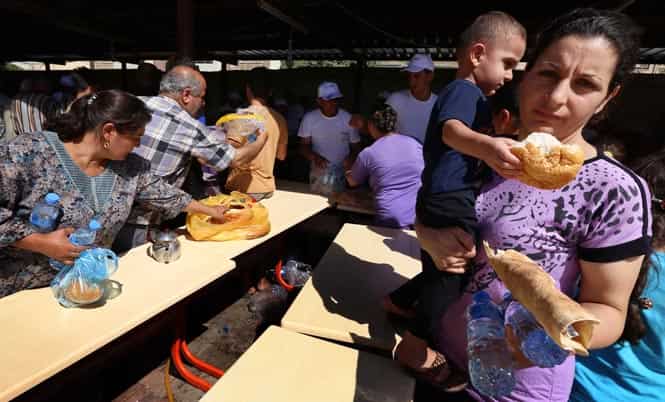
"We don't want them to go, but we understand. They are oppressed," said Atto, pointing at women washing clothes under the scorching sun, and families queueing up for bread and water.
"There is no more room in the 22 makeshift displacement centres we have set up in churches and schools here," Atto said, adding that the crisis has put a strain on Ainkawa's usual population of 35,000.
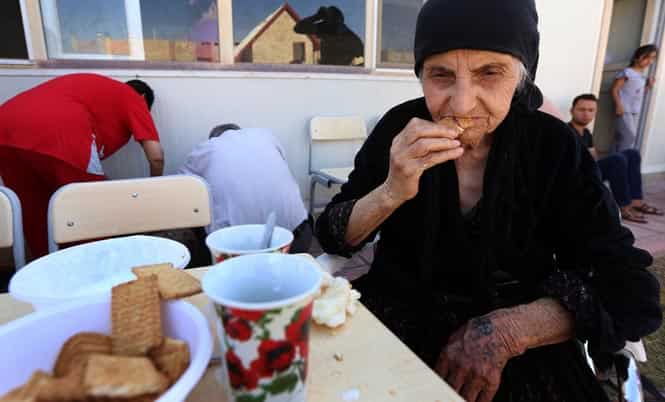
To 51-year-old Zoheir Yaacub, a retired Iraqi army soldier, the problem extends beyond the violence of the jihadist onslaught.
"Nobody cares about us. We didn't even receive a warning that the IS was coming," said Yaacub, who wore a dark blue checkered shirt.
Sitting under the shade of a plastic sheet, Yaacub held up a hand-written poster that read: "We want to live. Is that impossible, you warlords?"
"Whatever happens now, we will not go back to Qaraqosh. We have no protection. The central government is weak, and even now that (Prime Minister Nuri al-) Maliki has been replaced, things will not get any better," he said.
"The politicians don't care about people. They only care about lining their pockets," said Yaacub.
"The other (religious and ethnic) groups all have their militias. But we don't, and we cannot protect ourselves."


