E-Paper



Nepal government unveils plan to end power outages in 2 years
The Nepal government on Thursday unveiled a master plan to end the country’s crippling power crisis within two years.


The Nepal government on Thursday unveiled a master plan to end the country’s crippling power crisis, which results in daily outages of 13 hours in winter, within two years.
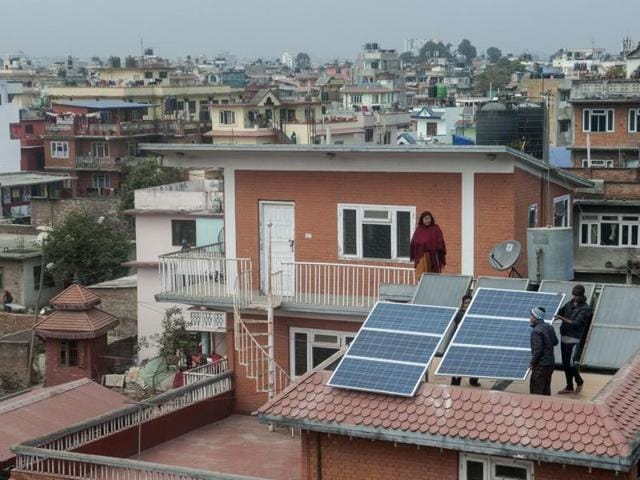
The plan, approved by the cabinet, aims to reduce load shedding in the next 12 months and end it completely by 2018. Electricity imports from India are a crucial part of the plan.
“In two years, we will produce surplus power,” Prime Minister KP Sharma Oli told journalists in Kathmandu.
Nepal needs more than 1,400 MW during the dry winter months, but the country with a generation capacity of nearly 600 MW is able to produce just 228 MW.
Hydropower generation began in Nepal more than a century ago and the country has the potential to produce 83,000 MW, but a civil war and unstable governments have resulted in the current situation.
Nepal began importing an additional 80 MW from India this week through the new Muzzafarpur-Dhalkebar transmission line, taking total imports to more than 300 MW.
The official inauguration of the transmission line is expected to be done in New Delhi during Oli’s visit to India this week.
According to the new plan, Nepal expects to generate more than 1,000 MW during the dry season and nearly 1,600 MW during the monsoon by importing electricity from India and increasing generation from projects under construction.
There is hope that by 2018, Nepal will be able to reduce energy dependence on India and increase generation to 1,850 MW from hydro, solar and wind projects.
“If the projects that are underway and being planned get completed within time, we expect to generate 10,000 MW in the next 10 years,” energy minister Top Bahadur Rayamajhi said.