E-Paper



India saw most number of tuberculosis deaths, patients in 2016: WHO report

 Prefer HTon Google


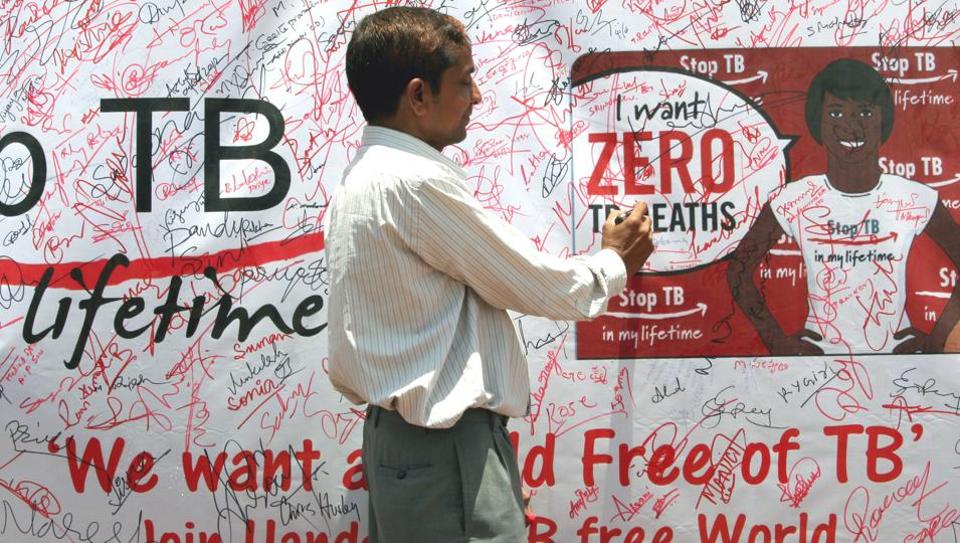
An estimated 147,000 patients in India have multidrug-resistant TB, which remains a public health crisis and a health security threat, the WHO said.
India topped the list of countries across the world with the highest number of people infected with tuberculosis as an estimated 279,000 patients were diagnosed with and 423,000 died of the highly contagious lung disease in 2016, the World Health Organization has said.
In its annual report on tackling TB, the WHO said the disease is the ninth leading cause of death worldwide and the leading cause from a single infectious agent, ranking above HIV/AIDS.
It was also the main cause of deaths related to antimicrobial resistance and of people with human immunodeficiency virus (HIV) that causes AIDS.
There were 10.4 million new TB cases worldwide and seven countries accounted for 64% of the total burden with India bearing most of the brunt, followed by Indonesia, China, Philippines, Pakistan, Nigeria, and South Africa, it said.
China has an estimated 895,000 lakh patients, Indonesia about 102,000 lakh, and the Philippines and Pakistan about five lakh patients suffering from the killer disease.
Multidrug-resistant TB (MDR-TB) also remains a public health crisis and a health security threat, the WHO said.
The WHO estimates that there were 600,000 new cases of resistance to rifampicin – the most effective first-line drug, of which 490,000 had MDR-TB. Almost half of these cases were in India, China and the Russian Federation.
An estimated 147,000 patients in India have MDR-TB.
“While the world has committed to ending the TB epidemic by 2030, actions and investments don’t match the political rhetoric. We need a dynamic, global, multisectoral approach.” Dr Tedros Adhanom Ghebreyesus, director-general of WHO, said.
About 900,000 of those living with TB in India are not getting the necessary treatment, a cause for concern since India aims to eliminate the infection by 2025.
The WHO report said that India’s funding for tuberculosis prevention, control and treatment programme substantially increased in 2017 to $525 million, “almost double the level of 2016”.
“The budget is fully funded, including US$ 387 million (74%) from domestic sources (triple the amount of US$ 124 million in 2016) and the remainder (26%) from international donor sources,” it said.
Chances of tuberculosis in HIV positive patients is high because their immune systems are weakened, with 10% of the estimated 10.4 million new TB cases worldwide being of people living with HIV.
Even though there was a drop of 4% compared to 2015, still an estimated 1.7 million people died from TB, including nearly 400,000 people who were co-infected with HIV.
“The good news is that we finally have two great opportunities to move forward: the first WHO Global Ministerial Conference to End TB in Moscow in 2017, followed by the first UN General Assembly High-Level Meeting on TB in 2018. These will build momentum, get different sectors engaged, and accelerate our efforts to make TB history,” Ghebreyesus said.