
 E-Paper



UP to have yoga in curriculum, separate board for Sanskrit education: Deputy CM
Deputy chief minister and minister for secondary education Dinesh Sharma on Wednesday said yoga would be included in school curriculum and a separate board to promote Sanskrit education would be set up in the state.

 Prefer HTon Google


Deputy chief minister and minister for secondary education Dinesh Sharma on Wednesday said yoga would be included in school curriculum and a separate board to promote Sanskrit education would be set up in the state.
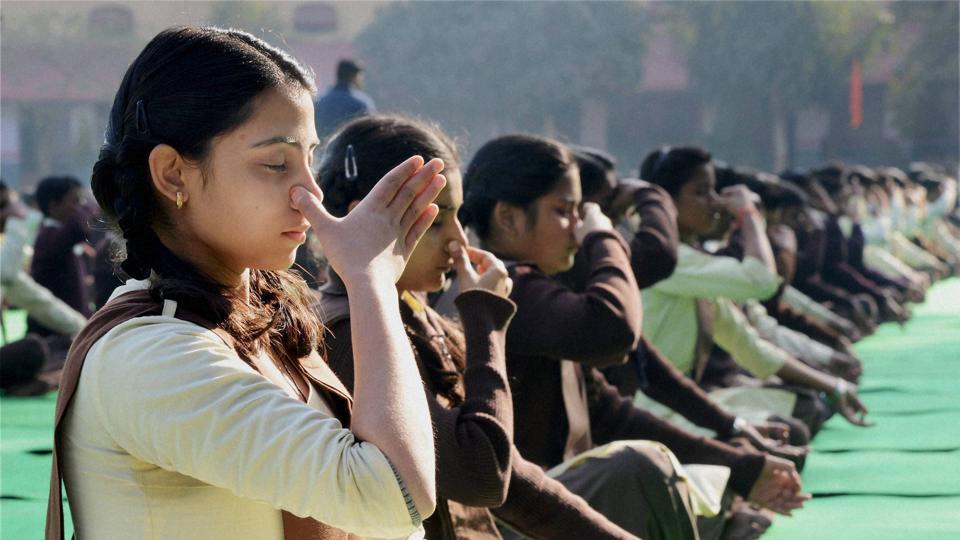
Addressing a seminar on ‘Yoga as a medicine’ during Yoga Mahotsav organised by Patanjali Yog Peeth at Indira Gandhi Pratishthan here on Wednesday, Sharma said the state government would form a panel to set up a Board of Sanskrit Secondary Education.
Speaking about inclusion of yoga in school curriculum under physical education, he said: “The subject will be divided into two parts – yoga and physical education.”
Sharma said the Sanskrit education board would affiliate, conduct examinations and make grants-in-aid available to schools following its curriculum. “This Board will be the first of its kind in the country,” he said.
“The state has a Sanskrit Parishad but it is more or less defunct and is being run by only a handful of officials. Sanskrit scholars, intellectuals, professors and writers will be appointed to the Board,” he said.
He said the state government would look into the anomalies in pay scales of Sanskrit teachers. “It is not good to see Sanskrit teachers in a pathetic condition,” the minister said.
Earlier, yoga guru Baba Ramdev requested the state government to establish a Sanskrit University in Uttar Pradesh and improve the condition of Sanskrit schools.
“These institutions (Sanskrit schools) are in a pathetic condition and their teachers are getting low salaries,” he said.
Baba Ramdev expressed happiness that a ‘yogi’ had become the chief minister of the state. “Nath ‘parampara’ (tradition) laid the foundation of ‘Hathyoga’. The Nath sect has been instrumental in spreading the message of yoga. As the state now has a CM who comes with a background of yoga, he will surely help the students of yoga,” he said.
Baba Ramdev said his company would become the biggest not in India but also in the world within a decade but he would not keep the profits with himself but use it to promote education.


