E-Paper



Pak surgical strikes will be remembered for generations: Raheel Sharif
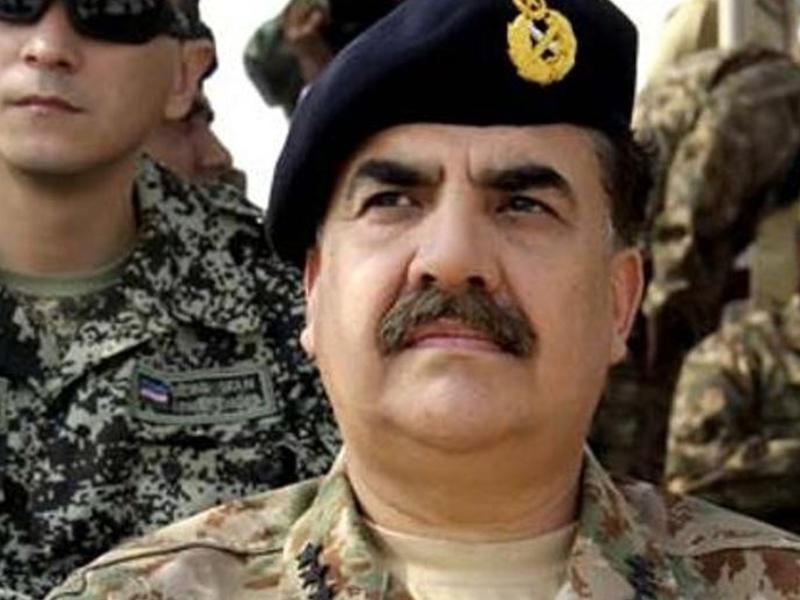
Pakistan’s military leadership upped the ante in a war of words with India on Thursday, with army chief Gen Raheel Sharif saying any surgical strike by Pakistan would not be forgotten by Indians for generations to come.

 Prefer HTon Google


Pakistan’s military leadership upped the ante in a war of words with India on Thursday, with army chief Gen Raheel Sharif saying any surgical strike by Pakistan would not be forgotten by Indians for generations to come.
Air force chief Sohail Aman too warned India against escalating a dispute over Kashmir into full-scale war.
The rhetoric by the military leadership came a day a flare-up of hostilities along the LoC following the killing of three Indian soldiers, and the mutilation of the body of one, on Tuesday. Pakistani authorities said 11 civilians and three soldiers were killed in shelling by Indian forces.
Sharif, who is on a farewell tour of army units before his retirement on November 29, was quoted by The Express Tribune as saying that “if Pakistan were to launch surgical strikes, India would not be able to forget it for generations to come”.
“India will be teaching its children about Pakistan’s surgical strike if the latter took such measures. Pakistani troops are capable of teaching Indian forces a lesson,” he said.
Sharif’s remarks, made while addressing a ‘jirga’ of tribal elders in the Khyber semi-autonomous region, were also an apparent riposte to the surgical strikes carried out by Indian troops along the LoC in September in retaliation for an attack on an army camp in Uri by Pakistan-based militants.
In Karachi, Air Chief Marshal Sohail Aman said Pakistan’s armed forces were prepared for all contingencies.
“We are not worried about India at all, it is better if they show some restraint,” he told reporters on the margins of a defence exhibition. If India escalates the crisis, Pakistani troops will “know full well how to deal with them”, he said.
Aman called on India to resolve the Kashmir issue, saying: “They should speak on matters of principle and our ties will improve.”
Naval chief Admiral Muhammad Zakaullah also told the media that an Indian submarine’s alleged “breach of Pakistan’s waters” was “an unusual incident”. He added: “Whenever India does something like this Pakistan will respond.”
The Line of control in Kashmir has witnessed frequent exchanges of fire following unrest in Jammu and Kashmir that followed the killing of militant commander Burhan Wani.